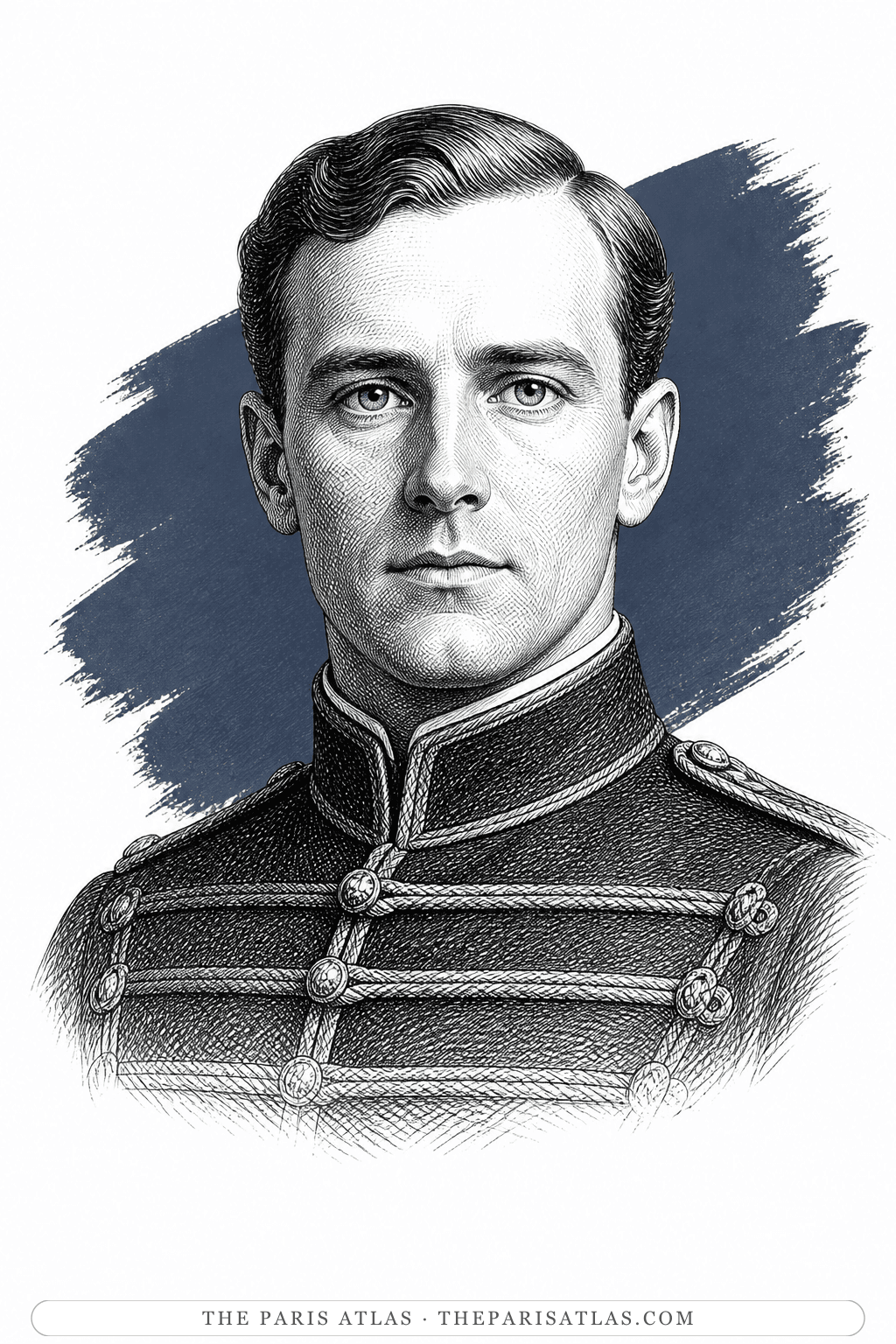
Edward Ashburnham
The English soldier and landowner of the title — a decorated captain, a county magistrate, and by every outward sign the best man in three counties. The narrator spends the novel finding out what else he was.
To be needed by a woman who is unhappy, and told that he has done right by her. "He would say how much the society of a good woman could do towards redeeming you, and he would say that constancy was the finest of the virtues."
The book

At a glance
- Captain Edward Ashburnham, Fourteenth Hussars — thirty-three when the novel opens
- "Edward" by the narrator, "Teddy" by his wife, "Uncle Edward" by the Ashburnhams' young ward
- Branshaw Teleragh, Hampshire — let out for seven years to clear his debts
- The D.S.O.; the Royal Humane Society's medal with a clasp; twice recommended for the Victoria Cross
- County magistrate, chairman of the local Tory caucus, and a landlord whom his own land-steward defends
- A heart, he says, from too much polo in his youth. The narrator later reports there was nothing wrong with it
- To Leonora Powys, in a match arranged by their two mothers' letters
Who they are in the book
Spoiler-freeEdward Ashburnham is the title character of The Good Soldier, the 1915 novel by Ford Madox Ford, although no one in the book fights a war. He is an English captain of hussars, home on sick leave from India, and the owner of Branshaw Teleragh, an estate in Hampshire; his family is descended from an Ashburnham who attended Charles I at the scaffold. He is thirty-three when the four principals meet at a German spa in 1904, married to Leonora Ashburnham, and to the narrator, John Dowell, he looks like the most ordinary Englishman alive.
The public record is genuine, and most of it reaches Dowell at second hand. The medals come from Nancy Rufford, the Ashburnhams' young ward, who recites them to him by the hour: the Distinguished Service Order, the Royal Humane Society's medal with a clasp for twice going over the side of a troopship in the Red Sea after soldiers who had fallen in, and two recommendations for the Victoria Cross that never came to anything. What Dowell saw for himself is the magistrate spending two hundred pounds of his own money to get a tenant's daughter acquitted of murdering her baby, and the landlord letting an old farmer off his rent altogether because the man's family had held the farm for two hundred years. Dowell believes all of it, and never stops believing it.
Alongside it runs a series of love affairs, each of which Edward treated as permanent while it lasted: a servant girl he kissed in a railway carriage, a dancer at Monte Carlo who billed him for the week, a brother officer's wife in Burma, and others. Dowell has this second-hand — the money from Leonora, the interior from Edward himself, who talked for a whole night at the end and, Dowell says, talked like a very good novelist. The word the book uses for him is sentimentalist, and it is meant as a diagnosis: he could not sit with an unhappy woman without wanting to comfort her, and could not comfort one without concluding that he now owed her his life.
How Edward Ashburnham Is Portrayed
- His face, the first time the narrator sees itAcross the hotel dining room at the spa, John Dowell can read nothing in it whatever. "There was in it neither joy nor despair; neither hope nor fear; neither boredom nor satisfaction." He might, Dowell thinks, have been walking through a jungle.
- His eyes"They were as blue as the sides of a certain type of box of matches." And then the assessment that follows it: "When you looked at them carefully you saw that they were perfectly honest, perfectly straightforward, perfectly, perfectly stupid."
- What he talks aboutMartingales, Chiffney bits, boots, where to buy the best soap and the best brandy, the man who rode a horse down the Khyber cliffs. "Not in all the years that I knew him did I hear him talk of anything but these subjects." The exception: he once told Dowell where to get blue ties cheaper, and Dowell has bought them there ever since.
- What he readsSentimental novels in which typewriter girls marry Marquises and governesses marry Earls, and poetry of a certain kind. Dowell has seen his eyes fill at a hopeless parting in a book. At twenty-two he was reading Walter Scott and the chronicles of Froissart.
- The luggagePigskin cases stamped E. F. A. — gun cases, collar cases, shirt cases, letter cases, hat cases, helmet cases. Dowell reads them as vanity. They were not his idea: he liked to be clean but preferred to be threadbare, and the cases were his wife's notion of a reward.
- The Kilsyte case, the one part of his private life that reached a courtTravelling third class to prove to his wife that he could economise, he found a nineteen-year-old nurse-maid crying in the carriage, moved to her side, put his arm round her waist and kissed her. She pulled the communication cord. The bench fined him five shillings for want of tact. Edward maintained the trial put the idea of infidelity into his head; Dowell does not believe him.
- What money does to himAt Monte Carlo he spent one night with a Spanish dancer who was a Grand Duke's mistress, woke up in love with her, and learned that she wanted twenty thousand pounds. Trying to raise it he lost forty thousand more at the tables in a fortnight. Dowell notes that he was not, in the ordinary way, a gambler.
- How he behaves when nobody is watchingHe spends a week of letters and consular appointments getting a head waiter's runaway wife brought back from London. He digs two families of destitute Germans out of trouble, wrestling with a dictionary, because he saw a child crying in the street. "He was like that."
The affairs, in the order Dowell eventually assembles them: the nurse-maid in the railway carriage; the Grand Duke's mistress at Monte Carlo; Mrs Basil, a brother officer's wife in Burma, for five years, whose husband then blackmailed him at three hundred pounds a year; Maisie Maidan, a dying twenty-three-year-old he followed from India to the spa; and Florence Dowell, the narrator's wife, for the last nine years of her life.
The last is Nancy Rufford, the girl the Ashburnhams have raised since she was thirteen and who calls him uncle. His account, given to Dowell in that one night of talk, is that he had no idea he loved her until he heard himself telling her so on a park bench at the spa, and that he never so much as touched her hand. He then arranged — with what Dowell calls a merciless correctness — to ship her to her father in India, and told her nothing at all. When she came to his bedroom at night and offered herself to save his life, he answered: "Go back to your room and go to sleep."
The last weeks are bad. He is drinking heavily; his wife has made him a scene over the two hundred pounds he spent defending the tenant's daughter and threatened to take his bank account away from him again; and he has told Dowell that his feeling for Nancy Rufford is over. "I guess it was only a flash in the pan." Then a stable-boy brings him a telegram from Brindisi, where her ship has called: "Safe Brindisi. Having rattling good time. Nancy." He reads it without expression, hands it to Dowell, takes a small pen-knife from his waistcoat pocket and asks him to carry the wire to Leonora. His last words are "So long, old man, I must have a bit of a rest, you know." A fortnight earlier, watching his wife cross the hall after the girl's train had gone, he had quoted Swinburne under his breath: "Thou hast conquered, O pale Galilean."
If you like The Good Soldier


If you like Ford Madox Ford
Explore authors with a similar voice, perspective, and influence.
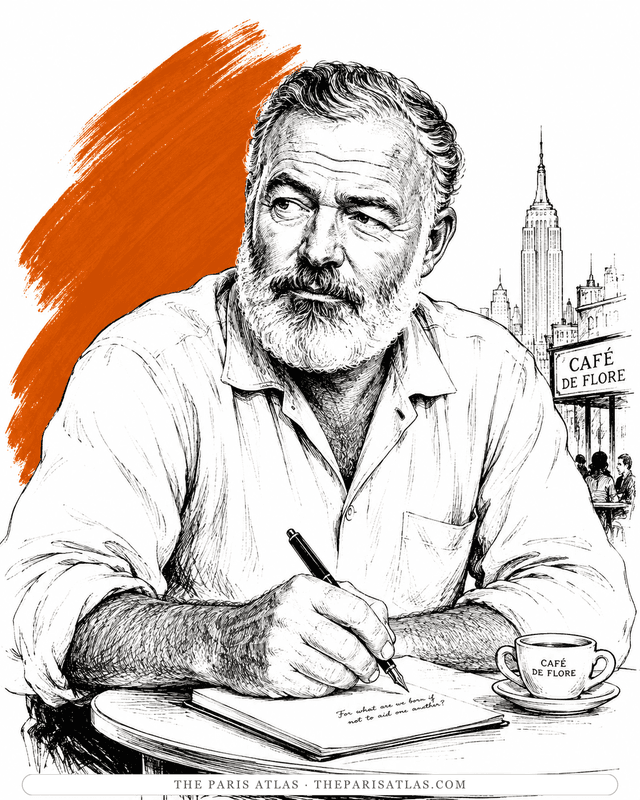
Ernest Hemingway
Ford published Hemingway's earliest Paris work and let him subedit the transatlantic review; Hemingway put him in The Sun Also Rises as Braddocks and settled accounts again in A Moveable Feast.
View author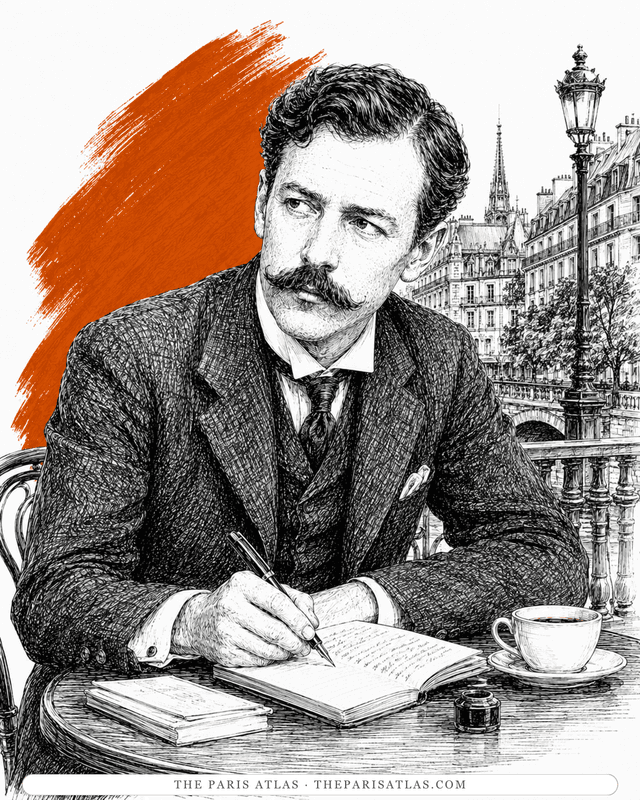
Sisley Huddleston
Fellow witness and friend — Huddleston's memoir catches Ford live: the studio parties, the bal musette, Conrad reminiscences on the Closerie terrace.
View author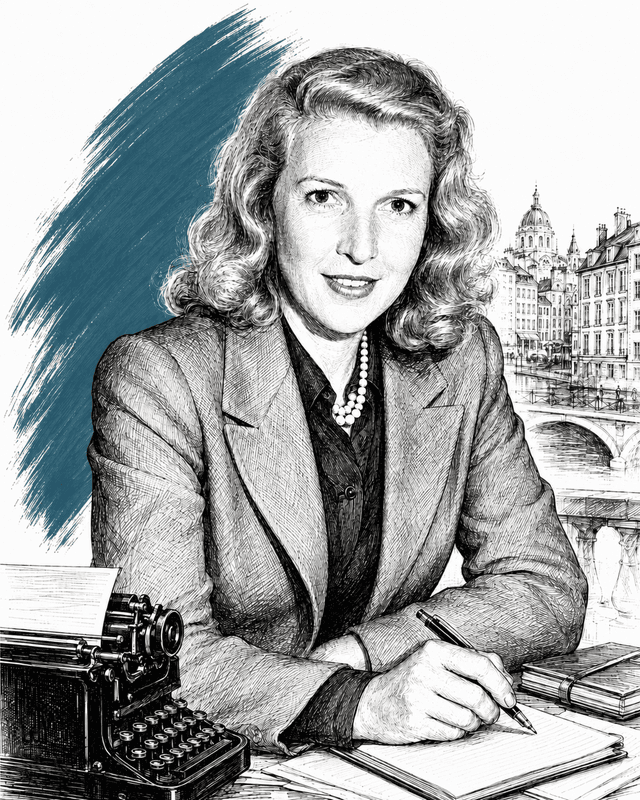
Martha Gellhorn
War correspondent who covered the Spanish Civil War, D-Day, and conflicts across five more decades; Hemingway's third wife, 1940–1945.
View author