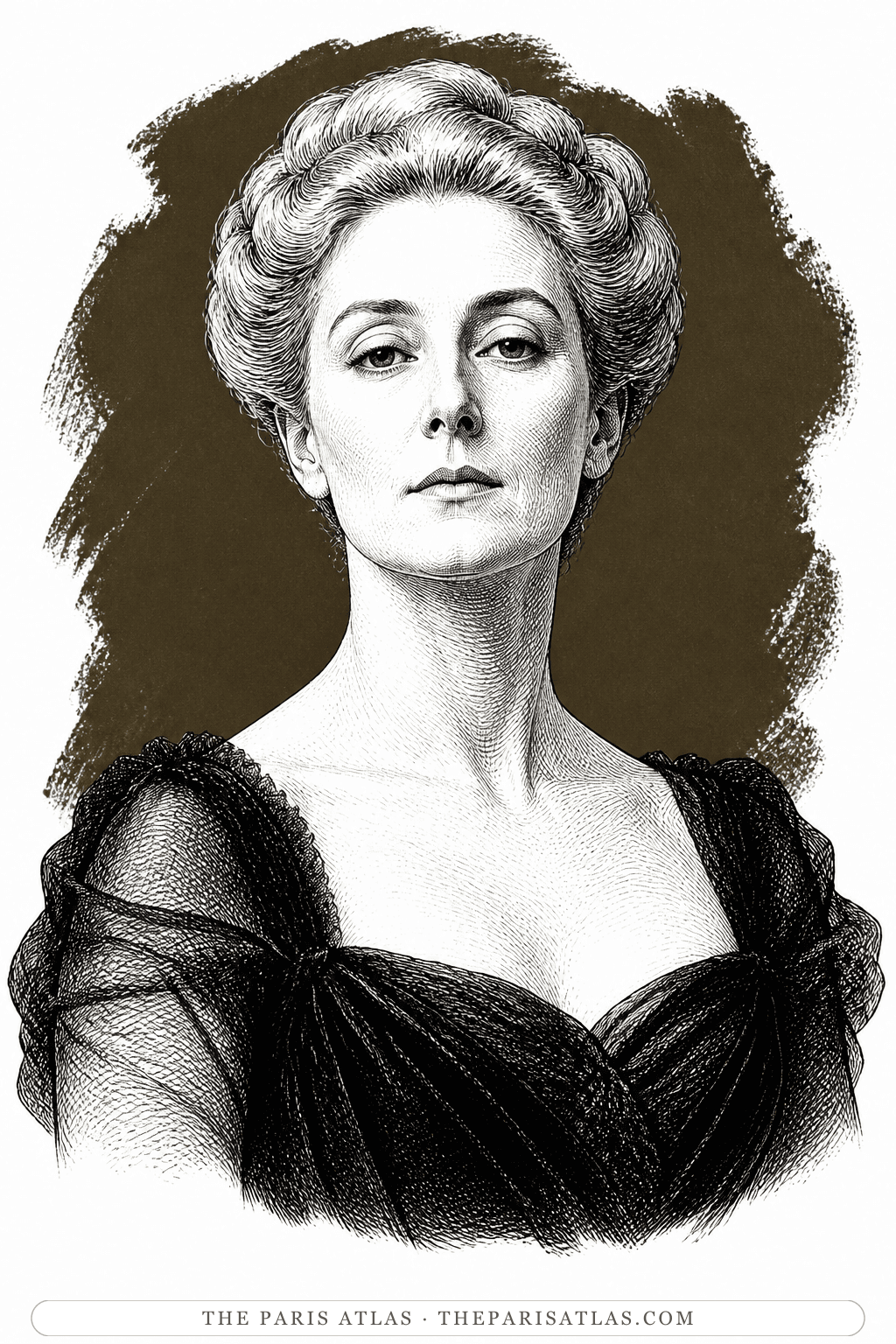
Leonora Ashburnham
Edward Ashburnham's wife — an Irish Catholic colonel's daughter, married off to him at nineteen, who has spent the years since managing his estate, his debts and his affairs with other women.
To win her husband back, and to be seen to have done it. As Dowell understands her, that would not only be her own victory: "It would, as it appeared to her, have been a victory for all wives and a victory for her Church."
The book

At a glance
- Mrs Edward Ashburnham of Branshaw Teleragh — thirty-one when the novel opens, forty when the narrator writes
- Leonora Powys, third of seven daughters of Colonel Powys of Glasmoyle, Ireland
- Roman Catholic, convent-raised — and in England, as the narrator sees it, a member of a beleaguered garrison
- At nineteen. The Ashburnhams' visit that arranged it cost her family sixty pounds they could not spare
- None. She believed the childlessness was a punishment for a promise her parents failed to extract
- Her husband's estate, his bank account, his creditors, his blackmailers and his reputation
- Speak to her husband in private. For nine years the two of them exchange nothing but arrangements about trains and servants
Who they are in the book
Spoiler-freeLeonora Ashburnham is the wife of the title character in The Good Soldier, the 1915 novel by Ford Madox Ford. She was born Leonora Powys, the third of seven daughters of an Irish Catholic colonel whose tenants took shots at him from behind hedges. She was raised in a convent and then behind the walls of a shabby manor house, where in a whole year she entered another person's house three times. Her marriage was arranged between the two mothers by letter and settled after a photograph was taken of all seven Powys girls under an apple tree — in the photograph, a branch's shadow falls across Leonora's face and hides it.
To the narrator, John Dowell, she is the most reassuring person he has ever met: tall, fair, splendid on a horse, perfectly mannered, and, he says, too good to be true. Nearly everything he learns about her he learns from her, after the fact, in a run of conversations she begins a week after her husband's funeral, having waited that long out of what Dowell takes to be a sense of decency.
What she has actually been doing for twenty years is the estate. After her husband lost a fortune at Monte Carlo she went to a solicitor, had every acre and shilling of his property transferred into trust to her, let the house, sold two Van Dyck paintings and some family silver, and spent eight years in India economising until the debts were gone. She is a devout Catholic in a country where, as Dowell puts it, English Catholics had learned to behave like a small garrison in hostile territory. Her church does not permit divorce, and she believes she will get her husband back instead, by outlasting the other women.
How Leonora Ashburnham Is Portrayed
- How she looks to the narratorTall, fair, coiled yellow hair, dark blue eyes under high-arched lids, and black in the evenings. "Yes, Leonora was extraordinarily fair and so extraordinarily the real thing that she seemed too good to be true."
- The gold key on her wristA small gold key to a dispatch box hangs from a chain at her wrist, and John Dowell notices that her whole figure directs your eye there rather than to her face. "Perhaps it was that in which she locked up her heart and her feelings."
- The look she gives a strangerAt their first dinner she stares at Dowell once, deliberately, and he reads the questions running behind it: is this man trustworthy about money, is he likely to play the lover, is he likely to talk about my affairs. She is, he notes, a very good judge of a horse.
- The one time she is seen to lose controlIn a hotel corridor she hits Maisie Maidan, the young woman her husband is in love with, hard across the cheek, and her wrist key catches in the girl's hair. Florence Dowell rounds the screen and has to untangle it. Leonora explains, without a pause: "So awkward of me... I was just trying to put the comb straight in Mrs Maidan's hair...."
- The one thing she volunteers about herselfYears later she tells Dowell that she once tried to take a lover and could not go through with it. "Once I tried to have a lover but I was so sick at the heart, so utterly worn out that I had to send him away." It happened in a dark carriage on an eleven-mile drive home from a hunt ball, and she cried the whole eleven miles.
- How she answers a question about her husbandDowell asks her outright whether Edward Ashburnham is not a splendid fellow. She answers twice, and both times attaches the same qualification: "To do my husband justice there could not be a better man on the earth. There would not be room for it—along those lines." Dowell does not hear it.
- The estate, in her own figuresBranshaw should have brought in five thousand a year and brought in four; her husband's month at Monte Carlo cut it to three. She let the house for a thousand a year, raised twenty-nine thousand on mortgage, sold the paintings and silver for eleven, and clawed it all back over eight years of economising in India. Laying the finished figures in front of her husband, she said: "This is the great day of my life."
- What she was taught to expect from marriageShe took the news of her husband's first infidelity to the Mother Superior of her childhood convent, who shook her head and said: "Men are like that. By the blessing of God it will all come right in the end." Dowell reports that this was more or less her entire programme for married life.
She knows about the affairs, and has known for years — she opens her husband's letters as of right. Her worst stretch is with Florence Dowell, the narrator's wife, who becomes Edward's mistress and then insists on discussing it with her, urging her to forgive him and take him back. Leonora's replies are the flattest lines in the novel. "You come to me straight out of his bed to tell me that that is my proper place. I know it, thank you." And, brushing her hair one morning: "I should think myself defiled if Edward touched me now that he has touched you."
The break comes with Nancy Rufford, the girl the Ashburnhams have raised since she was thirteen. Leonora first tells her she must belong to Edward and offers to divorce him. Then she discovers what Edward actually wants — for the girl to go to India and go on loving him from five thousand miles away — and sets out to destroy that instead, telling Nancy every detail of every affair over night after night of talk. Dowell's account of what the two women did to Edward in those weeks is the most violent writing in the book.
She survives it, and the novel is sour about how comfortably. Within eighteen months . Dowell, who begins the book saying he loved her and would gladly lay down what is left of his life in her service, ends it: "I cannot conceal from myself the fact that I now dislike Leonora."
If you like The Good Soldier


If you like Ford Madox Ford
Explore authors with a similar voice, perspective, and influence.
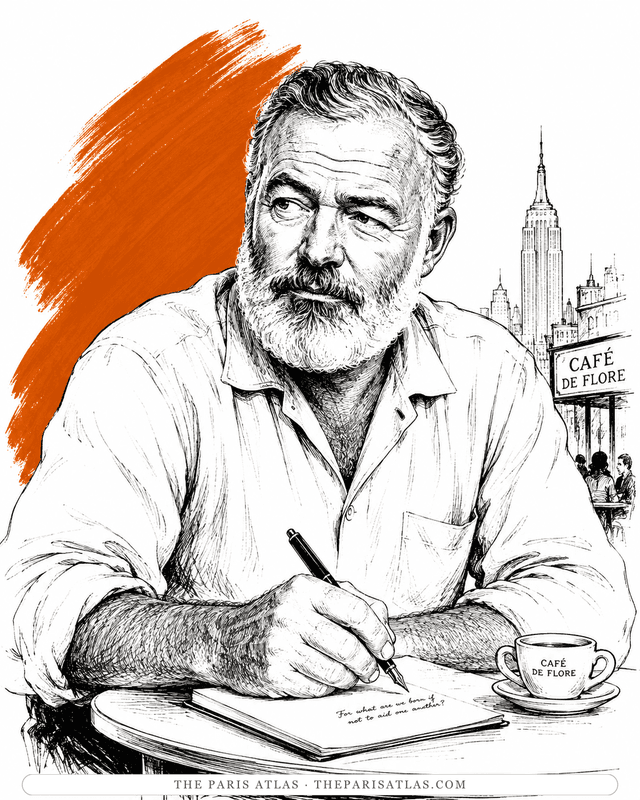
Ernest Hemingway
Ford published Hemingway's earliest Paris work and let him subedit the transatlantic review; Hemingway put him in The Sun Also Rises as Braddocks and settled accounts again in A Moveable Feast.
View author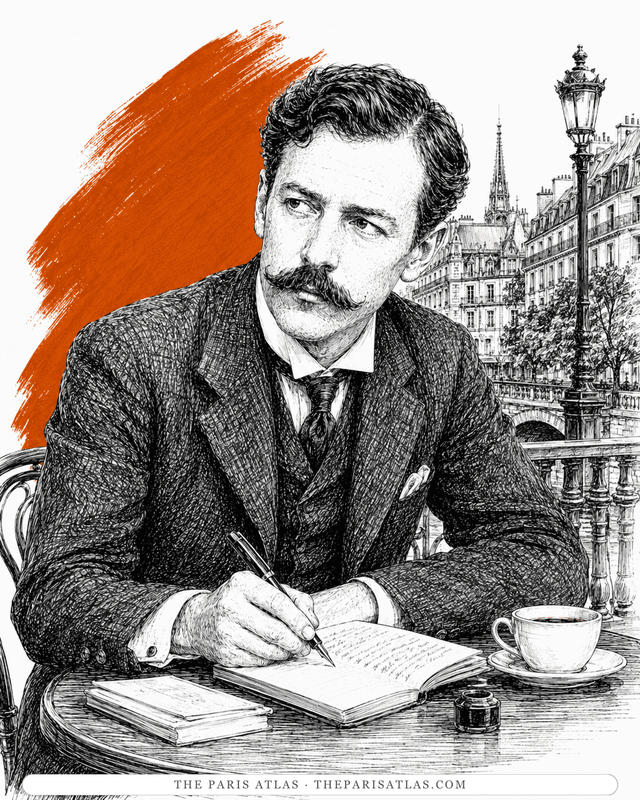
Sisley Huddleston
Fellow witness and friend — Huddleston's memoir catches Ford live: the studio parties, the bal musette, Conrad reminiscences on the Closerie terrace.
View author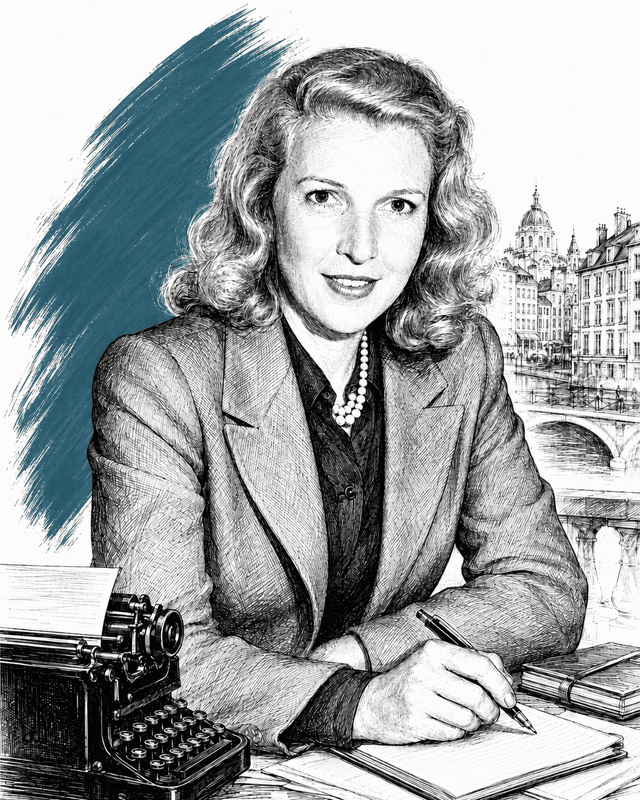
Martha Gellhorn
War correspondent who covered the Spanish Civil War, D-Day, and conflicts across five more decades; Hemingway's third wife, 1940–1945.
View author