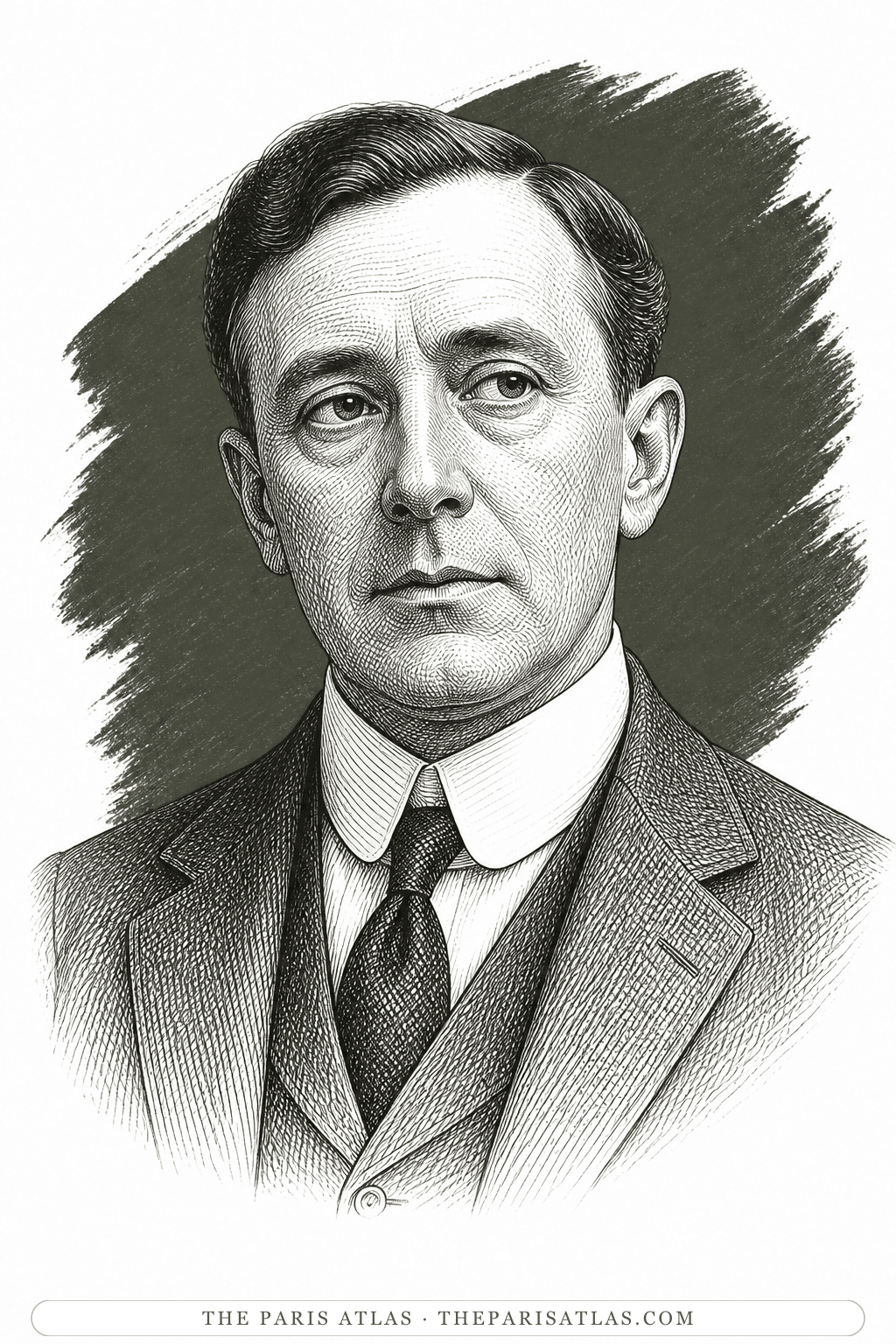
John Dowell
The American who narrates the book: a rich, idle Philadelphian who spent nine years beside these people and understood almost nothing of what he was looking at.
To keep his wife alive and entertained, which he treats as a profession. "And my function in life was to keep that bright thing in existence."
The book

At a glance
- The narrator — an American of thirty-six when the story starts, forty-five when he sits down to write it
- Philadelphia; a Quaker family that came over with William Penn, whose title deeds are wampum
- None. His wife's aunts said he must be the laziest man in Philadelphia
- Florence Hurlbird of Stamford, Connecticut, from 4 August 1901
- Nauheim, Paris, Provence, Connecticut, and the Ashburnhams' corner of Hampshire
- A male sick nurse; later, a trained poodle
- His own nine years of watching, Leonora Ashburnham's confidences afterwards, and one night of talk from Edward Ashburnham
Who they are in the book
Spoiler-freeJohn Dowell is the narrator of The Good Soldier, the 1915 novel by the English writer Ford Madox Ford. He is a wealthy American from Philadelphia with no job and no wish for one, married to Florence Dowell, an heiress from Connecticut whose doctors say that any strong feeling could stop her heart. For nine summers the Dowells go to Nauheim, a German spa town, for her cure, and there they fall in with an English couple, Captain Edward Ashburnham and his wife Leonora. Dowell is writing months after the friendship ended, and the first thing he tells you is that he does not understand what he saw.
The design of the book is that he narrates it badly on purpose. He tells events out of sequence, breaks off, apologises for digressions, and openly revises things he has already written down — at one point announcing that a page he wrote earlier gave a false impression. A little of what he reports he witnessed. Much more of it he got afterwards, from Leonora Ashburnham in a series of confidences and from Edward Ashburnham in one long unburdening near the end. He is careful, most of the time, to say which is which, and readers have been arguing since 1915 about how much of the rest to believe.
What he was actually doing for those years was nursing. He kept his wife's conversation off love, poverty, crime and religion because a doctor told him excitement would kill her. He walked her to the baths and counted his own footsteps on the way. He never opened her locked bedroom door without knocking. He describes himself in that period as a male sick nurse and, later, as a trained poodle, and Ford gives him the flattest voice in the book and lets the reader assemble what he cannot.
How John Dowell Is Portrayed
- The sentence he opens with"This is the saddest story I have ever heard." Heard, not lived: he was present for all nine years and learned what had been happening only afterwards, from other people.
- The voice he tells it inHe addresses an imagined listener across a cottage fireside and keeps stopping to check whether he is making sense. "Is all this digression or isn't it digression?" he asks, and answers himself: "Again I don't know."
- The way he takes back what he has just saidHe compares the four-sided friendship to a minuet, spends a page on the image, and then throws it out. "No, by God, it is false!" A page later he swears the minuet was true as well, and leaves both versions standing.
- The twelve years as a nurseHe watched every word spoken in his wife's hearing and steered the talk away from anything that might excite her. He was issued an axe to break down her bedroom door if she ever failed to answer his knock.
- The counting at the spaWith nothing whatever to do at Nauheim he fell into pacing out the distances. "From the Hotel Regina you took one hundred and eighty-seven paces, then, turning sharp, left-handed, four hundred and twenty took you straight down to the fountain."
- The one time he is violentOn the ferry to the ship carrying the couple to Europe, his elderly Black servant Julius dropped the bag holding Florence Dowell's heart medicine. Dowell, who insists everywhere else on his own mildness, flew at him and blackened his eye. He decided long afterwards that his wife spent the marriage afraid he might kill her, and that this was why.
- What he claims to know"I know nothing—nothing in the world—of the hearts of men." His first chapter ends on the same note: "It is all a darkness."
Dowell learns the two central facts about his own marriage after everyone concerned is dead, and he learns both from Leonora Ashburnham, in passing. A week after Edward Ashburnham's funeral she asks him to stay on at the house and then adds: "And isn't it odd to think that if your wife hadn't been my husband's mistress, you would probably never have been here at all?" That is how he finds out that Florence Dowell and Edward had been lovers for nine of his twelve married years. "That was how I got the news—full in the face, like that." Minutes later she mentions Florence's suicide as a settled fact, and he has to say: "Did Florence commit suicide? I didn't know."
He is present for the last of it as well. On his final night at the house Edward tells him, in a perfectly calm voice, "I am so desperately in love with Nancy Rufford that I am dying of it," and then talks until morning. A fortnight later, in the stables, Dowell watches Edward read a telegram, take a small pen-knife out of his waistcoat pocket, and ask him to carry the wire indoors. He does not try to stop him. "Why should I hinder him?"
What he ends with is his wife's ambition, achieved by the wrong person. "I am the attendant, not the husband, of a beautiful girl, who pays no attention to me." His verdict on the man who ruined him is the last thing he offers: "For I can't conceal from myself the fact that I loved Edward Ashburnham—and that I love him because he was just myself."
If you like The Good Soldier


If you like Ford Madox Ford
Explore authors with a similar voice, perspective, and influence.
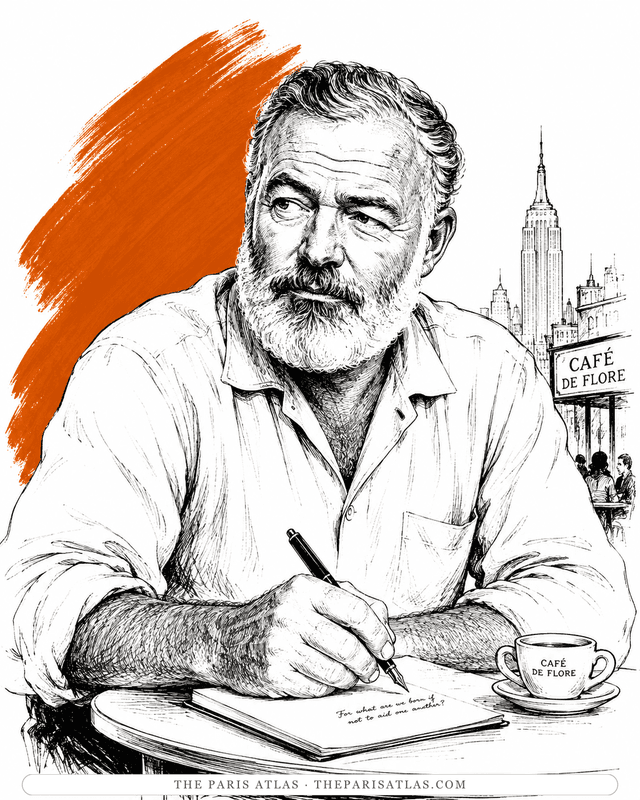
Ernest Hemingway
Ford published Hemingway's earliest Paris work and let him subedit the transatlantic review; Hemingway put him in The Sun Also Rises as Braddocks and settled accounts again in A Moveable Feast.
View author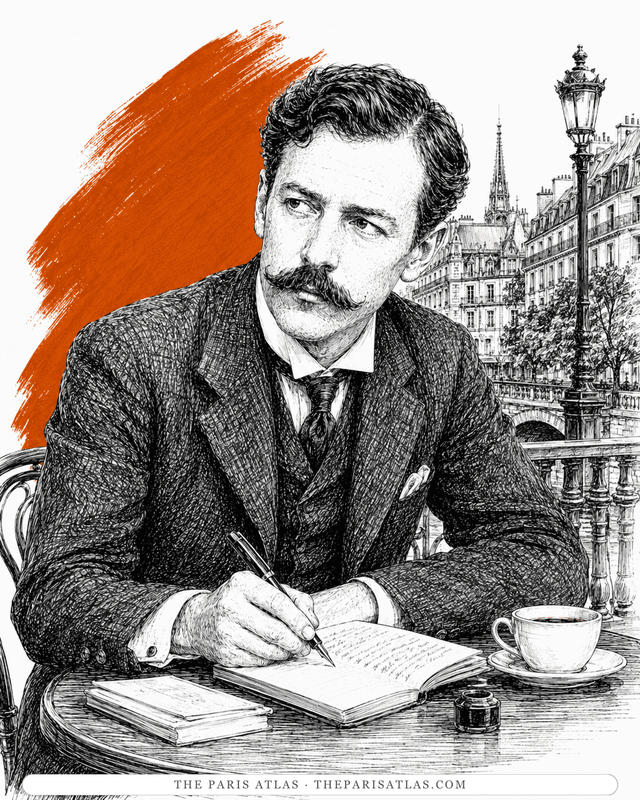
Sisley Huddleston
Fellow witness and friend — Huddleston's memoir catches Ford live: the studio parties, the bal musette, Conrad reminiscences on the Closerie terrace.
View author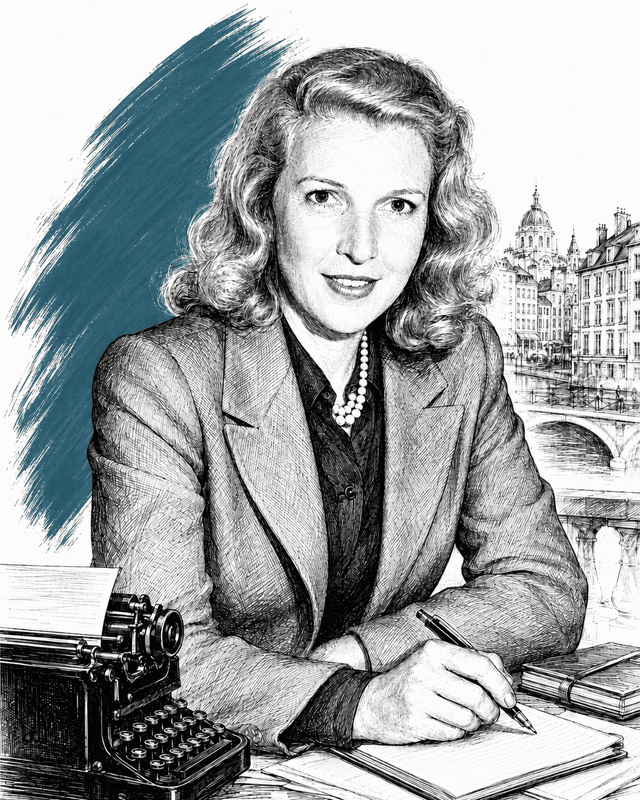
Martha Gellhorn
War correspondent who covered the Spanish Civil War, D-Day, and conflicts across five more decades; Hemingway's third wife, 1940–1945.
View author