Baisemeaux de Montlezun
Governor of the Bastille, in Aramis's debt and Aramis's power, who twice hands over the wrong prisoner.
To keep his post, his supper and his books in order, and to be told by someone in authority that he has done nothing wrong.
The book
The Man in the Iron Mask
Alexandre Dumas
At a glance
- Governor of the Bastille
- The Bertaudière tower and the governor's supper table
Who they are in the book
Spoiler-freeBaisemeaux runs the Bastille as a business, worries about his accounts, and owes Aramis money and gratitude. Once he learns that the bishop is a confessor of the Jesuits he stops being a friend and becomes a subordinate. He is the instrument of the plot and the last person to understand it.
How Baisemeaux de Montlezun Is Portrayed
- At your orders, monseigneurIn Chapter I he lights the lantern himself, summons a turnkey, and tells Aramis he is at his orders. The text says he now feels himself an inferior.
- Seldon, MarchialiIn Chapter VIII he reads a release order for Seldon and is talked into believing it says Marchiali. He asks to keep the order, because if it is found it will prove he is lost and Aramis will have to save him.
- Less like the king than you saidIn Chapter XVII, locking the true king into Philippe's cell, he tells Aramis that the resemblance is striking but less than promised, and says he would never have been deceived by a substitution.
- His few remaining hairsIn Chapter XXIII he watches Marchiali walk out a second time on Fouquet's authority, with the king's own signature under the order, tears out most of the hair he has left, and strikes himself on the forehead.
If you like The Man in the Iron Mask


If you like Alexandre Dumas
Explore authors with a similar voice, perspective, and influence.
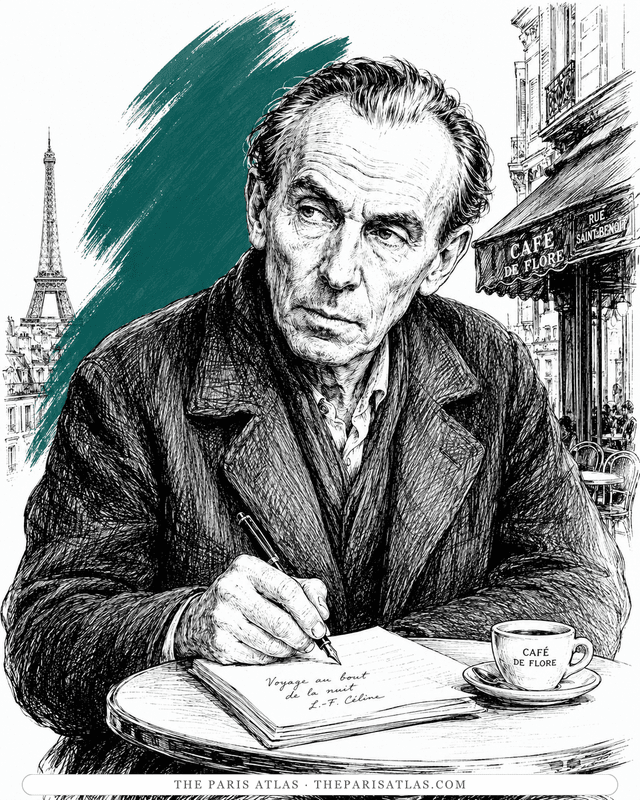
Louis-Ferdinand Céline
The doctor of the Paris slums who wrote the century's blackest, funniest novel — and changed the sound of French prose.
View author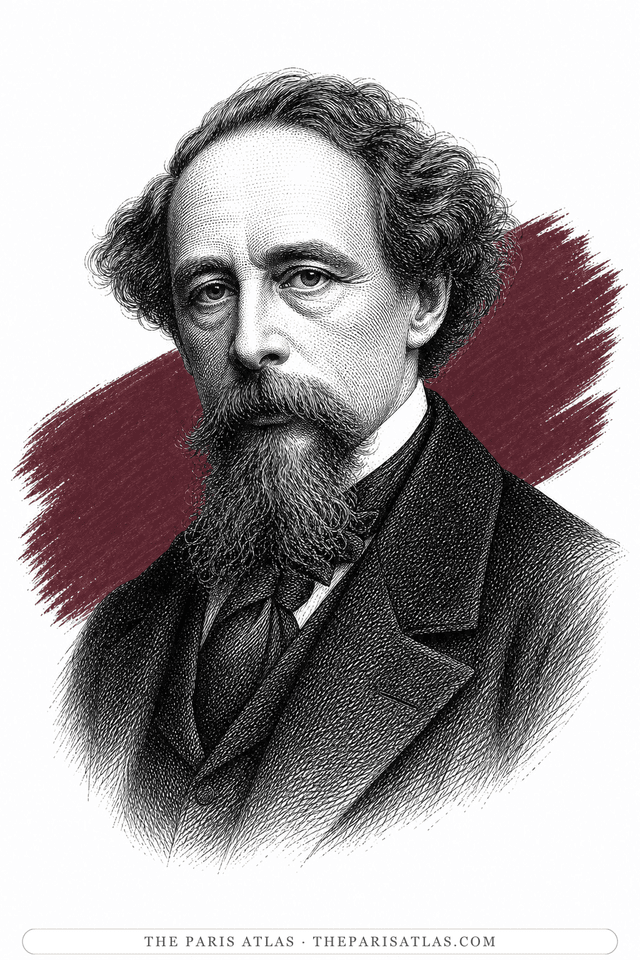
Charles Dickens
The most popular English novelist of the nineteenth century, who was never a Paris resident in the ordinary sense but kept coming back for twenty-five years: one winter in a rented mansion on the rue de Courcelles, a second winter on the Champs-Élysées writing Little Dorrit, repeated compulsive visits to the Paris Morgue — the riverside building where the city displayed its unidentified dead to the public — and a novel of the French Revolution, A Tale of Two Cities, that has shaped how English readers picture Paris ever since.
View author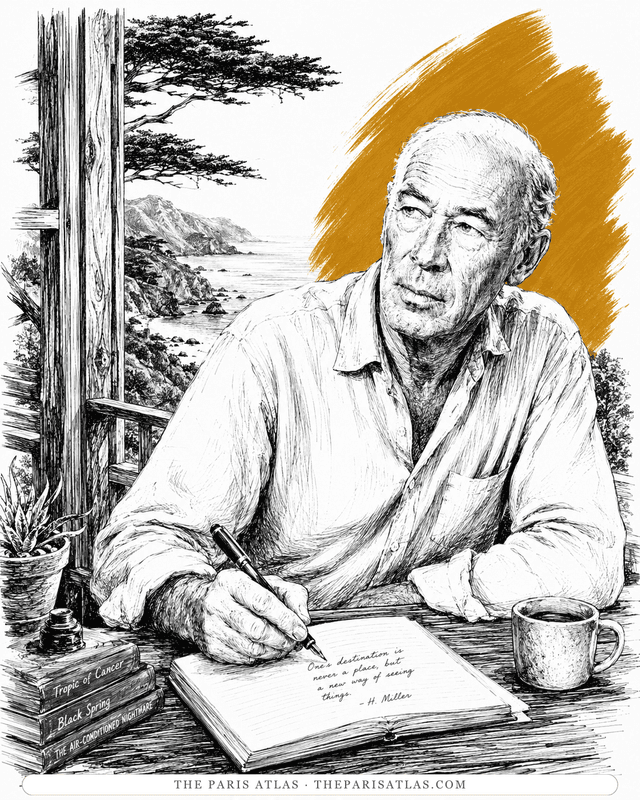
Henry Miller
The Brooklyn dropout who arrived in Paris broke at thirty-eight and wrote the exuberant, banned books that ended American censorship.
View author