Louis XIV
The king, twenty-three, who spends a night in the Bastille as a madman called Marchiali and comes out determined that no one will ever be his equal again.
To be master in his own house, with no king his equal in the kingdom, and to be obeyed by men who love him for it.
The book
The Man in the Iron Mask
Alexandre Dumas
At a glance
- King of France, aged twenty-three in 1661
- Anne of Austria, who hid his twin
- Marchiali, for one night in the Bertaudière
- Louis XIV · 1638–1715 · Saint-Germain-en-Laye
Who they are in the book
Spoiler-freeLouis XIV is twenty-three in 1661 and has just begun to govern without a first minister. He is in love with Louise de La Vallière, enraged by a letter Fouquet once wrote her, and half persuaded by Colbert that Fouquet has stolen thirteen million francs. Aramis takes him out of his bed at Vaux and puts him in his brother's cell for a night.
He is a real king in a novel about invented friends, and Dumas gives him the book's hardest speech. Restored to the throne, he tells d'Artagnan in Chapter LIII that the Fronde has emancipated the monarchy, that he is the head and the limbs obey, and that d'Artagnan may bow or go into exile. It is the voice of the reign that would last another fifty-four years.
How Louis XIV Is Portrayed
- Thirteen millionsIn Chapter XIV Colbert hands him Mazarin's letter about the thirteen million francs and reminds him that his own party at Fontainebleau cost three. The king says he will make up his mind by morning, and goes to bed.
- The sinking bedIn Chapter XVII he falls asleep under a painted Morpheus, sees a face like his own looking down through the dome, and feels the bed descend into darkness. Told he is mad, he enters the Bastille cell limp and haggard, the text says, as a rain-struck lily.
- Seen and approvedIn Chapter XXIII, freed by Fouquet, he refuses ever to pardon Aramis and Porthos, then signs the release order for the prisoner Marchiali, his own name, with the words seen and approved. He says he will change at the Louvre before facing the court.
- Which of us is palerIn Chapter XXIV he tears the curtains open to flood the room with light, asks his mother whether she recognises her son, and shouts for d'Artagnan to look at the two of them and say which is paler. Then he writes the order for the iron visor.
- I am the headIn Chapter LIII he tells d'Artagnan that the Fronde emancipated the monarchy, that God gave genius to the head and the limbs obey, and that d'Artagnan may bow or choose exile. He then lays his white hand on the captain's grey head and promises him a marshal's baton abroad.
- Do I not sleep at homeIn the Epilogue, four years later, the queen complains that he neglects her and he answers that he sleeps at home every night. He rides beside Madame de Montespan, and Louise de La Vallière follows in the second carriage.
Louis XIV quotes
It is to the head he has given genius, and the head, you know, the rest obey. I am the head.
He wins. Fouquet goes to Pignerol, Belle-Île falls, Porthos dies, Aramis flees, and d'Artagnan takes back his resignation. In the Epilogue he has moved from Louise de La Vallière to Madame de Montespan and sends d'Artagnan his marshal's baton at Maastricht, by Colbert's hand, in the box a cannonball breaks.
If you like The Man in the Iron Mask


If you like Alexandre Dumas
Explore authors with a similar voice, perspective, and influence.
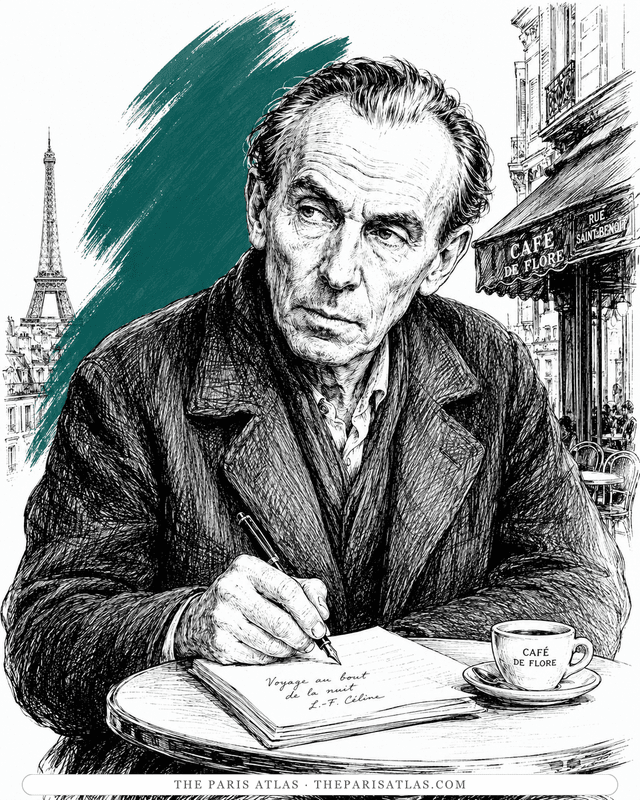
Louis-Ferdinand Céline
The doctor of the Paris slums who wrote the century's blackest, funniest novel — and changed the sound of French prose.
View author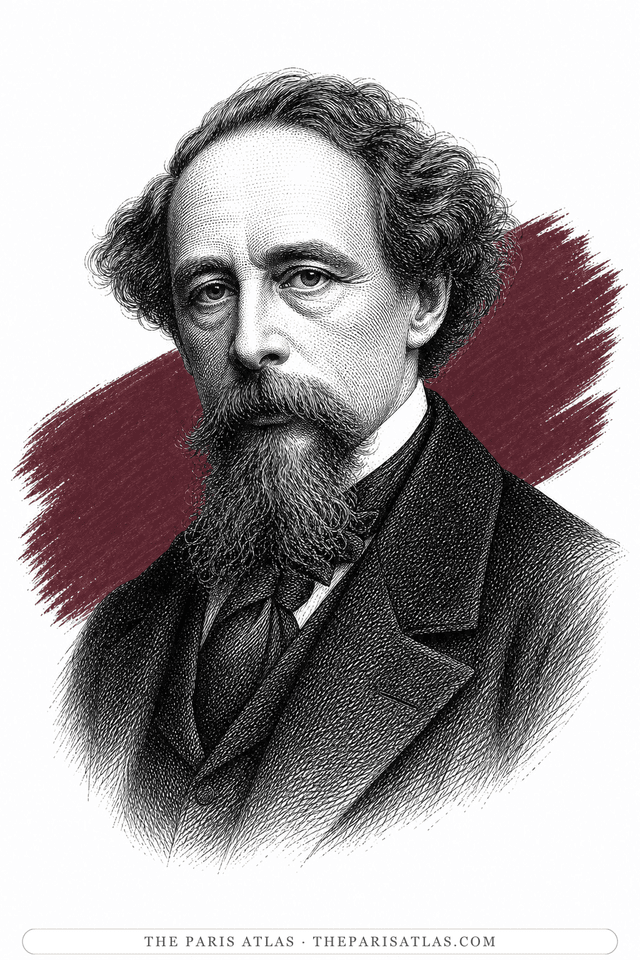
Charles Dickens
The most popular English novelist of the nineteenth century, who was never a Paris resident in the ordinary sense but kept coming back for twenty-five years: one winter in a rented mansion on the rue de Courcelles, a second winter on the Champs-Élysées writing Little Dorrit, repeated compulsive visits to the Paris Morgue — the riverside building where the city displayed its unidentified dead to the public — and a novel of the French Revolution, A Tale of Two Cities, that has shaped how English readers picture Paris ever since.
View author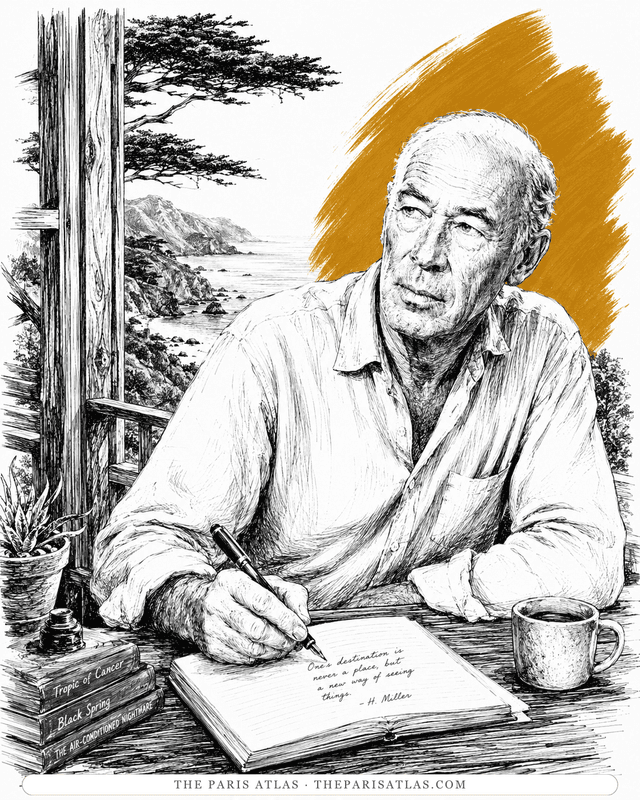
Henry Miller
The Brooklyn dropout who arrived in Paris broke at thirty-eight and wrote the exuberant, banned books that ended American censorship.
View author