Nicolas Fouquet
Superintendent of finances and master of Vaux-le-Vicomte, who saves the king that is ruining him and is arrested after a chase along the Loire.
To be the king's honest servant and to be seen as one, which is why he cannot accept a throne bought with a crime against his guest.
The book
The Man in the Iron Mask
Alexandre Dumas
At a glance
- Superintendent of finances; vicomte de Vaux; lord of Belle-Île
- Vaux-le-Vicomte; Belle-Île-en-Mer, which he gives to the king and then takes back
- Aramis, Gourville, Molière, La Fontaine, the painter Le Brun
- Nicolas Fouquet, vicomte de Vaux et marquis de Belle-Isle · 1615–1680 · Paris
Who they are in the book
Spoiler-freeNicolas Fouquet is the king's superintendent of finances, patron of Molière and La Fontaine, and builder of the château of Vaux-le-Vicomte, whose party for the king is the setting of the first half of this book. He is in debt, ill, and under attack from Colbert, and he does not know that his friend Aramis is planning to replace the king he is entertaining.
Told the truth, he chooses the king over the plot, and the book treats that choice as the finest thing anyone does in it. The real Fouquet gave his party on 17 August 1661 and was arrested by d'Artagnan at Nantes on 5 September. He died in the fortress of Pignerol in 1680, after a sentence of banishment that Louis XIV changed to prison for life.
How Nicolas Fouquet Is Portrayed
- The hostIn Chapter XV he gives the king a promenade, a banquet and a comedy, Les Fâcheux, in which Porthos recognises the man he calls Coquelin de Volière. At cards the king wins a thousand pistoles and Fouquet loses ten thousand.
- The regretIn Chapter XIX, kept in his own bedroom all night by d'Artagnan, he tells the captain he is the wittiest and most courteous man he has ever met, and that his one regret will be having met him so late.
- Belle-Île is impregnableIn Chapter XXIII he frees the king from the Bastille, admits he has given Aramis four hours' start and his best horses, and tells Louis that neither his musketeers nor his whole army could take Belle-Île. The king turns livid.
- My guestIn Chapter XXIV, kneeling before the arrested Philippe, he explains that the man who has just left was his guest, and that no one will touch a hair of Aramis's head while he lives and is free.
- Too late at NantesIn Chapter XXXVIII, feverish in bed, he misses d'Artagnan's hints until the captain has gone, then rings for horses and his boat. Gourville tells him the king has arrived eight hours early, and the cannon fires from the ramparts.
- Water in a hatIn Chapter XL, after the chase in which both horses die, he throws his pistols into the river, gives d'Artagnan his arm, and bathes the fainting captain's temples with water from his hat. D'Artagnan calls him the true king. Fouquet says his one error was not having him for a friend.
Nicolas Fouquet quotes
I arrest you in the king's name! blow my brains out, if you like; we have both done our duty.
Arrested at the end of Chapter XL, he is carried to Angers and then to the Bastille in a carriage with gratings on the windows to stop him throwing out letters. The Epilogue reports that the court banished him and the king commuted the sentence to prison at Pignerol, where d'Artagnan visits him and finds him unable to understand how imprisonment can be called a favour. Larousse confirms the sentence of December 1664 and his death at Pignerol in 1680.
If you like The Man in the Iron Mask


If you like Alexandre Dumas
Explore authors with a similar voice, perspective, and influence.
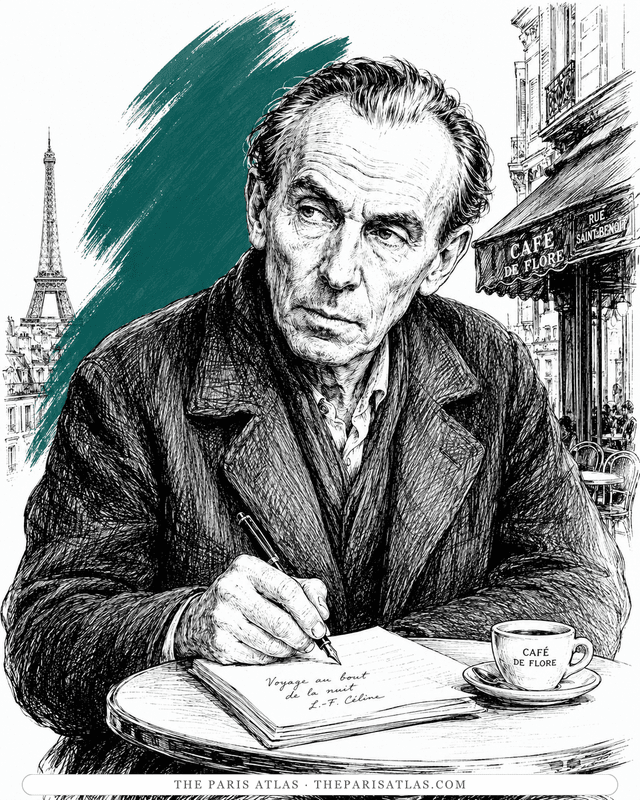
Louis-Ferdinand Céline
The doctor of the Paris slums who wrote the century's blackest, funniest novel — and changed the sound of French prose.
View author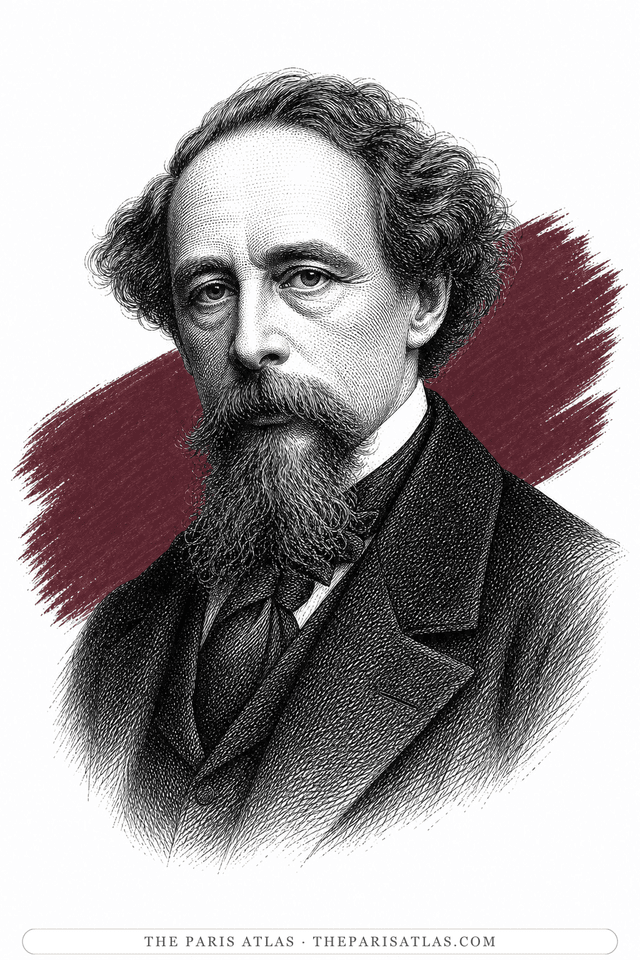
Charles Dickens
The most popular English novelist of the nineteenth century, who was never a Paris resident in the ordinary sense but kept coming back for twenty-five years: one winter in a rented mansion on the rue de Courcelles, a second winter on the Champs-Élysées writing Little Dorrit, repeated compulsive visits to the Paris Morgue — the riverside building where the city displayed its unidentified dead to the public — and a novel of the French Revolution, A Tale of Two Cities, that has shaped how English readers picture Paris ever since.
View author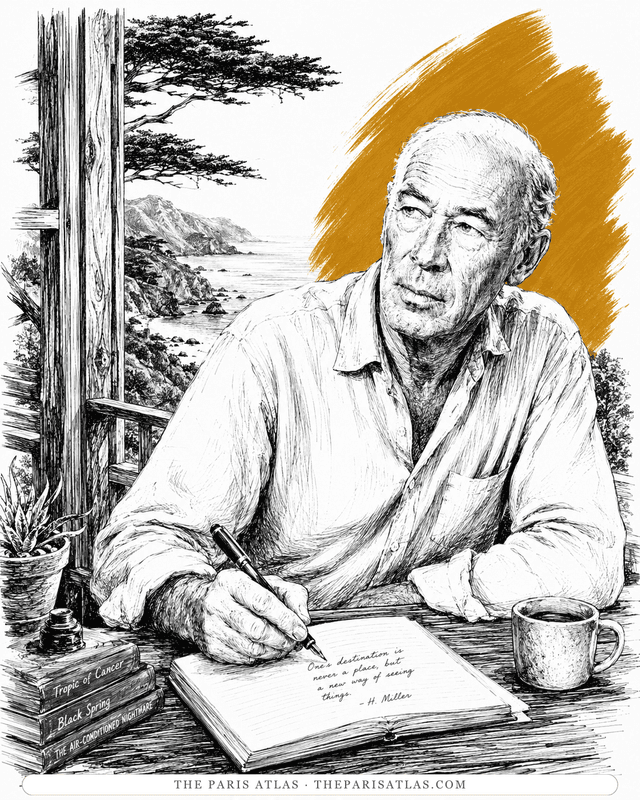
Henry Miller
The Brooklyn dropout who arrived in Paris broke at thirty-eight and wrote the exuberant, banned books that ended American censorship.
View author