Porthos
Baron du Vallon, the strongest of the four, who follows Aramis into treason believing he is serving the king, and dies holding up a mountain.
To be made a duke, and to be told what to do by a friend he trusts.
The book
The Man in the Iron Mask
Alexandre Dumas
At a glance
- Baron du Vallon de Bracieux de Pierrefonds
- Pierrefonds, Bracieux, du Vallon; fifty farms in Touraine, three mills on the Cher, per his will
- Mousqueton, called Mouston, who inherits his forty-seven suits
Who they are in the book
Spoiler-freePorthos is the Baron du Vallon de Bracieux de Pierrefonds, rich, enormous, and happy. He has come to Paris to be dressed for the king's visit to Vaux and is thrown into despair because his intendant Mouston has grown fat and can no longer serve as his dressmaker's dummy. Aramis borrows him for the plot with a story about serving the king, and Porthos believes it because Aramis said it.
What he wants is a dukedom and the respect of his friends, in that order, and the book gives him the first as a lie and the second in full. His death in the sea cave at Locmaria is the longest and most physical scene Dumas ever wrote. The will read in Chapter LV, with its twenty named horses and six thousand unopened books, is the book's one comic chapter after the deaths begin.
How Porthos Is Portrayed
- Among the garmentsIn Chapter II d'Artagnan finds him half-dressed on his bed with coats strewn across the floor, miserable because Mouston has become too fat to stand in for him at the tailor's. He brightens the moment d'Artagnan appears, because now he will get hold of an idea.
- Measured by MolièreIn Chapters III to V, at Percerin's in the Rue Saint-Honoré, a young playwright takes his measure without touching him, by watching him pose. The chapter title says this is where Molière got the idea for a scene; Porthos calls the man Coquelin de Volière.
- The musket in the carriageIn Chapter XVII he rides back to the Bastille masked, keeping a musket levelled at the breast of the true king, and says that a man feels light when he has faithfully served his king and saved his country.
- A duke by brevetIn Chapter XXVI he tells Raoul in a whisper loud enough for the whole room that the king has made him a duke. Athos hears it and looks at Aramis. Riding away, Porthos asks if he was not born lucky.
- The family weaknessIn Chapter XLV he explains to Aramis that his grandfather Antoine and his father Gaspard both felt their legs give way shortly before dying, one by a boar and one on a stair. He has felt it himself, and he is making his will.
- Too heavyIn Chapter L he lifts a barrel of powder in one hand, throws it among the soldiers, and is caught under the collapsing roof of the cave. He holds up the rock with his arms and shoulders long enough to say two words, and dies with it still on him.
Porthos quotes
Athos—Porthos, farewell till we meet again! Aramis, adieu forever!
He dies in Chapter L in the grotto of Locmaria on Belle-Île, crushed by the rock fall his own barrel of powder brings down, after killing the king's soldiers with a fifty-pound iron bar. His will, read at Pierrefonds in Chapter LV, leaves everything to Raoul de Bragelonne, a pension to Aramis in exile, and Mousqueton himself to Raoul on condition that he die happy. Raoul is already dead when it is read, though the household does not yet know.
If you like The Man in the Iron Mask


If you like Alexandre Dumas
Explore authors with a similar voice, perspective, and influence.
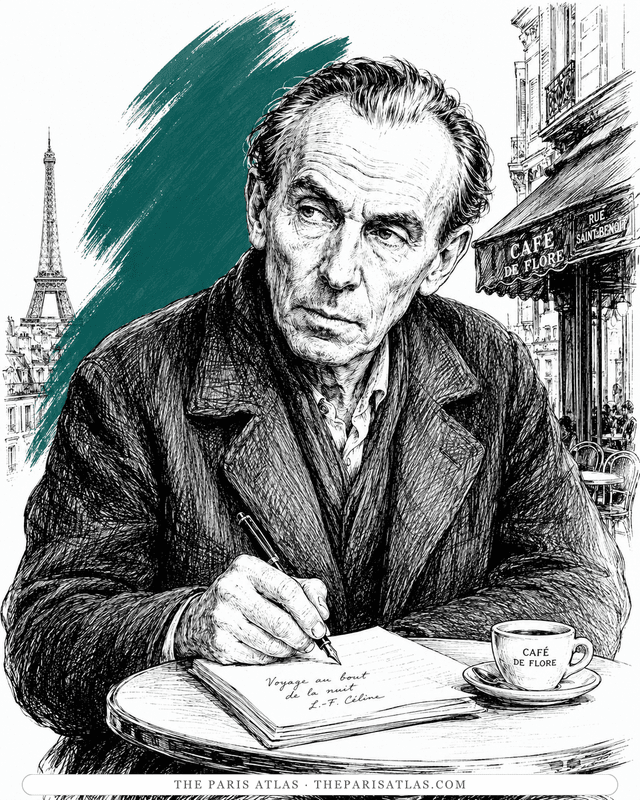
Louis-Ferdinand Céline
The doctor of the Paris slums who wrote the century's blackest, funniest novel — and changed the sound of French prose.
View author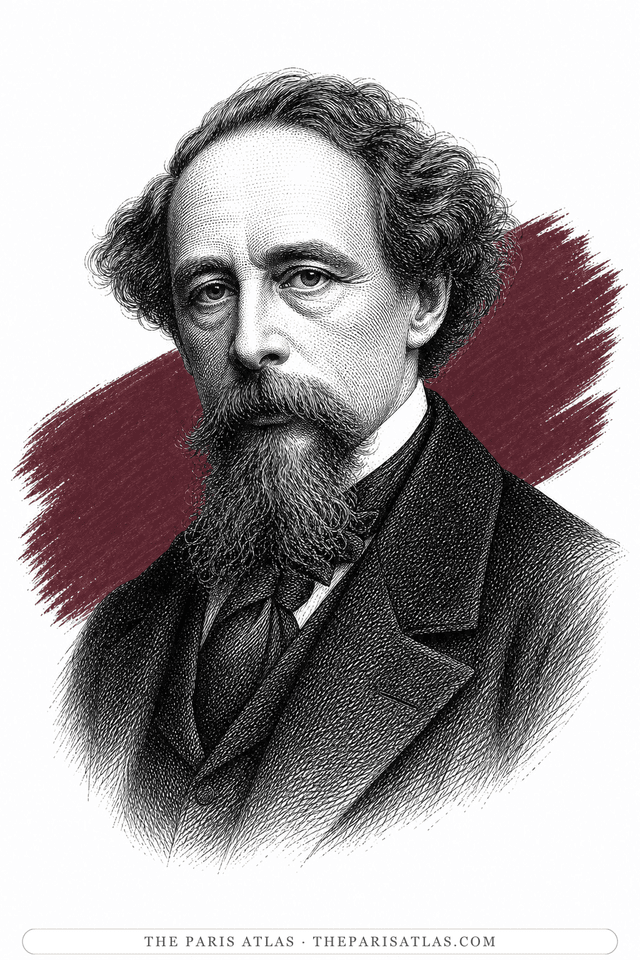
Charles Dickens
The most popular English novelist of the nineteenth century, who was never a Paris resident in the ordinary sense but kept coming back for twenty-five years: one winter in a rented mansion on the rue de Courcelles, a second winter on the Champs-Élysées writing Little Dorrit, repeated compulsive visits to the Paris Morgue — the riverside building where the city displayed its unidentified dead to the public — and a novel of the French Revolution, A Tale of Two Cities, that has shaped how English readers picture Paris ever since.
View author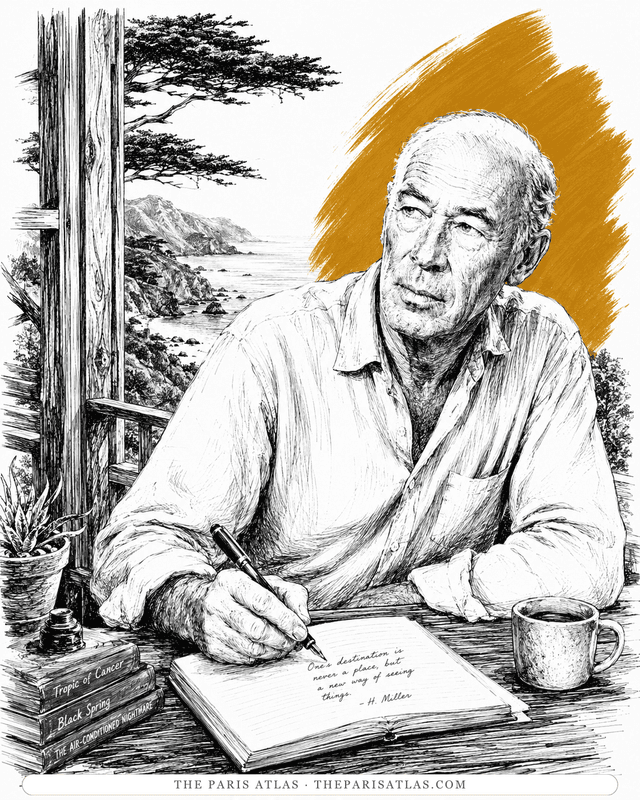
Henry Miller
The Brooklyn dropout who arrived in Paris broke at thirty-eight and wrote the exuberant, banned books that ended American censorship.
View author