Raoul de Bragelonne
Athos's son, who gives the novel its French title and goes to Africa to die after the king takes Louise de La Vallière.
To tell Louise once more that he loves her, and then to stop existing, which is what the sentence he writes on his tablets says.
The book
The Man in the Iron Mask
Alexandre Dumas
At a glance
- Vicomte de Bragelonne; Athos's son
- Raoul Auguste Jules de Bragelonne
- Blois, Sainte-Marguerite, Toulon, the siege of Gigelli in North Africa
Who they are in the book
Spoiler-freeRaoul, Vicomte de Bragelonne, is the young officer whose name is on the whole novel. By this last section he has lost Louise de La Vallière to the king, refused to accept anything from the crown, and decided, without saying so, that he does not want to live. He takes a commission with the Duc de Beaufort for the expedition against Gigelli in North Africa.
He is the character the book treats most gently and least dramatically. His last letter to Louise, written on Sainte-Marguerite and cut down to a single sentence at d'Artagnan's suggestion, is the plainest statement of what he wants, and the report of his death is deliberately ambiguous about whether he chose it.
How Raoul de Bragelonne Is Portrayed
- The same thoughtIn Chapter XXVI, when Athos says he has seen Aramis and Porthos for the last time, Raoul answers that he has had the same thought and will never see them again. Athos tells him he speaks like a man made sad by a different cause.
- Picking up the plateIn Chapter XXXI it is Raoul who runs after the silver plate on the dry sand of Sainte-Marguerite and tries to read the words scratched on it. When a musket fires from the wall he forces his own head down and his father's with it.
- One sentence on a tabletIn Chapter XXXII d'Artagnan tells him his farewell letter to Louise says everything except the love that is still consuming him. Raoul tears it up and writes instead that to tell her once more he loves her he commits the baseness of writing, and to punish that baseness he dies.
- Refusing d'Artagnan's musketsIn Chapter XXXIII d'Artagnan offers to ask the king for a hundred good muskets and come to Africa with him. Raoul thanks him with emotion and refuses, because the offer would give them more than they wish.
- The errand he was refusedIn Chapter LIX Beaufort's secretary reports that Raoul volunteered to carry an order to the frigates and was refused; the sergeant sent instead was shot dead on the beach. Raoul smiled at the duke, who said he had saved his life.
- Eight woundsIn the same report a surgeon counts eight wounds, three of them mortal, and says he may live if he does not move a finger. That evening he is found on the floor at the foot of his bed, holding a lock of fair hair against his heart.
He is killed at Gigelli in Chapter LIX. The report says three of eight wounds were mortal and that he might have lived if he had not moved; he is found on the floor, having fallen or thrown himself from the bed. D'Artagnan reads it and calls it suicide. Beaufort has the body embalmed and sent to Blois, where it lies in a second coffin beside his father's. Porthos's will, unknown to him, had left him everything.
If you like The Man in the Iron Mask


If you like Alexandre Dumas
Explore authors with a similar voice, perspective, and influence.
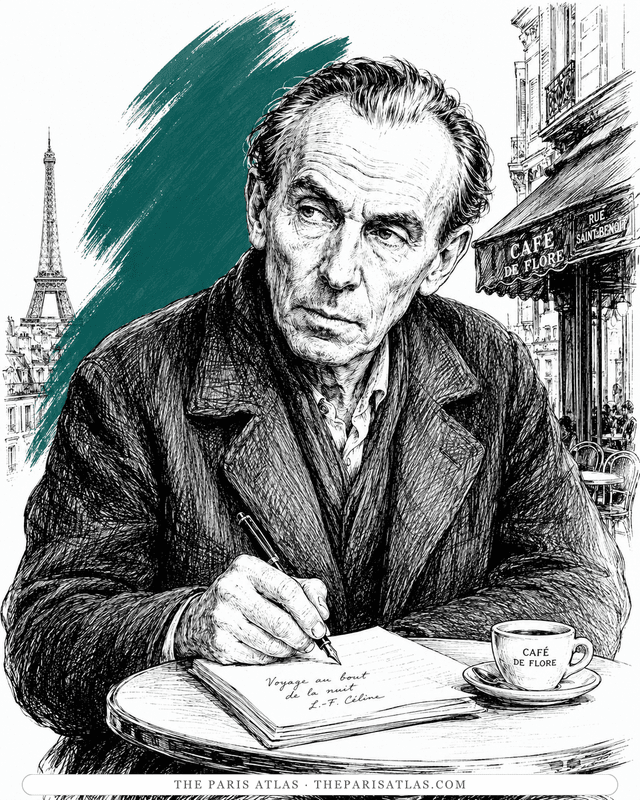
Louis-Ferdinand Céline
The doctor of the Paris slums who wrote the century's blackest, funniest novel — and changed the sound of French prose.
View author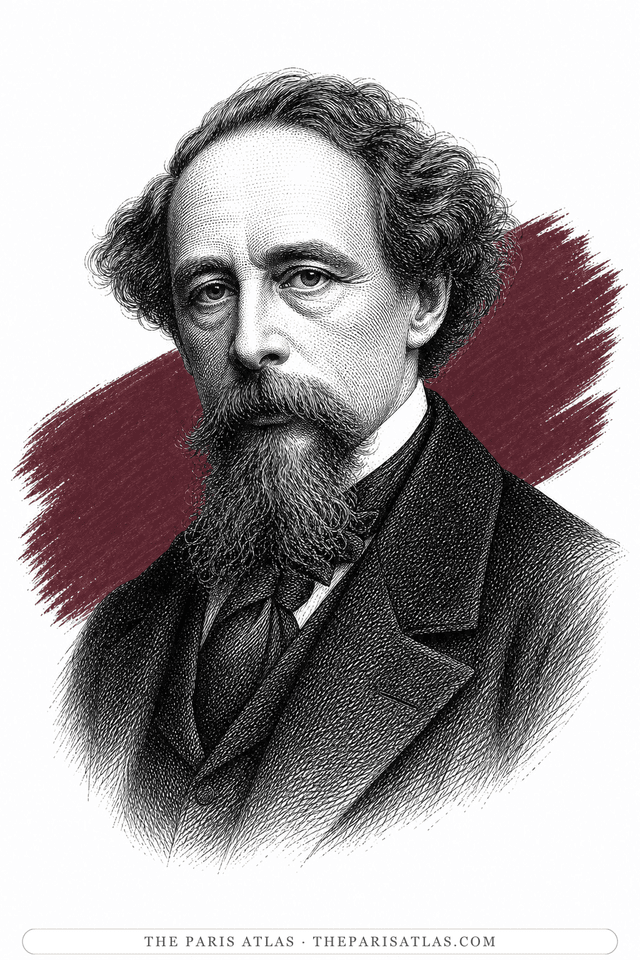
Charles Dickens
The most popular English novelist of the nineteenth century, who was never a Paris resident in the ordinary sense but kept coming back for twenty-five years: one winter in a rented mansion on the rue de Courcelles, a second winter on the Champs-Élysées writing Little Dorrit, repeated compulsive visits to the Paris Morgue — the riverside building where the city displayed its unidentified dead to the public — and a novel of the French Revolution, A Tale of Two Cities, that has shaped how English readers picture Paris ever since.
View author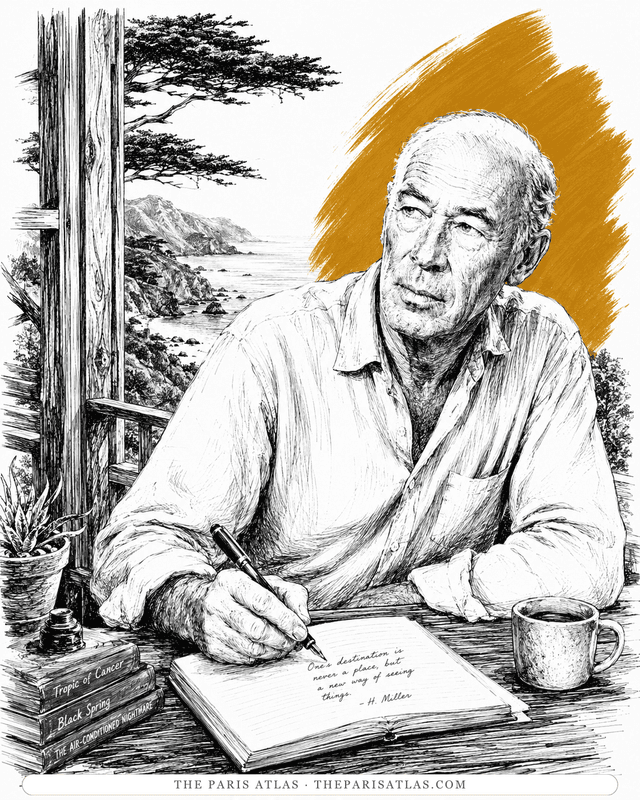
Henry Miller
The Brooklyn dropout who arrived in Paris broke at thirty-eight and wrote the exuberant, banned books that ended American censorship.
View author