Louise de La Vallière
Raoul's former fiancée and the king's mistress, who comes to the double grave at Blois and is riding alone behind the king by the Epilogue.
To love the king without remorse, which she tells d'Artagnan in Chapter LX she can no longer do.
The book
The Man in the Iron Mask
Alexandre Dumas
At a glance
- Maid of honour to Madame; the king's mistress
- Louise de La Vallière, mistress of Louis XIV, later a Carmelite nun
- Louise de La Baume Le Blanc, duchesse de La Vallière · 1644–1710 · Tours
Who they are in the book
Spoiler-freeLouise de La Vallière was engaged to Raoul de Bragelonne and is now loved by the king. In this section she is mostly absent and always present. A letter Fouquet once wrote her starts the king's fury, and Raoul's last letter is addressed to her. She is the one visitor at the grave of the two men her choice killed.
How Louise de La Vallière Is Portrayed
- The letter that starts itIn Chapter XVII the king's rage at reading Fouquet's old love letter to her is what sends him to bed exhausted and asleep under the painted dome, where Aramis is waiting.
- The sentence on the tabletIn Chapter XXXII Raoul's final message to her, to be delivered on the day a date can be placed under it, says that he writes to tell her once more he loves her and dies to punish himself for it.
- A religionIn Chapter LX she kneels at the grave of Athos and Raoul and tells d'Artagnan that such love is a religion and that she will be punished for it. She strews flowers on the fresh earth before Saint-Aignan fetches her back to the jealous king.
- The second carriageIn the Epilogue she rides alone with two dull women in the second carriage while the king rides beside Madame de Montespan. Aramis points out how her eyes follow the king.
If you like The Man in the Iron Mask


If you like Alexandre Dumas
Explore authors with a similar voice, perspective, and influence.
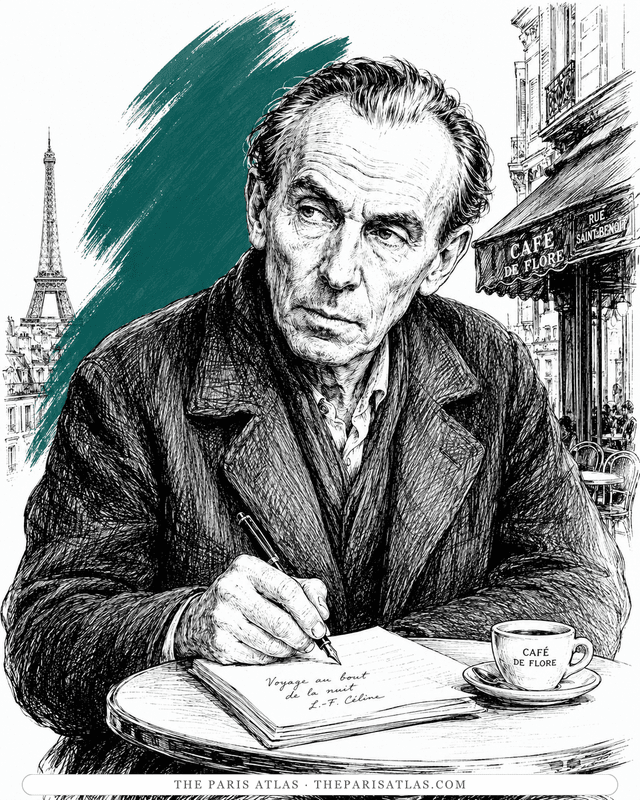
Louis-Ferdinand Céline
The doctor of the Paris slums who wrote the century's blackest, funniest novel — and changed the sound of French prose.
View author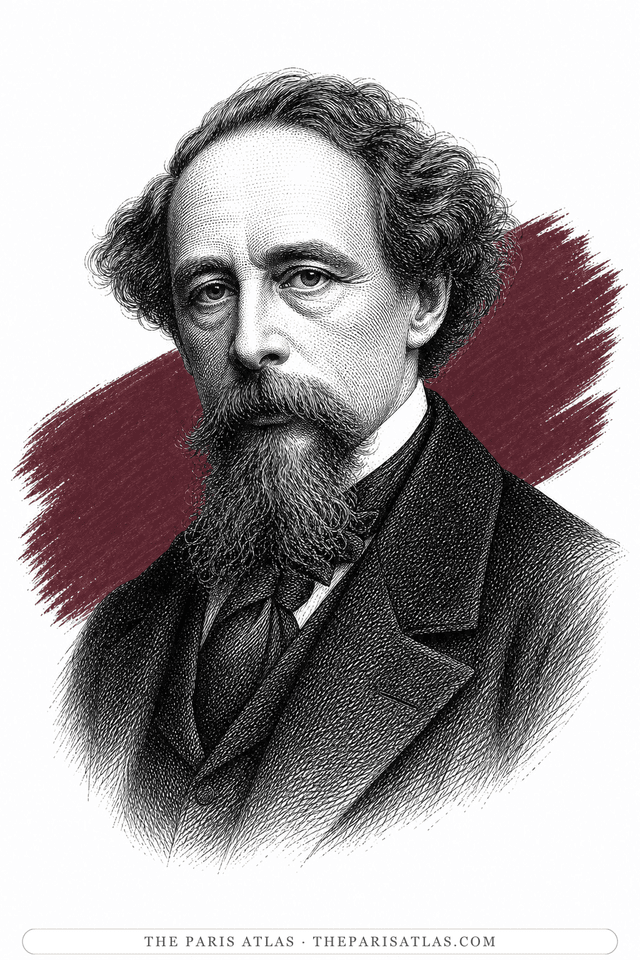
Charles Dickens
The most popular English novelist of the nineteenth century, who was never a Paris resident in the ordinary sense but kept coming back for twenty-five years: one winter in a rented mansion on the rue de Courcelles, a second winter on the Champs-Élysées writing Little Dorrit, repeated compulsive visits to the Paris Morgue — the riverside building where the city displayed its unidentified dead to the public — and a novel of the French Revolution, A Tale of Two Cities, that has shaped how English readers picture Paris ever since.
View author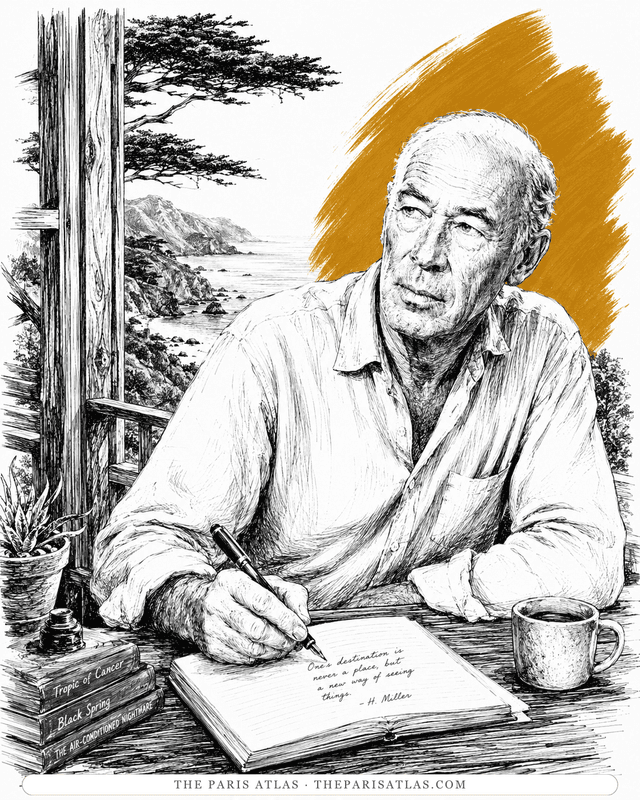
Henry Miller
The Brooklyn dropout who arrived in Paris broke at thirty-eight and wrote the exuberant, banned books that ended American censorship.
View author