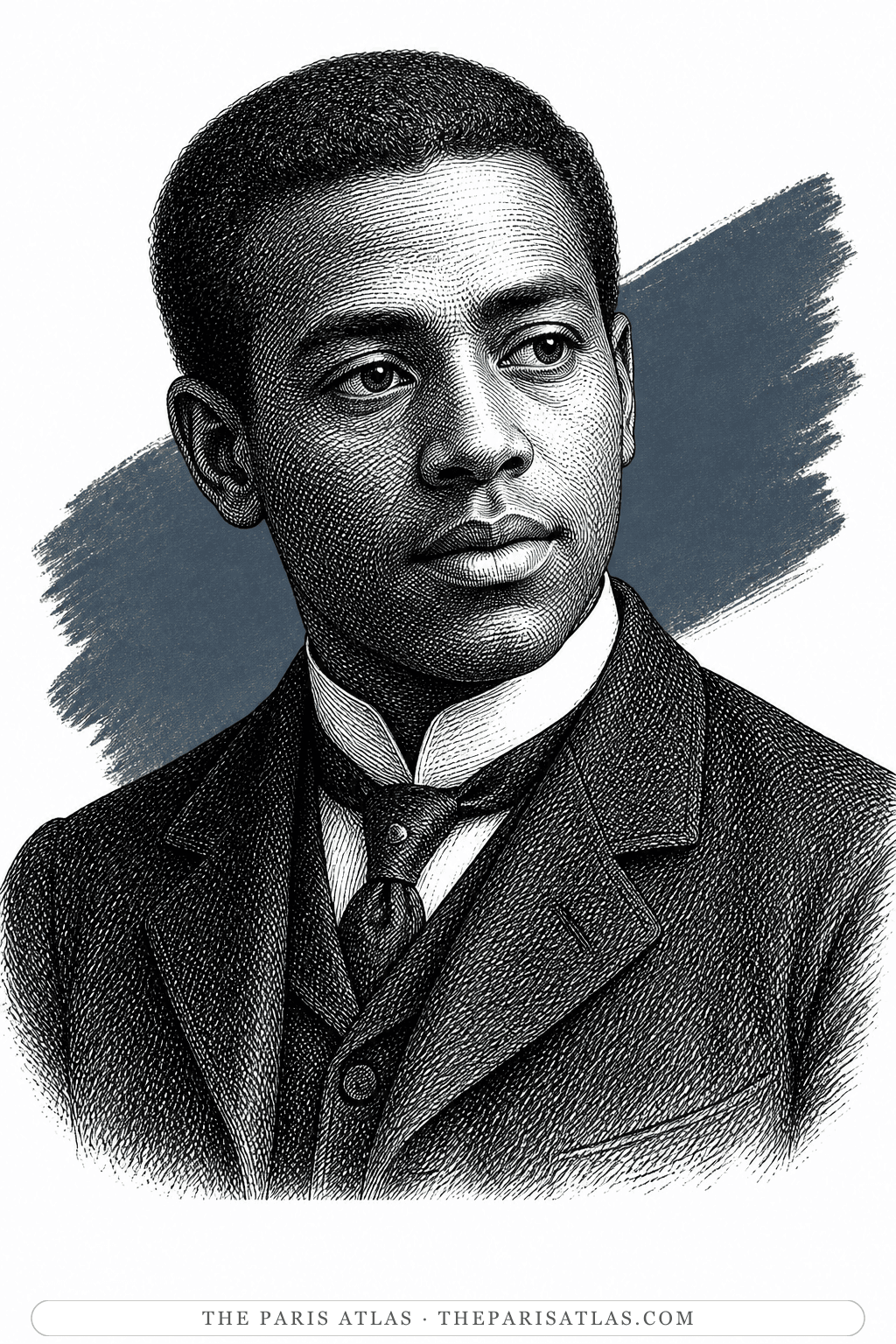
Jefferson Campbell
The young doctor in the middle story — good, hard-working, sure of how people should live, and completely unable to say what he feels without thinking it through first.
To be honest out loud, even when it costs both of them. He tells Melanctha repeatedly that he is slow-minded, that he only knows how to think and not how to feel, and that he cannot say a thing to her until he is sure he means it.
The book

At a glance
- Doctor in Bridgepoint; the man Melanctha Herbert is with for the middle of the story
- Only child of a butler and a small, gentle mother; his grandparents worked for the same family as free people
- A college for Black students, then medicine; two or three years in practice when the story starts
- Constantly. He carries a book to every bedside vigil, and the one night he forgets it is the night the story turns
- 'Miss Melanctha' for months, and then simply Melanctha
Who they are in the book
Spoiler-freeJefferson Campbell is the young doctor in Melanctha, and for most of the story's length he shares it with her. He is Black, in his twenties, two or three years into practice, the only child of a butler who served one family for years and of a mother who worshipped him. The book presents him as almost oppressively good: cheerful, liked by everyone, hard-working, and firmly of the view that people should live regular lives, save money, stay with their families and stop chasing excitement. He says so at length, to anyone.
He meets Melanctha Herbert while attending her dying mother, decides she is worth nothing, changes his mind over two long nights sitting on her staircase, and then spends the rest of the story trying to work out what she means by what she says. The argument between them is the longest thing in the book, and Stein gives it to him almost entirely as speech.
How Jefferson Campbell Is Portrayed
- What he thinks people should doHe wants Black people in his town to work hard, save, live quietly with their families and stop looking for new ways to get excited, and he will explain it for a page at a time. Melanctha's answer is that he does not live that way himself and knows it.
- Thinking instead of feelingHis habit when stuck is to rub his head hard, frown, and start talking. Melanctha asks whether he ever stops thinking long enough to have any feeling at all. It becomes the standing charge against him, and he never quite answers it.
- The nights on the stairsTwo long vigils outside a dying woman's room, reading old newspapers by a smoking lamp, are where he first decides Melanctha has a good mind, and where, at the end of the second one, she leans over him, kisses him, and goes to bed without a word.
- What he is toldNursing Jane Harden through an illness, he lets her talk about Melanctha's past and does not stop her. It makes him physically sick. He stays away for three days, and then tells Melanctha exactly what he heard and exactly why he listened, because he cannot do otherwise.
- Honest to the point of crueltyHe talks his doubts about her out loud while staring into the fire, and only notices at the end that she has been shaking beside him the whole time. He apologises for hours. Then he does it again.
- What it costs himBy the end he can feel everything he could not feel at the beginning, and the book is blunt about what that gets him: he finally understands her, and by then she does not want him.
He ends it in writing, in a letter that says he now knows how to love her and that she will never be equal to him in feeling. It is the least attractive thing he does in the book. A spring morning some weeks later undoes him, and he writes again; she answers in one line and he comes. Nothing is repaired. He tells her he will not come especially to see her any more, that he will always be a friend if she needs one, and he leaves without looking back. He goes to work in another town, is very sad for a while, and keeps what she taught him. The story's last word on him is that what she showed him kept helping him afterwards, in his work and with the people he doctored.
If you like Three Lives


If you like Gertrude Stein
Explore authors with a similar voice, perspective, and influence.

Ernest Hemingway
Her most famous pupil — the tutorials at the rue de Fleurus, the godmother years, and the 'lost generation' epigraph all passed through her studio before the celebrated falling-out.
View author
Sherwood Anderson
Her loudest American champion — he wrote the introduction to her Geography and Plays, and it was his letter that first brought Hemingway to her door.
View author
Henry Miller
The Brooklyn dropout who arrived in Paris broke at thirty-eight and wrote the exuberant, banned books that ended American censorship.
View author