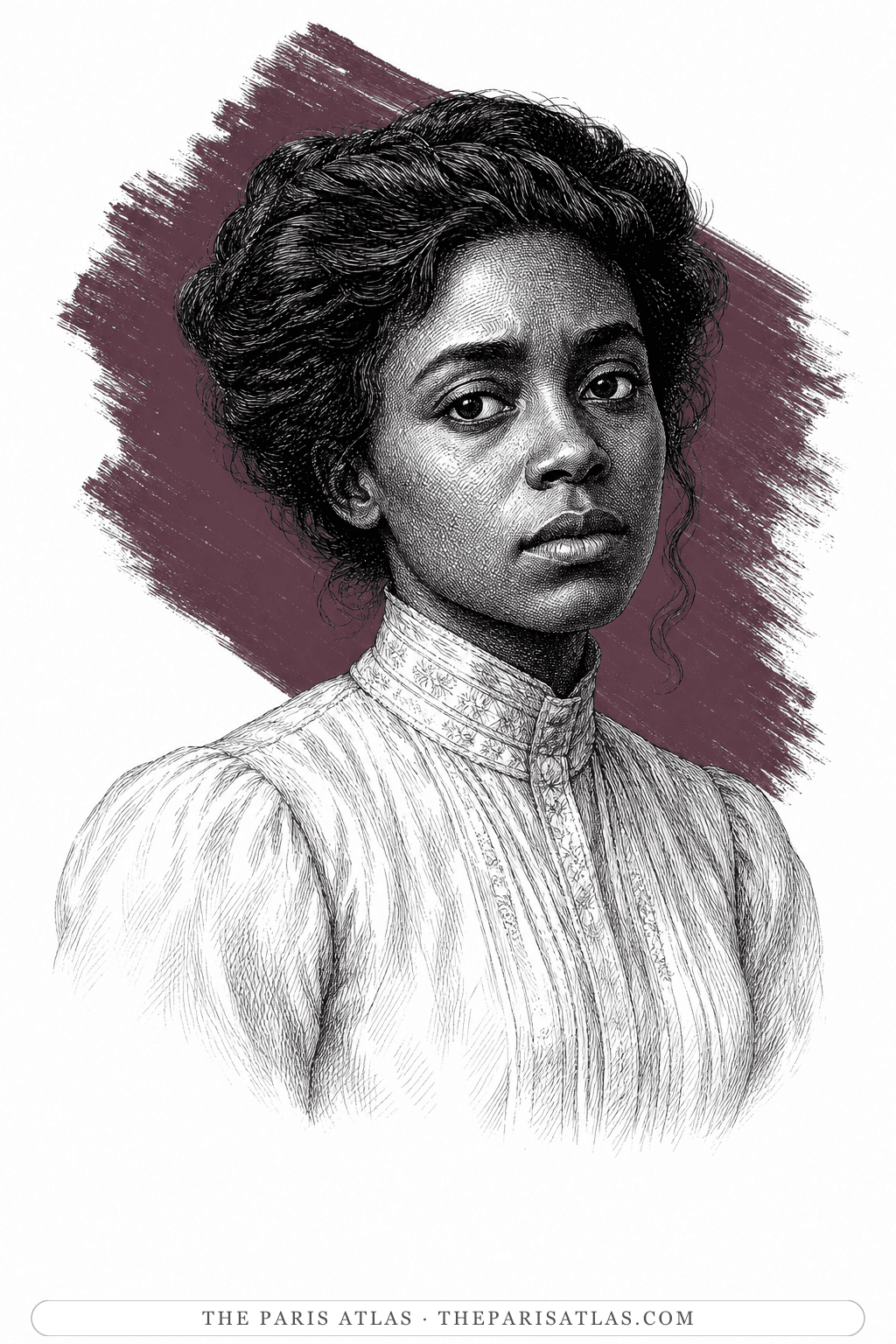
Melanctha Herbert
The young woman at the centre of the long middle story — reckless, admired, and looking for something the book never lets her put into words.
To understand something nobody has told her. The story puts it plainly: "Melanctha Herbert wanted very much to know and yet she feared the knowledge." It never lets her say what the knowledge is.
The book

At a glance
- A young Black woman in Bridgepoint; the subject of the long middle story
- Twelve at the first scene, sixteen when she meets Jane Harden, about eighteen when the main story begins
- A mother the neighbours called 'Mis' Herbert, and a father, James Herbert, who was in the house rarely
- Sewing, occasional substitute teaching at a school for Black children, and one rented room after another
- 'Sis' by the men at the yards and the docks; 'Miss Melanctha' by Jeff Campbell, for months, before he stops
- Married — the story says so on its second page and comes back to it at the end
Who they are in the book
Spoiler-freeMelanctha Herbert is the subject of Melanctha, the long middle story and the one Stein cared about most. She is a young Black woman in Bridgepoint, the Southern city where all three stories are set. Her mother was pale-skinned, religious and remote, and never liked her; her father came to the house rarely and was violent when he did. The story makes a great deal of both parents' colouring and of Melanctha's own, and returns to it constantly. What it says about her otherwise is that she was intelligent, graceful and attractive, and that she had, in its own repeated phrase, a break neck courage.
The story follows her from about twelve to the end of her life through a series of attachments that end the same way each time: she is left, or she leaves. The word it uses for what she does in between is wandering. Three people matter most: Jane Harden, who teaches her; Jefferson Campbell, a young doctor who loves her and cannot trust her; and Rose Johnson, a friend she waits on hand and foot for nothing. Stein wrote most of it in 1905 and 1906, some of it in Picasso's studio while he painted her portrait, and its long circling conversations are the writing in this book that other writers copied.
How Melanctha Herbert Is Portrayed
- The wanderingStein's word for what Melanctha does from about twelve onward: going out to the railroad yards, the shipping docks and half-built buildings, talking to the working men in daylight and to clerks and agents after dark, going almost far enough, and then getting away in time.
- The nerveAs a child she rides and breaks horses. Later she takes the dares workmen offer her on scaffolding, and one day falls from a high place and breaks her arm without making a sound. The men carry her home boasting about how she did not squeal. The same paragraphs call her a coward about the one thing she actually wants: with all her break neck courage, the story says, here she was a coward, and so she could not learn to understand.
- Two different womenJefferson Campbell tells her she seems to him like two girls who have nothing to do with each other: one he would never trust, with a laugh that rattles, and one whose sweetness he compares to getting religion. He asks her which is the real one. She does not answer.
- What she cannot doShe cannot tell a story whole. The narration says she always left out the pieces that would have changed it, and never on purpose, because she could not remember right what she had done. Jeff Campbell eventually decides that this, rather than dishonesty, is why nobody can hold her.
- Being good to peopleShe nurses her dying mother, who never liked her, through every stage of it. She keeps helping Jane Harden long after Jane has turned on her. She waits on Rose Johnson through a pregnancy and a dead baby. It earns her nothing, and everyone who watches her do it says so.
- Being blueThe book's word for her lowest state, and it recurs. She says more than once that killing herself would be the best thing she could do, and her friend Rose Johnson answers, each time, that she herself would never kill herself just for being blue.
- The line she is remembered forAsked by Jeff Campbell how much she cares about him, she says: "I certainly do care for you Jeff Campbell less than you are always thinking and much more than you are ever knowing." It is the most quoted sentence in the book.
Everyone goes. Jeff Campbell writes a letter ending it, comes back once in the spring, and then leaves for good and takes work in another town. Rose Johnson stands on her own front steps, tells Melanctha she has heard things about her and cannot trust her any more, says she is not to set foot in the house again, and shuts the door; the book says Rose had worked in to be the deepest of all Melanctha's emotions. Jem Richards, the gambler she was engaged to, tells her he does not give a damn about her any more and walks away. She never does kill herself, though she says throughout that it would be the easiest thing. She gets a bad fever, is cured in hospital, takes a place and works regularly for a while, then falls ill again, is told she has consumption, and is sent to a home for poor consumptives, where she dies.
This story has been argued over for a century, and the two earliest verdicts are still the two positions. Richard Wright said that reading it he could hear the speech of his own grandmother, and he read the story aloud to Black workers in Chicago, who followed it easily. The poet Claude McKay found nothing in it about Black life at all: "Melanctha, the mulatress, might have been a Jewess." They were reading the same pages, and readers still divide over them.
If you like Three Lives


If you like Gertrude Stein
Explore authors with a similar voice, perspective, and influence.

Ernest Hemingway
Her most famous pupil — the tutorials at the rue de Fleurus, the godmother years, and the 'lost generation' epigraph all passed through her studio before the celebrated falling-out.
View author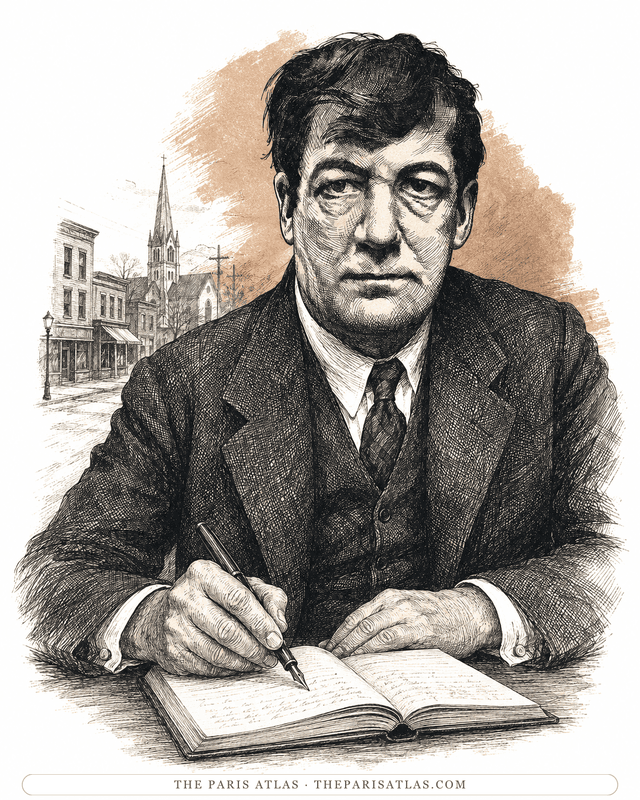
Sherwood Anderson
Her loudest American champion — he wrote the introduction to her Geography and Plays, and it was his letter that first brought Hemingway to her door.
View author
Henry Miller
The Brooklyn dropout who arrived in Paris broke at thirty-eight and wrote the exuberant, banned books that ended American censorship.
View author