
Lena Mainz
The servant girl of the third story — brought over from Germany at seventeen and married off by an aunt to a man who did not want the wedding either.
Nothing she will say out loud. The one preference the story records is about her Sundays: she would rather have spent them with the girls she sat with in the park, who often asked her, but her aunt had said she was to come to the Haydon house, so that is where she always went.
The book

At a glance
- German servant girl in Bridgepoint; the subject of the third story
- Seventeen when her aunt brings her over; four years in service before the wedding
- For Mrs. Aldrich — a pleasant, unexacting mistress, her children, and a cook who scolds
- Herman Kreder, a tailor's son, in a match arranged entirely by other people
- Brown hair, very thick black eyebrows, hazel eyes, and the flat chest and forward-falling shoulders the book gives its working women
- Irish Mary and dark, quiet Nellie, two nursemaids from the park, who tease her constantly and defend her fiercely
Who they are in the book
Spoiler-freeLena Mainz is the servant at the centre of The Gentle Lena, the shortest of the three stories. Her aunt, Mrs. Haydon, brought her from a German farming town to Bridgepoint at seventeen and placed her in a household where she is genuinely happy: hard work in the mornings, afternoons in the park minding a two-year-old, a German cook who scolds her for her own good, and two or three other nursemaids who tease her because she is so easy to tease. The story's first sentence is "Lena was patient, gentle, sweet and german." Almost everything that happens to her afterwards happens because she does not object to it.
Her aunt arranges a marriage to Herman Kreder, a tailor's son who wants it no more than she does. Asked whether she likes him, Lena says she will do whatever her aunt says. The phrase the story uses for her, over and over, is that she was always dreamy and not there. Once the marriage happens, she stops being there almost entirely.
How Lena Mainz Is Portrayed
- The morning voicePart of her job is waking the family. She stands in the hallway calling the children, waits a long time, calls again, and never changes her tone. The book compares the sound to a soft breeze at midday in summer, and it is the thing people remember about her afterwards.
- The green paintIn the park the other nursemaids tell her the paint she has just licked off her finger is poison, and then keep a straight face. She rubs the finger on the inside of her dress for the rest of the afternoon and goes home still not knowing whether they meant it.
- The crossingShe is sick for the whole voyage from Germany and spends it certain she is about to die, with no way to fight the sickness and no way to give in to it. The same helplessness comes back years later, when she is having her first child.
- The answer she givesPressed by her aunt to say whether she likes the man chosen for her, Lena says: "I marry Herman Kreder, if you want me." Her aunt is furious that it took her so long to say it.
- Being leftThree days before the wedding, the groom disappears. Lena cries the whole way home in a nearly empty street car; the conductor sits down beside her, tells her she will get a better man, and then tells the story to every passenger who boards. What upsets her is not losing Herman but the disgrace of having been left, which is how her aunt had put it to her.
- What she savedShe never spent a wage in four years, because it never occurred to her to spend one. The cook walked her money to the bank each month, since otherwise her aunt's son or the girls in the park would ask her for it and she would hand it over.
- After the weddingShe lives in her husband's parents' house and stops keeping herself clean. The cook who trained her, who scolded her for years and is the only one still trying, scolds her for it and gets almost nothing back. The word the book settles on for what she becomes is lifeless, and it uses it again and again.
Herman's father fetches him back from New York and the wedding goes ahead a week late. Lena moves into the Kreders' house, where her mother-in-law scolds without stopping, and she goes quiet in a way that never lifts. Herman does eventually fight his mother, because he wants to be a father and will not have his child raised in that noise, and he gets them a house next door. It changes nothing in Lena. She has three children, and then a fourth. The baby is born lifeless as well. The German cook who scolded her for years is the only person who misses her; her aunt has decided she did very well by Lena and has stopped visiting.
If you like Three Lives


If you like Gertrude Stein
Explore authors with a similar voice, perspective, and influence.

Ernest Hemingway
Her most famous pupil — the tutorials at the rue de Fleurus, the godmother years, and the 'lost generation' epigraph all passed through her studio before the celebrated falling-out.
View author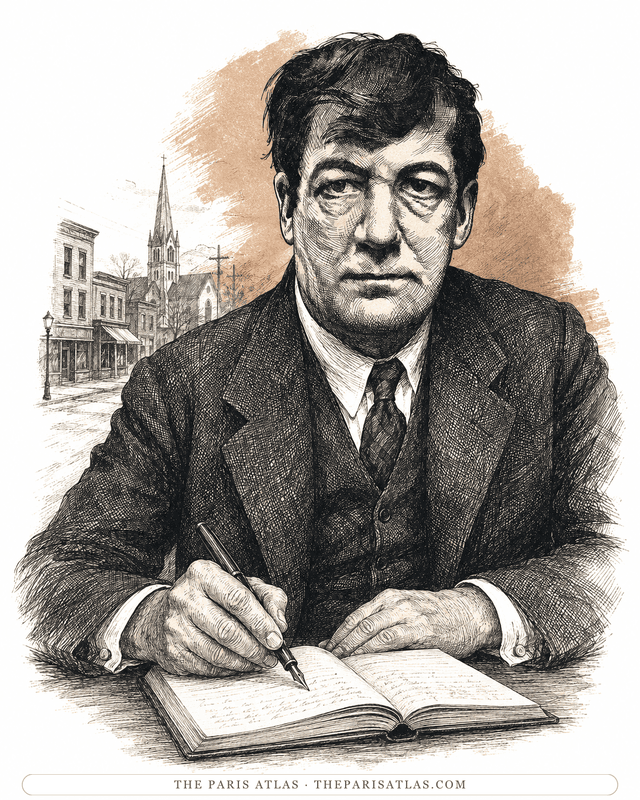
Sherwood Anderson
Her loudest American champion — he wrote the introduction to her Geography and Plays, and it was his letter that first brought Hemingway to her door.
View author
Henry Miller
The Brooklyn dropout who arrived in Paris broke at thirty-eight and wrote the exuberant, banned books that ended American censorship.
View author