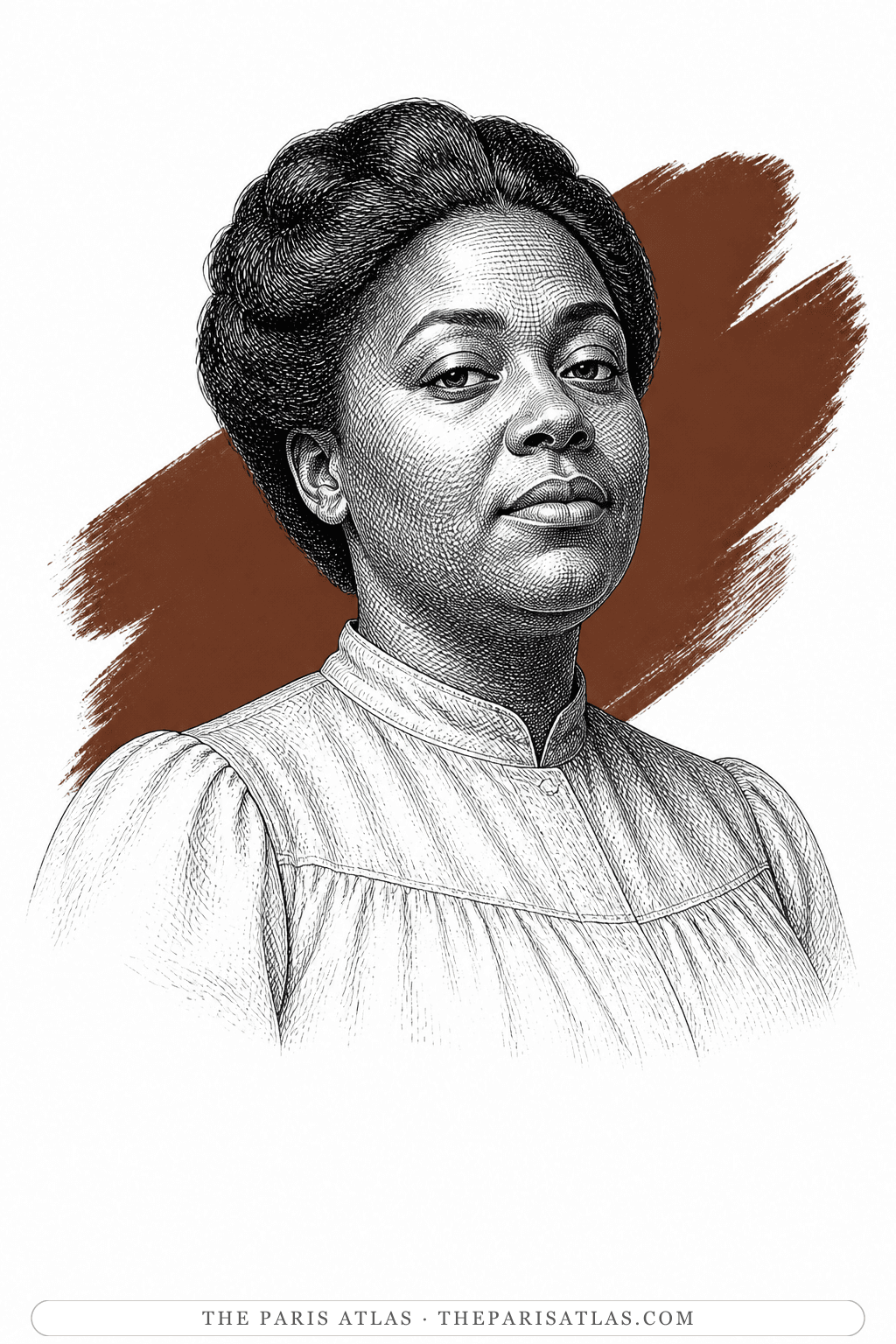
Rose Johnson
Melanctha's friend, and the first and last person in the middle story — lazy, blunt, certain she is always right, and raised by white people, which she mentions constantly.
Decent comfort, and to be seen to have it. Rose decides to get married because it would be a nice thing to have in her position, and then sits at home and brags to her friends about being really married to a husband.
The book

At a glance
- Melanctha Herbert's friend; the first and last figure in the middle story
- In a white family's house after her mother, their servant, died; they left her a small allowance when they moved away
- Sam Johnson, a deckhand on a coasting steamer, in a grand real wedding
- A little red brick house that Melanctha helped furnish and did the finer sewing for
- One, who does not live
Who they are in the book
Spoiler-freeRose Johnson is Melanctha Herbert's friend, and the story opens and closes on her. She is a Black woman who was raised in a white family's house after her mother, their servant, died, and was brought up not as a servant but nearly as their own child. She never stops mentioning it. It is her evidence that she knows how people ought to behave and that she is not to be mistaken for anyone else in the neighbourhood. She is lazy, blunt and entirely sure of herself, and she gets exactly what she wants: a husband with steady wages and a small furnished house.
Melanctha sews for her, fetches for her, and nurses her through the birth of a child, and is scolded for the trouble. The story never explains why the cleverer woman submits to the duller one. It asks the question outright, twice, in almost the same words both times, and then leaves it alone.
How Rose Johnson Is Portrayed
- Raised by white folksShe says it constantly, as a credential. It is the reason she gives for knowing the right way to behave, for knowing which men are safe, and for not being a common woman like the others.
- The rule about engagementsShe keeps company with a series of men and makes certain she is engaged to each one first. The book calls this her strong sense of proper conduct, in the same paragraph in which it describes her conduct in less flattering terms.
- The adviceShe lectures Melanctha continuously on the right way to behave, in speeches that run half a page and double back on themselves. Nearly all of it is warning, and none of it lands.
- The babyHer child is born healthy and dies while Melanctha is away for a few days. The book tells this twice, once on the first page and once near the end, and says both times that Rose was careless and had perhaps just forgotten it for a while, and that she and her husband were sorry and did not think about it very long.
- Sam, her husbandHer husband is a deckhand on a coasting steamer with good wages, and he does whatever she asks. She spends the first half of the story telling him to be good to Melanctha and the second half telling him not to be.
- The answer about being blueTold that a woman Melanctha knew had killed herself for being blue, Rose says: "I'd never kill myself Melanctha just 'cause I was blue." She adds that she might well kill somebody else, and that if she ever did it by accident she would be awful sorry. She says a version of this twice, at each end of the story.
- The doorstepWhen she has made up her mind she does not argue. She stands on her own front steps, tells Melanctha what she has heard and that she cannot trust her, tells her not to set foot in the house again, goes inside and closes the door.
Rose comes out of the story unchanged and unpunished. She hears things about Melanctha, decides they are true, and ends the friendship on her own front steps without letting her inside. Afterwards she tells anyone who asks that Melanctha never came to any good, that she expects she will kill herself one day, and that she is real sorry for her. The book's own verdict on the friendship is quieter and lands a page later: Rose Johnson had worked in to be the deepest of all Melanctha's emotions.
If you like Three Lives


If you like Gertrude Stein
Explore authors with a similar voice, perspective, and influence.

Ernest Hemingway
Her most famous pupil — the tutorials at the rue de Fleurus, the godmother years, and the 'lost generation' epigraph all passed through her studio before the celebrated falling-out.
View author
Sherwood Anderson
Her loudest American champion — he wrote the introduction to her Geography and Plays, and it was his letter that first brought Hemingway to her door.
View author
Henry Miller
The Brooklyn dropout who arrived in Paris broke at thirty-eight and wrote the exuberant, banned books that ended American censorship.
View author