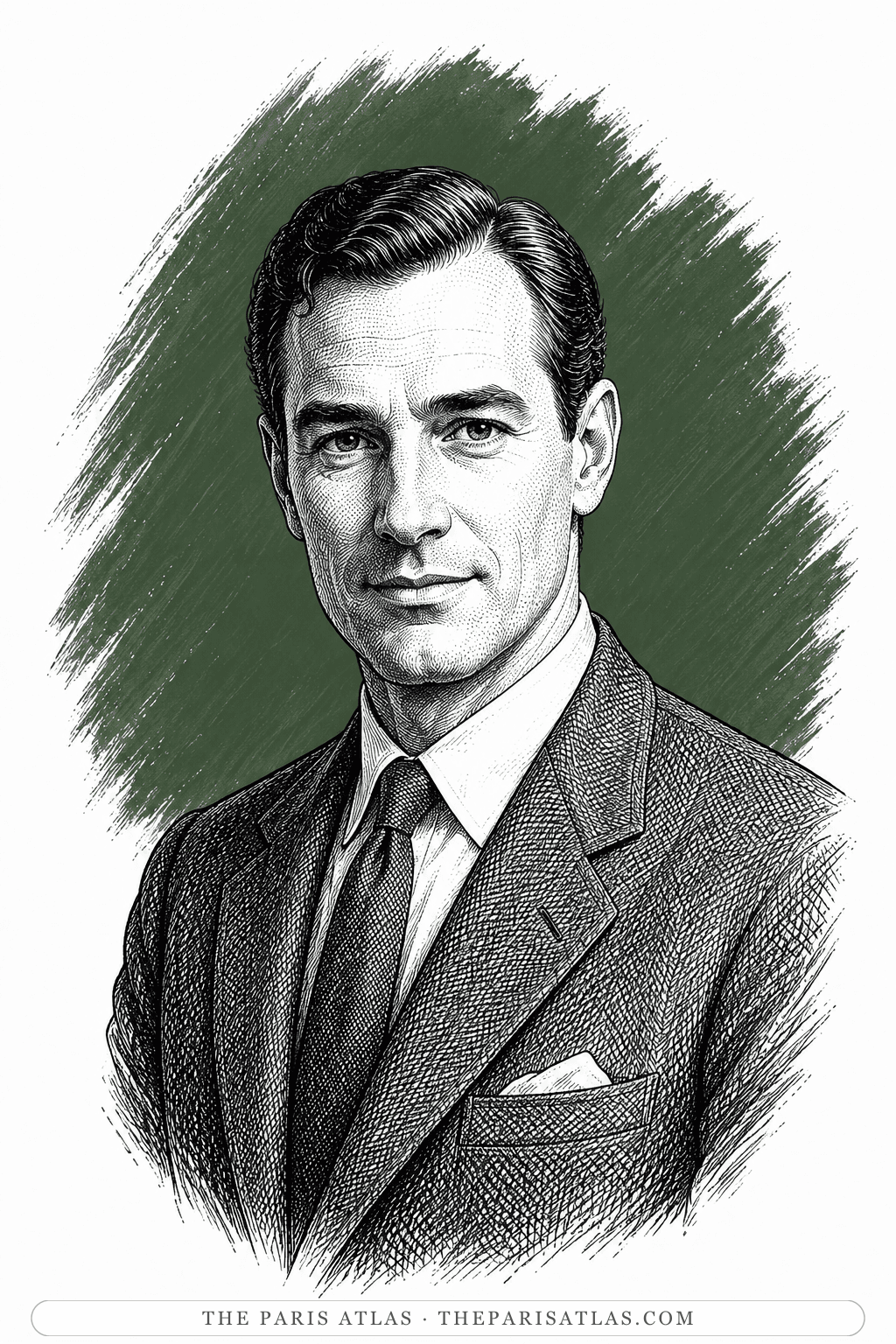
Alan
Sabina's husband of ten years, five years older than her and treated by her as a father as much as a spouse. He believes she is an actress touring with a company, and repeats the story back to her as praise.
That Sabina should come home — the one thing the novel says he ever seems to want for himself.
The book

At a glance
- Sabina's husband, and the person she lies to most
- Thirty-five, with grey at the temples
- Ten years, since Sabina was twenty
- That his wife is an actress touring with a company
Who they are in the book
Spoiler-freeAlan is the husband of Sabina, the central character of A Spy in the House of Love, the 1954 novel by the French-born American writer Anaïs Nin. They have been married ten years when the book opens. He is thirty-five, five years older than she is, and already grey at the temples.
He is the one person Sabina lies to constantly and cannot do without. Her explanation for her absences is that she is an actress on tour, and Alan accepts it so completely that he compliments her on the performance and says her success consoles him for her absences. When she is on the edge of telling him the truth, it is his pleasure in the story that stops her.
Nin draws him almost entirely through Sabina's mind rather than in scenes. She cannot picture him moving; she carries two mental snapshots of him and nothing else, no voice and no touch. What she does remember vividly is him sobbing at his father's funeral, and the fear of causing that face again is what keeps the whole arrangement running.
This profile is drawn from the Swallow Press edition of 1995, read in the Internet Archive's scan of the book.
How Alan Is Portrayed
- A photograph, not a personWhen Sabina is frightened, Alan's image appears to her as a fixed point: a calm face, a calm bearing, a man tall enough to be visible in crowds. It reaches her only through the eyes. She cannot summon his voice or his touch, and she cannot picture him playful or reckless.
- At the doorThe first thing she sees when he opens it is the smile — strong, very even teeth in a long, narrow head, a smile that almost closes his eyes. He stands very erect, with an almost military bearing, and his head bends down under its own weight to look at her.
- Talking to her like a fatherHe is only five years her senior, but the tone is paternal and she cannot remember it ever being anything else. She tries to picture him at twenty-five and gets the same man.
- Praising the performanceWhen she describes a week she did not have, he tells her what an actress she is and that she cannot get out of the part. He also tells her, in earnest, that it makes him happy she is fulfilling her wish to act, and that it consoles him for her absences.
- "I want my own Sabina back."He says it as an endearment, meaning the woman he thinks she is when she is not working. She hears it as permission: if the woman who was away was a part she played, then nothing that happened need attach to her at all.
- The records from the islandHe surprises her with recordings of drumming and singing from an island she longs for. She says she wishes they could go there together. He answers that he cannot leave his work, and asks her to be patient. He mistakes the docility that follows for obedience; she is already gone.
- Sleeping while she lies awakeAfter she has reassembled the week for him, he kisses her with gratitude and falls into a deep, trusting sleep. She spends the rest of the night auditing her own inventions.
- The image she cannot bearTwice the novel returns to the same picture: Alan sobbing as he sobbed when his father died. It is the thing she is protecting, and the reason she goes on lying.
- At the theatreHe takes her to plays believing it is a treat. She becomes agitated, weeps in the dark, and leaves between acts so nobody sees her face. He asks patiently what is wrong and assumes she envies the actresses their parts.
If you like A Spy in the House of Love


If you like Anaïs Nin
Explore authors with a similar voice, perspective, and influence.

Henry Miller
The entangled careers of the Villa Seurat: she financed and prefaced his scandal, he detonated her prose — and each wrote the other into the century's record.
View author
Louis-Ferdinand Céline
The doctor of the Paris slums who wrote the century's blackest, funniest novel — and changed the sound of French prose.
View author
Martha Gellhorn
War correspondent who covered the Spanish Civil War, D-Day, and conflicts across five more decades; Hemingway's third wife, 1940–1945.
View author