
The lie detector
The man Sabina reaches when she dials a number at random in the middle of the night. He tells her his profession is lie detector, traces the call, and follows her through the rest of the novel. He is never given a name.
To hear an admission — he says at once that people who telephone strangers in the night are confessing, and he spends the book waiting for the confession to arrive.
The book

At a glance
- The man who follows Sabina after she telephones him by accident
- Never given. He is the lie detector throughout
- A wrong number dialled at random in the middle of the night
- A notebook, which he writes in while watching her
Who they are in the book
Spoiler-freeThe lie detector is the second figure in A Spy in the House of Love, the 1954 novel by the French-born American writer Anaïs Nin. The book never gives him a name, a home or a history. He is called the lie detector on every page he appears on, and the phrase is his own: it is the answer he gives when the woman on the telephone asks what he does.
He arrives by accident. Sabina, the novel's central character, dials a number at random in the middle of the night because she wants to hear a voice, and gets him out of bed. He tells her that guilt is the one burden people cannot carry alone, and that she would not have telephoned if she were innocent. Then he calls the operator, has the call traced to a bar, and is sitting in that bar half an hour later.
For the rest of the novel he follows her: to the street where her lover lives, to the café where she waits for a friend, writing in a notebook. Nin never settles whether he is a real man with a strange job or a piece of Sabina's own conscience wearing a coat, and the novel gains from not settling it. He behaves like a detective, delivers a verdict like a judge, and in the last pages tells Sabina plainly that she is the one who invited him.
This profile is drawn from the Swallow Press edition of 1995, read in the Internet Archive's scan of the book.
How The lie detector Is Portrayed
- Woken by the telephoneThe novel opens on him asleep. He picks up and hears a voice he cannot place: rusty, possibly disguised, and he cannot tell whether it has been altered by drink, drugs, anxiety or fear, or whether it belongs to a woman imitating an adolescent or an adolescent imitating a woman.
- Naming his jobAsked what he does, he answers in three words: "A lie detector." There is a long silence, and he expects her to hang up. She coughs instead, and laughs at him for practising his profession over the telephone.
- Tracing the callHe rings the operator, has the call traced to a bar, and is sitting in that bar within half an hour. It is the only piece of ordinary detective work he does in the book.
- Refusing to look at herIn the bar he deliberately does not let his eyes roam or examine her. He wants his ears alone working, so that he can be sure he is matching the voice.
- The list of symptomsHe decides she has every sign of guilt and itemises them: the way she watches the door as if timing an escape, talk without continuity, gestures unrelated to what she is saying, and sudden sulky silences.
- The notebookHe follows her afterwards and turns up where she does — outside the house of a lover, alone at a café table with a notebook open, writing. What is in it is never shown, and the novel treats the writing itself as the threat.
- What he tells her about PhilipAt the end he reports on one of her lovers, the singer she had cast as a Wagnerian hero. Philip is in hospital with a broken ankle, and immobility has made him put on a great deal of weight. He watches her turn her face away and asks whether that was the myth she made love to.
- The verdictHe tells her she asked him to shadow her, and that she has handed the same power to priests, policemen and doctors, because being watched felt safer than being free. Then he tells her that if she had been caught and tried she would have been given a lighter punishment than the one she gives herself.
If you like A Spy in the House of Love


If you like Anaïs Nin
Explore authors with a similar voice, perspective, and influence.
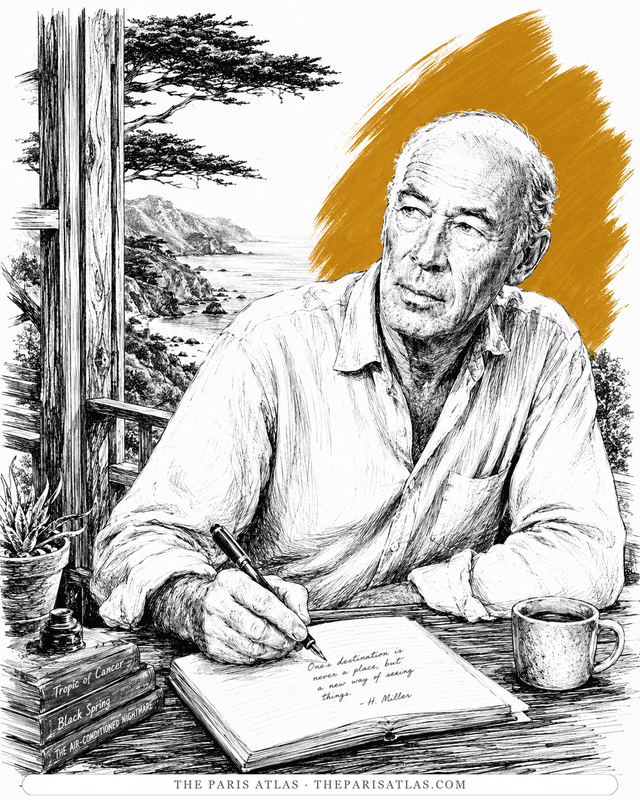
Henry Miller
The entangled careers of the Villa Seurat: she financed and prefaced his scandal, he detonated her prose — and each wrote the other into the century's record.
View author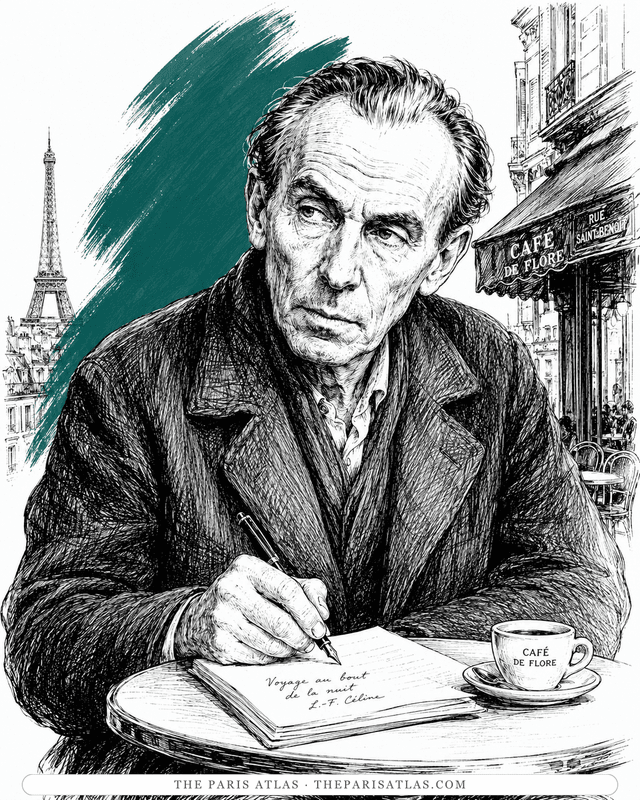
Louis-Ferdinand Céline
The doctor of the Paris slums who wrote the century's blackest, funniest novel — and changed the sound of French prose.
View author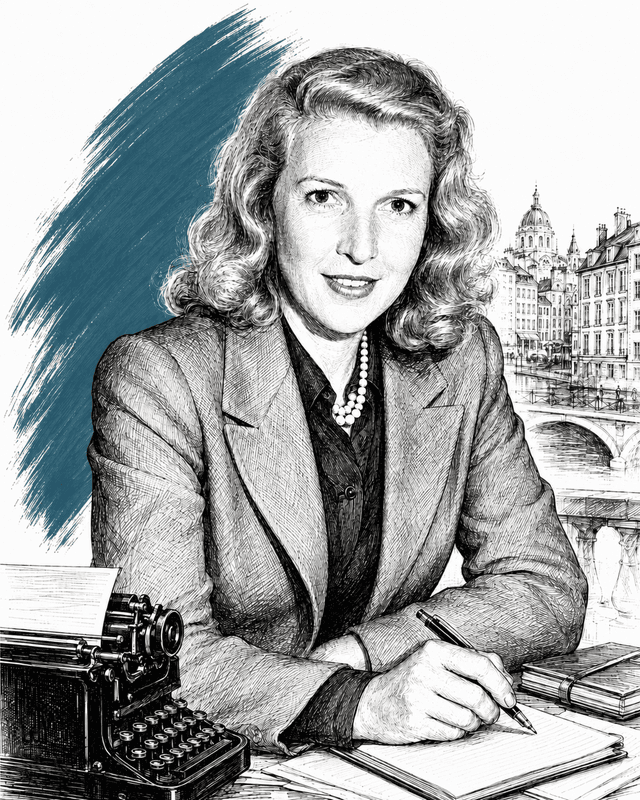
Martha Gellhorn
War correspondent who covered the Spanish Civil War, D-Day, and conflicts across five more decades; Hemingway's third wife, 1940–1945.
View author