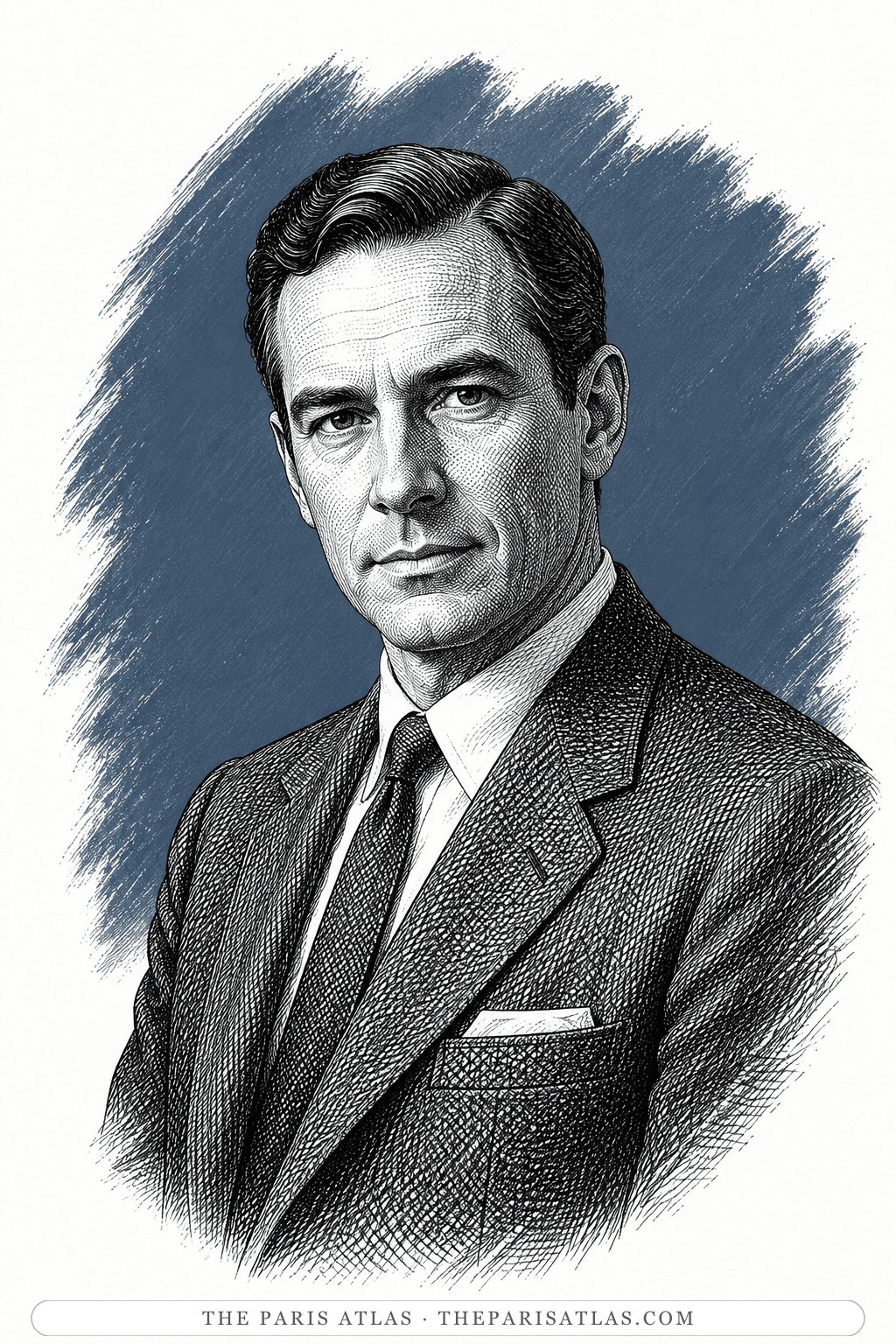
John
A pilot who flew all through the war from the age of seventeen and has been grounded. Sabina meets him at a traffic light on Long Island. He cannot bear peacetime and cannot forgive himself for wanting her.
To be flying again — everyone who meets him says the same thing about him, and he confirms it by the way he rides a bicycle through red lights.
The book

At a glance
- A grounded pilot, and one of Sabina's lovers
- The English Air Corps. He volunteered at seventeen and flew all through the war
- A beach town on Long Island, at a red light
- A rented bicycle, ridden too fast
Who they are in the book
Spoiler-freeJohn is one of Sabina's lovers in A Spy in the House of Love, the 1954 novel by the French-born American writer Anaïs Nin. He served in the British air force, volunteering at seventeen, and flew for the whole of the war. When Sabina meets him he has been grounded and is living in a comfortable beach town on Long Island that he despises.
She sees him first as a cyclist waiting beside her at a red light, and it is his eyes that stop her: a wet silver brilliance with panic just under it. A policeman gives her his story before he does, complaining that the boy speeds and breaks traffic laws and that the red lights drive him mad.
What they have in common is contempt for the town, and it takes them the length of the beach to the parts with no houses. John talks about the war the whole way. Their night together is written plainly, and so is what it costs him: he wakes into shame, transfers it to Sabina, and disappears. Of all her lovers he is the one she cannot let go of, and the only one whose damage she recognises as a version of her own.
This profile is drawn from the Swallow Press edition of 1995, read in the Internet Archive's scan of the book.
How John Is Portrayed
- The eyes at the traffic lightSabina looks at the cyclist next to her and finds a wet, silver sparkle that frightens her, because it lights up a panic close to the surface. She tries to talk herself out of it and cannot: he has seen something the other young men have not.
- The policeman's accountA white-haired policeman who has been kind to Sabina mentions a second case of homesickness that day — a boy from the English Air Corps who volunteered at seventeen, flew all through the war and is grounded now. He speeds, he breaks traffic laws, the red lights drive him crazy, and the policeman has stopped writing him tickets.
- What he likes about her"I like you because you hate this place, and because you don't giggle," he says, taking her hand gently. Later he says he is glad to have found a woman who walks his stride and hates what he hates.
- The rule about dying menWalking the beach he tells her that the first thing he was taught in training was never to look into a dying man's eyes, and that some men die silent and some die yelling. Then he asks her whether she thinks he is mad.
- The kiss that missesHe says in a very low voice that he wishes he could stay with her, and then bends over and gives her a brotherly kiss that misses her mouth.
- "Would you like me to tuck you in before I leave?"Asked afterwards, dressed and holding his shoes, in the voice of a young man playing at being a father. Sabina takes it as proof that he does not think her a bad woman, and the sentence becomes something she repeats to herself for the rest of the section.
- The look he gives her laterThey meet by accident when she is walking beside her husband, and in that one glance she sees that he has decided the shame was hers after all. He does not come back.
- Answering a knockStanding outside his window at night she whispers his name. "Who's there?" he says — the novel notes the tone: a man at war, expecting an ambush.
If you like A Spy in the House of Love


If you like Anaïs Nin
Explore authors with a similar voice, perspective, and influence.

Henry Miller
The entangled careers of the Villa Seurat: she financed and prefaced his scandal, he detonated her prose — and each wrote the other into the century's record.
View author
Louis-Ferdinand Céline
The doctor of the Paris slums who wrote the century's blackest, funniest novel — and changed the sound of French prose.
View author
Martha Gellhorn
War correspondent who covered the Spanish Civil War, D-Day, and conflicts across five more decades; Hemingway's third wife, 1940–1945.
View author