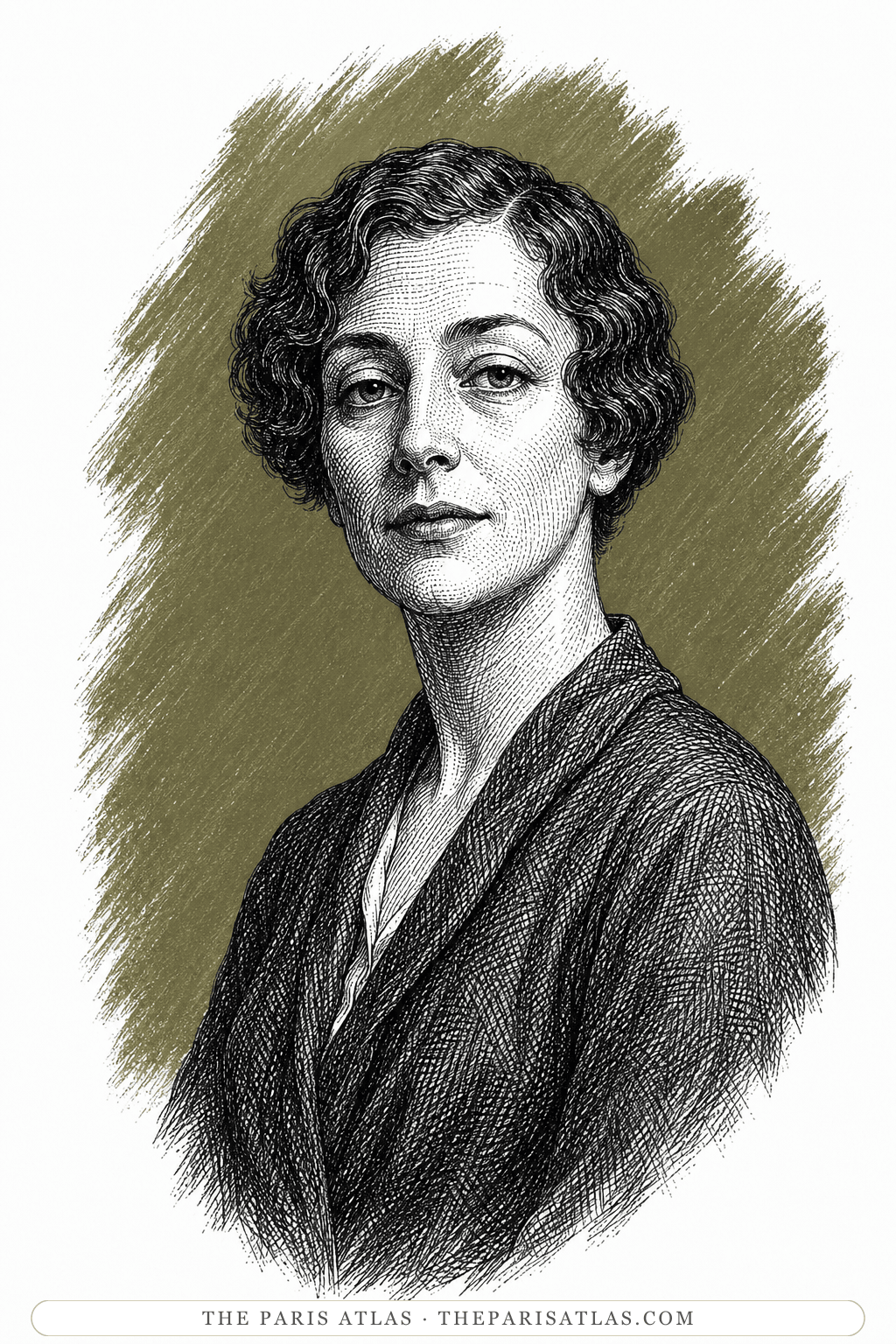
Djuna
A dancer who lives above the night club and is the only person in the book Sabina can talk to honestly. She tells her that the man following her is her own guilt, and she is right.
To make Sabina see herself accurately, which is the whole of her role here and which she pursues by contradicting her.
The book

At a glance
- A dancer, and Sabina's friend
- In Paris, with the ballet dancers of the Opéra
- A few floors above the night club
- She recurs through Nin's five-novel sequence, and Children of the Albatross is her book
Who they are in the book
Spoiler-freeDjuna is Sabina's friend in A Spy in the House of Love, the 1954 novel by the French-born American writer Anaïs Nin. She is a dancer who trained in Paris with the ballet dancers of the Opéra and now works at the barre a few floors above the night club where the last section of the book takes place.
She arrives near the end and changes the register of the novel. Sabina has spent the book unable to tell anyone the truth; Djuna is the person she waits up for, and the conversation between them is where the novel finally says out loud what has been wrong. Djuna listens to the story of the man with the notebook and tells Sabina, without cruelty, that she is describing her own guilt.
Nin uses her across the whole of the five-novel sequence this book belongs to, and the role is consistent: the one who sees. In this book that means telling Sabina that the love she takes from her husband is a child's love and that she is right to trust it, and then that she will lose it anyway.
This profile is drawn from the Swallow Press edition of 1995, read in the Internet Archive's scan of the book.
How Djuna Is Portrayed
- How she arrivesShe walks into the night club with her black rehearsal tights showing under her raincoat and her hair tied back with a ribbon like a schoolgirl. She has come straight down from bar work a few floors up.
- Compassion as a practised skillWhat Sabina remembers about her is not the dancer's legs or the technique but the compassion, which she describes as something Djuna exercises daily, the way a dancer exercises anything else.
- "You've never done anything to be arrested for!"Sabina jokes that the man at the next table may arrest her, and this is Djuna's answer. It lands as the flat, obvious truth nobody else in the book has said.
- Reading Sabina's faceShe looks at her and sees that the old feverish intentness has changed character. It is no longer burning aliveness. The features have tightened and there is fear in the eyes.
- Naming the followerShe tells Sabina that the man is her own guilt given a body, and that she sees the same guilt reflected back at her from every policeman, judge and parent — that she is looking at her own acts through other people's eyes.
- On the marriageShe tells Sabina that what she has with her husband is not a man's love and not even a father's, but an idealised father invented by a needy child. She says Sabina is right to trust it, and that she will lose it in the end, because there are other Alans as there are other Sabinas.
- Where she puts the blameThe line she closes on: "The enemy of a love is never outside, it's not a man or woman, it's what we lack in ourselves."
- The recordShe takes Sabina upstairs to her studio, where the drumming from below is still audible, and puts a record on the phonograph — a Beethoven quartet — instead of continuing to talk.
If you like A Spy in the House of Love


If you like Anaïs Nin
Explore authors with a similar voice, perspective, and influence.
Henry Miller
The entangled careers of the Villa Seurat: she financed and prefaced his scandal, he detonated her prose — and each wrote the other into the century's record.
View author
Louis-Ferdinand Céline
The doctor of the Paris slums who wrote the century's blackest, funniest novel — and changed the sound of French prose.
View author
Martha Gellhorn
War correspondent who covered the Spanish Civil War, D-Day, and conflicts across five more decades; Hemingway's third wife, 1940–1945.
View author