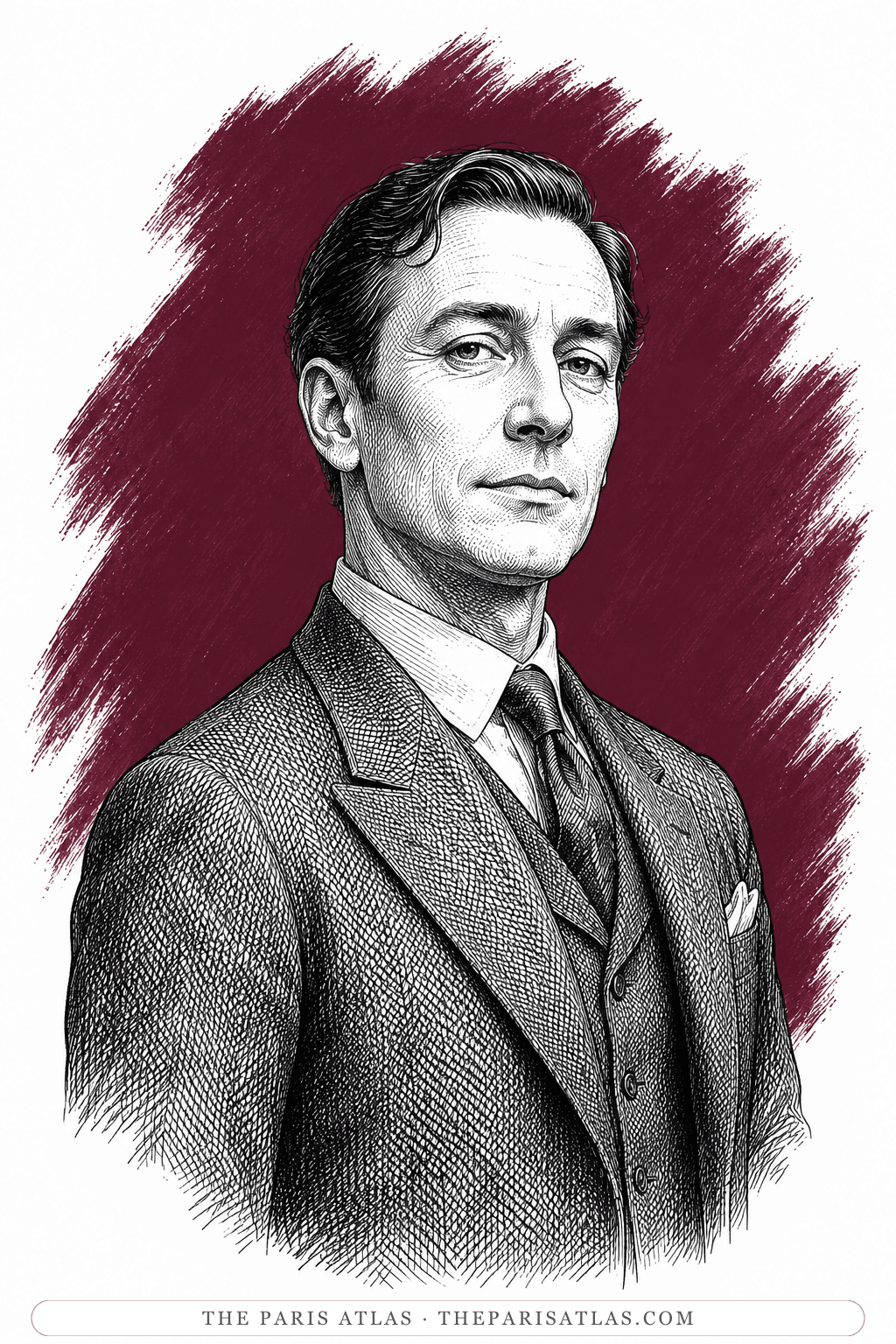
Donald
A young man who mimics women brilliantly and cruelly, collects empty birdcages, and wants Sabina as a mother rather than a lover. Their affair has no sex in it and changes her more than the ones that do.
To be looked after by a woman who will not disappoint him the way he says his mother did — which is what he asks Sabina for, and what he gets.
The book

At a glance
- A young man Sabina takes up after losing John
- Empty birdcages
- The firebird, after the Stravinsky record she plays him
- Maternal on her side, with no sex in it
Who they are in the book
Spoiler-freeDonald is the last of Sabina's attachments in A Spy in the House of Love, the 1954 novel by the French-born American writer Anaïs Nin. Sabina notices him because he physically resembles John, a lover she has lost, and mistakes the echo for a new desire.
He turns out to be something else. Donald performs women — their gestures, their whims, their fashions — with an accuracy that makes Sabina laugh until she works out what is underneath it. He dresses to be looked at, in a shirt matching her dress, a baroque watch, a woman's billfold, a streak of hair dyed silver-grey. He talks constantly about his mother, and Sabina eventually understands that she is in a relationship with three people.
There is no sex in this affair. What Donald wants from Sabina is care, and she gives it: she becomes the provider of food and blankets and reassurance, deserts her other lovers to do it, and feels good in a way none of the rest have made her feel. He renames her the firebird, after the Stravinsky record she plays for him, and tells her that until she arrived all his cages were empty.
This profile is drawn from the Swallow Press edition of 1995, read in the Internet Archive's scan of the book.
How Donald Is Portrayed
- The resemblanceSabina sees a slender body, the same small nose, a head carried on a long-stemmed neck, and the old emotion is strong enough to pass for a new one. He is standing in for someone else before he says a word.
- The impersonationsHe parodies women's feathery gestures and seductive smiles, orders in a restaurant with the tyranny of a business executive, is curt with a salesgirl like a statesman with no time to charm, and reproduces female whims exactly. Sabina laughs until she asks where he found all these repulsive women, and stops laughing when she realises caricature is a form of hatred.
- How he dressesA shirt the colour of her dress, a baroque watch, a woman's billfold, and one strand of hair dyed silver-grey in his young gold head. He can be made to laugh at his own absurdities and stand up straighter.
- The third person presentSabina tries to defeat his mother by being her opposite — attentive, never flirting, never complaining — and finds it makes no difference. His mother stands between them anyway, translating everything Sabina offers back into an old disappointment.
- "It was like an electric shock."Kneeling to tie her sandals, his face comes up with the expression of a blind man given sight. He tells her he felt a shock through his whole body while he did it. He then drops her bare foot, stands up stiffly, and goes back to the clowning.
- The empty cagesHe takes her to see his collection of birdcages, all of them empty. "I prefer empty cages, Sabina, until I find a unique bird I once saw in my dreams," he tells her. Later, when she plays Stravinsky's Firebird for him, he decides she is the bird and that capturing her was the point of the cages.
- The notes he leavesChaotic, hasty ones saying where he is and when he will be back. They all end the same way: "You are wonderful. You are wonderful and good. You are generous and kind."
- "I can only nibble at you."Said playfully, before pressing his small, perfect teeth into her shoulder. Another time he cries out asking what he could possibly have to give her.
If you like A Spy in the House of Love


If you like Anaïs Nin
Explore authors with a similar voice, perspective, and influence.

Henry Miller
The entangled careers of the Villa Seurat: she financed and prefaced his scandal, he detonated her prose — and each wrote the other into the century's record.
View author
Louis-Ferdinand Céline
The doctor of the Paris slums who wrote the century's blackest, funniest novel — and changed the sound of French prose.
View author
Martha Gellhorn
War correspondent who covered the Spanish Civil War, D-Day, and conflicts across five more decades; Hemingway's third wife, 1940–1945.
View author