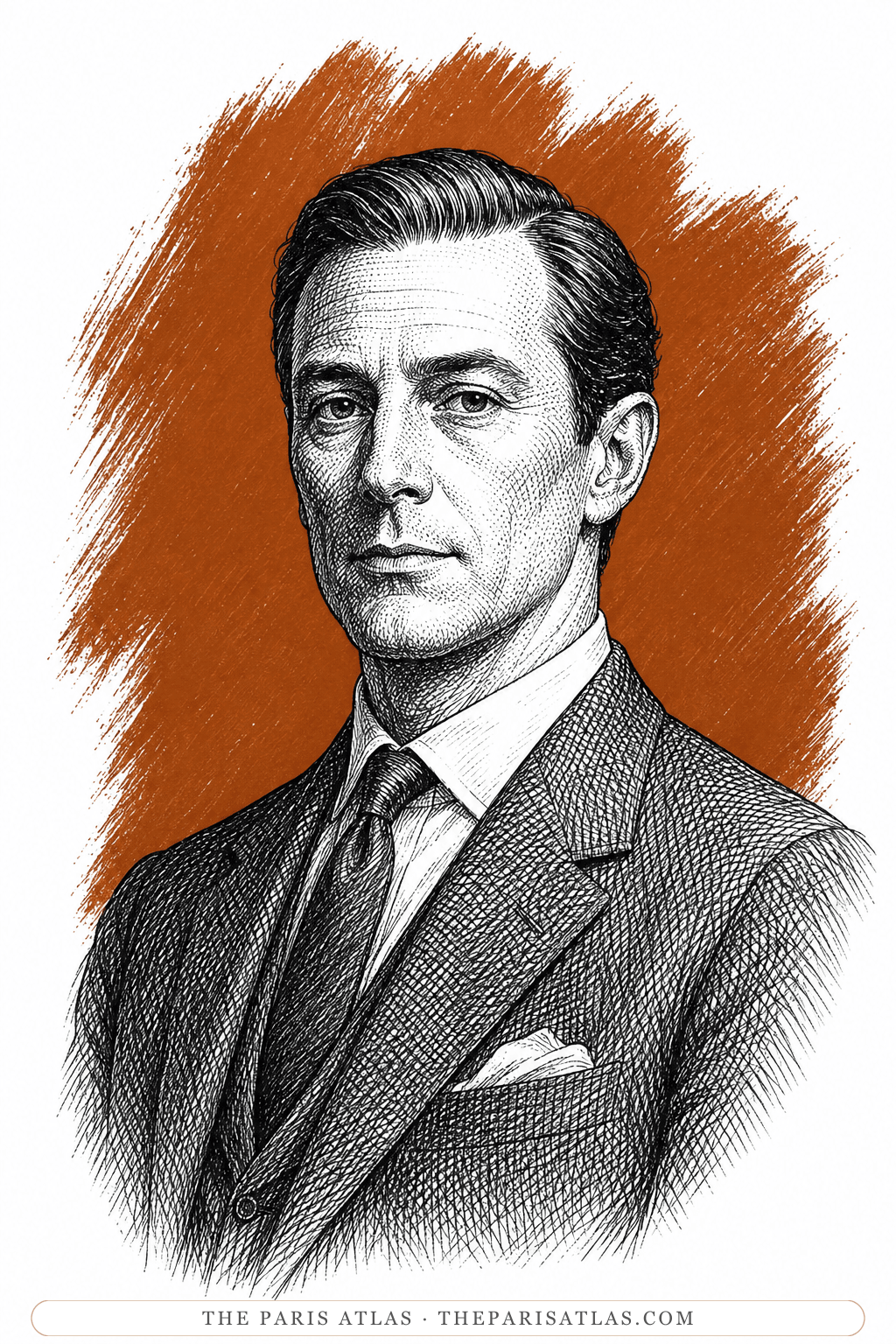
Philip
An opera singer Sabina meets on a beach, first heard before he is seen. He is handsome, mocking, and interested in women in general rather than in her. She calls the affair an adventure and it defeats her.
Women in quantity, and no obligation attached to any of them — he complains that women will never leave him alone and is relieved when Sabina offers not to expect anything.
The book

At a glance
- A singer, and one of Sabina's lovers
- Opera. Sabina first hears him singing from Tristan and Isolde on a beach
- Sabina's Paris friends called him after Vienna as it was before the war
- A Don Juan, and an adventure she means to have on her own terms
Who they are in the book
Spoiler-freePhilip is one of Sabina's lovers in A Spy in the House of Love, the 1954 novel by the French-born American writer Anaïs Nin. Sabina is a married woman in New York who conducts several affairs at once; Philip is the one she pursues as a deliberate experiment in taking a lover the way she believes men take them.
He is a singer, and she hears him before she sees him: a passage from Wagner's Tristan and Isolde carrying along a beach. The painter Jay knew him in Vienna years earlier, and the friends they share in Paris used to call him Vienna-as-it-was-before-the-war. He is also, in the book's own word, a Don Juan, and says so without embarrassment.
The affair goes wrong in a way Sabina does not expect. She has cast herself as the free adventurer and him as the prize, and finds that her body will not cooperate with the arrangement. She also discovers that the woman he treats with real tenderness is somebody else entirely — a singer he taught, plain, in poor health, whom he introduces to Sabina while walking softly beside her.
This profile is drawn from the Swallow Press edition of 1995, read in the Internet Archive's scan of the book.
How Philip Is Portrayed
- The voice arrives firstSabina hears the singing and then sees the man, and thinks of him as an instrument case: a strong neck, a large head with a high brow, wide shoulders, long legs. A good box for the vocal cords, she decides, good for resonance.
- The gaze she mistrustsWhen he finally looks straight at her his eyes turn glacial blue and seem to look past her at every woman at once, ready to dissolve her back into the crowd she was picked out of. Sabina recognises the look and it turns her cold.
- The mocking laughShe admits she is frightened and he laughs at her, disbelieving. She hears the same laugh again when he introduces her to a friend he calls his brother Don Juan, and the two men treat her merrily as one of their own kind — the huntress, the invulnerable woman. She is offended.
- Faces in the bedroomUndressing, he pulls endless grimaces like a child, apparently tired of being flawlessly handsome, and can turn himself into Frankenstein's monster on demand.
- "Women will never leave me alone."He says it out of nowhere, having just been talking about his childhood and how much he loved snow. Sabina tells him that if he ever wants to be with a woman who will not always expect him to make love, he should come to her. He thanks her, and says women are so offended when he is not in the mood.
- The woman he is gentle withA friend arrives at the beach whom he has spoken of with reserve — a singer he taught, in poor health, and not beautiful. In her company he walks softly, less erect and less arrogant. Sabina, who has hidden every weakness from him, understands that she is the fever and this woman is the life.
- The ring with the bellsHe gives her a Hindu ring hung with tiny bells. It becomes the object she swaps for her wedding ring on the bus, and it is the sound of it on a table that makes a drummer in a night club turn round and smile at her.
- What becomes of himThe last news of Philip comes from the lie detector: a hospital, a broken ankle, and a great deal of weight gained from lying still.
If you like A Spy in the House of Love


If you like Anaïs Nin
Explore authors with a similar voice, perspective, and influence.

Henry Miller
The entangled careers of the Villa Seurat: she financed and prefaced his scandal, he detonated her prose — and each wrote the other into the century's record.
View author
Louis-Ferdinand Céline
The doctor of the Paris slums who wrote the century's blackest, funniest novel — and changed the sound of French prose.
View author
Martha Gellhorn
War correspondent who covered the Spanish Civil War, D-Day, and conflicts across five more decades; Hemingway's third wife, 1940–1945.
View author