
Harry Bellamy
Sally Carrol's fiancé in “The Ice Palace”: healthy, proud of his town, and unable to hear how he sounds.
For her to like his town. He asks her directly, more than once, whether she can feel the pep in the air.
The book

At a glance
- Sally Carrol's fiancé in “The Ice Palace”
- An unnamed Northern city — a three-generation town, in his own phrase
- In Asheville, North Carolina, the previous midsummer
- Set for March. She asks him to move it up; he says that would be idiotic
Who they are in the book
Spoiler-freeHarry Bellamy is the man Sally Carrol Happer agrees to marry in “The Ice Palace.” He is tall, broad and brisk, and comes from a prosperous Northern city the story never names, though the Swedish population and the winter carnival both point to Fitzgerald's own St. Paul, Minnesota. He and Sally Carrol met the previous summer in Asheville, North Carolina. He comes down to Georgia in November for four days, settles the engagement in an afternoon, and invites her up for a month in January so that she can see the winter carnival.
How Harry Bellamy Is Portrayed
- The proposal, in one lineIt takes a quiet afternoon and an evening in front of an open fire, because, as the narration says, Harry Bellamy had everything she wanted, and besides, she loved him — with that side of her she kept especially for loving.
- His warning about his family's townBefore she has unpacked, he explains that Southerners put an emphasis on family and that things are different here: “Everybody has a father, and about half of us have grandfathers. Back of that we don’t go.” He adds that a Southern girl said some unfortunate things the previous summer, and considers the subject closed.
- What he is proud ofAt a dinner party he points out a Princeton tackle, two Yale hockey captains and the greatest wheat man in the Northwest, and tells her that the best athletes in the world come from these states. His summary is that this is a man's country.
- The joke that goes wrongSeeing a man whose baggy trousers had briefly made him look as though he were about to jump, Harry says he must be a Southerner, and then keeps going after she objects: “They’re sort of — sort of degenerates — not at all like the old Southerners. They’ve lived so long down there with all the colored people that they’ve gotten lazy and shiftless.” He apologises twice and both apologies make it worse.
- The ice palace, in figuresTrudging towards the entrance he is reciting statistics to a muffled stranger: a hundred and seventy feet tall, six thousand square yards covered. Inside, in the dark, his verdict is “My golly, it’s beautiful, isn’t it! They haven’t had one here since eighty-five!”
- What he does in the mazeAt the bottom of the chute their hands are parted by a low ceiling, and before she understands what he intends he darts off down one of the glittering passages, calling “Come on!” over his shoulder. He assumes she has gone home with the others. The search takes two hours.
If you like Flappers and Philosophers


If you like F. Scott Fitzgerald
Explore authors with a similar voice, perspective, and influence.
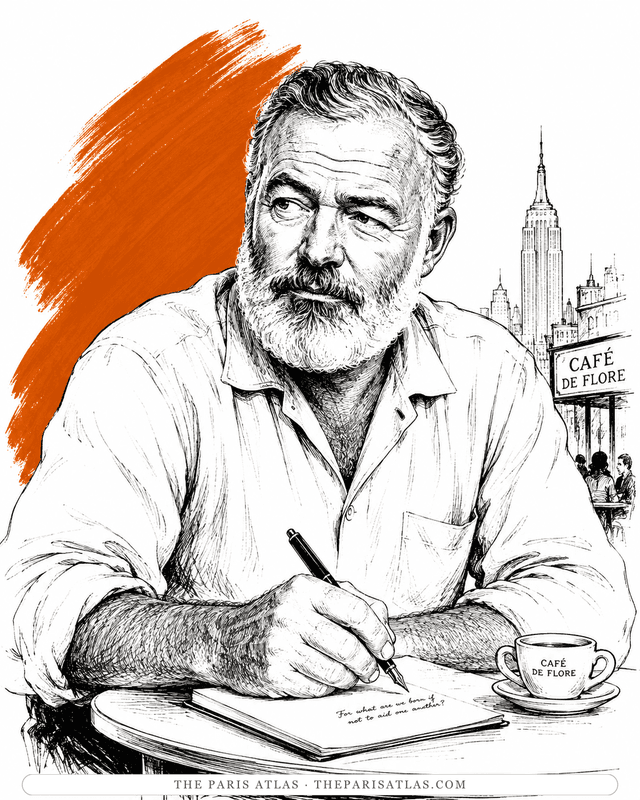
Ernest Hemingway
Fitzgerald vouched for him to Scribner's before they had met, then edited him better than he edited himself; the friendship's five rounds are chronicled in our journal.
View author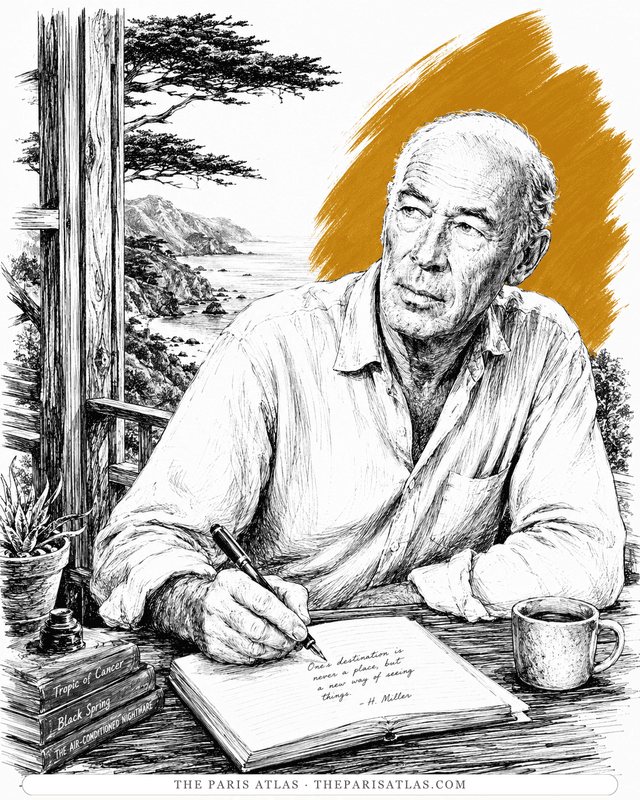
Henry Miller
The Brooklyn dropout who arrived in Paris broke at thirty-eight and wrote the exuberant, banned books that ended American censorship.
View author
Louis-Ferdinand Céline
The doctor of the Paris slums who wrote the century's blackest, funniest novel — and changed the sound of French prose.
View author