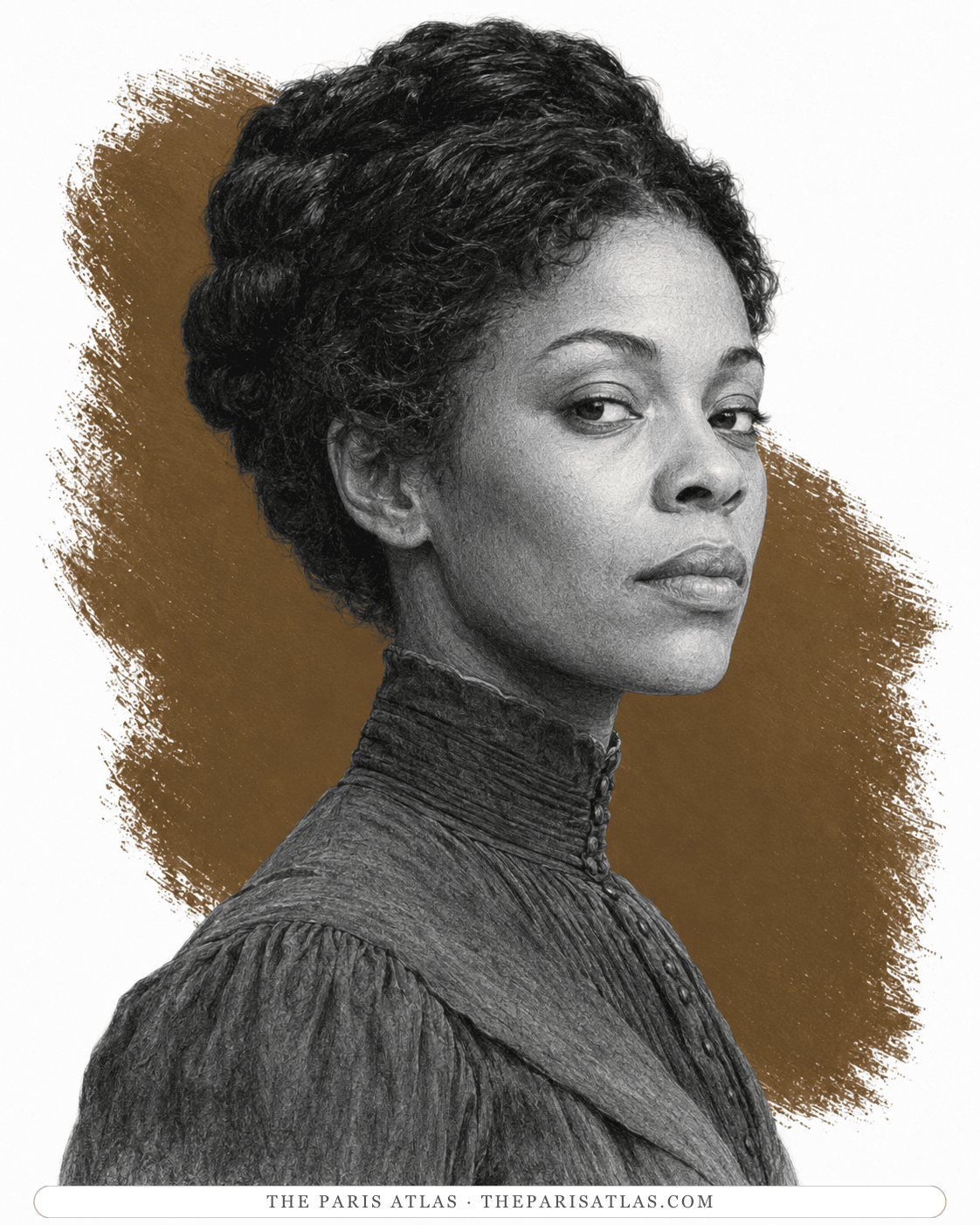
Deborah
Gabriel's first wife, in the Southern chapters. She cannot have children, and she knows more about her husband than he thinks.
The book

At a glance
- Gabriel Grimes's first wife, in the Southern chapters
- Eight years older than Gabriel; sixteen when Florence was thirteen
- The year Gabriel was converted and began to preach
- One of the serving women; visited the sick, comforted the dying, distributed tracts
- None
- Florence, from girlhood, and by letter afterwards
Who they are in the book
Spoiler-freeDeborah is Gabriel Grimes's first wife, in the Southern chapters of James Baldwin's first novel. She has been dead for years by the time the book opens, and John Grimes knows only her name and that she existed before he did — which is enough to make him think of her as holding the key to everything about his father he cannot reach.
The novel introduces her through a child's account. Florence, aged thirteen, is told that their neighbour Deborah, who is sixteen, was taken into the fields the night before by white men who did things to her to make her cry and bleed. Deborah's father went to one of their houses and said he would kill them all, and they beat him and left him for dead. Everyone in the settlement shut their doors and waited.
The book is exact about what that did to the rest of her life. Men looked no further than her body afterwards, and their look was a lewd, uneasy curiosity about that night; in their eyes it had robbed her of the right to be considered a woman, so she could only be regarded as a harlot. She and Florence became close friends and hated all men. She read her Bible, kept her speech to yes and no, visited the sick and comforted the dying, and stayed in that town.
Gabriel married her the year he was converted, having decided that the Lord had sent him to raise her up out of the dishonour men had put on her. She was eight years older than he was. They were married for the rest of her life, and they never talked.
How Deborah Is Portrayed
- How the town looked at herBaldwin sets it out plainly: no man would approach her in honour, because she was a living reproach to herself and to everyone around her. What stirred in men's faces when they looked at her was a lust she could not endure, because it was impersonal and limited everything between them to the area of her shame.
- How Gabriel describes herAs a body shapeless and hard as iron. Later, sitting in his own church while Esther comes in wearing a wine-red dress, he looks across at his wife and sees, as though for the first time, how black and bony she is, and how wholly undesirable. This is his account, and the book keeps it as his.
- What she does with her daysKeeps his house and shares his bed, visits the sick and comforts the dying as she has always done, reads her Bible, and prays. She distributes tracts from a Bible house through the town every week.
- The mockery that isn't sure of itselfPeople in the church, including men carrying the gospel, mocked her behind her back. The mockery was uneasy, though, because none of them could be certain they were not holding up to scorn the greatest saint among them.
- At the ministers' dinnerThe serving women, Deborah among them, carry loaded platters up the stairs to the visiting elders and go out again. The door has barely closed before one of them, a heavy, cheery, sandy-haired man with freckles across his face, makes a coarse joke at her expense. Gabriel is at the table.
- The proposalHe tells her the Lord has led him to ask her to be his wife and his holy helpmeet, and puts his hands on her shoulders — the first time he has ever touched her. She looks at him in what seems like speechless terror, tries to smile, and starts to cry instead, letting her head fall on his breast. She says she is not scared, and does not stop weeping.
- At his big sermonShe finds a seat in the very front of the congregation, directly below the pulpit, with her Bible folded on her lap. He asks her to read the fifth verse of Isaiah 6 aloud for him before he begins. Later she calls out Praise Him, and he has never heard her voice so loud.
- The tin boxShe had been saving money since their wedding day in a tin box at the top of the cupboard. Gabriel took it while she slept and put it back months later, and her silence in the interval was so complete that he could never establish whether she had noticed, or noticed and understood.
- How she cheerfully raises the subjectShe talks about Esther's son Royal without appearing to think about it: how badly he is being spoiled, how his grandmother cannot stop him signing up for the war, how he sometimes reminds her of Gabriel as a young man. Gabriel discovers that whenever she mentions the boy something in him listens and waits.
- The letters she wroteShe wrote to Florence, in New York — not many times, but in a rhythm that seemed to mark each crisis of her life with Gabriel. One of those letters is still in Florence's handbag.
- How she broke the newsFrom the bed she seldom tried to leave any more, with rain coming down outside, in a silence Gabriel could feel change quality the moment he came in. She said she had heard some mighty bad news today, and delivered it as neighbourhood gossip: Sister McDonald's grandson had got himself killed in Chicago.
She had worked it out.
The letter she wrote to Florence outlives them both.
If you like Go Tell It on the Mountain


If you like James Baldwin
Explore authors with a similar voice, perspective, and influence.

Louis-Ferdinand Céline
The doctor of the Paris slums who wrote the century's blackest, funniest novel — and changed the sound of French prose.
View author
Henry Miller
The Brooklyn dropout who arrived in Paris broke at thirty-eight and wrote the exuberant, banned books that ended American censorship.
View author
Ernest Hemingway
Author of The Sun Also Rises and A Moveable Feast; his pared-down style, developed in 1920s Paris, became the most imitated in American prose.
View author