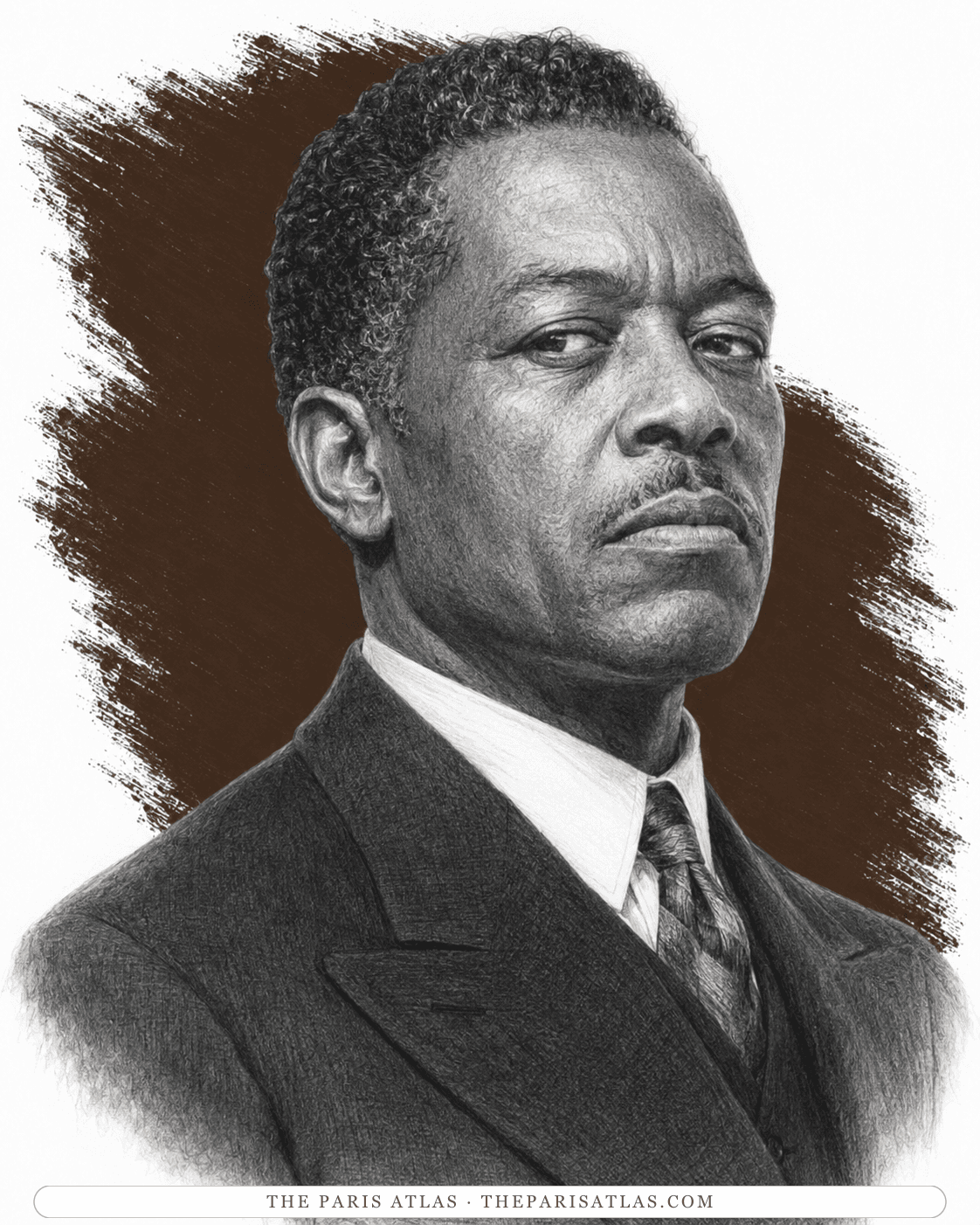
Gabriel Grimes
John's stepfather. A deacon now, a celebrated young preacher in the South once, and harder on this boy than on any of his own.
A son to carry down what he calls the royal line of the faithful. The book says he lived only for this and forsook the world's pleasures for it, and he had told Esther, before there was any child, that if God ever gave him a son he would name him Royal.
The book

At a glance
- Head deacon at the Temple of the Fire Baptized, Harlem
- Caretaker of the church; half a day at a factory on Saturdays
- The rural South, to a mother who had been enslaved
- At just past twenty-one, the year the century turned
- Deborah, eight years older, married the same year
- Elizabeth, John's mother
- Roy, Sarah, Ruth and John
- A revival preacher whose name was printed large on placards advertising the coming of a man of God
Who they are in the book
Spoiler-freeGabriel Grimes is John Grimes's stepfather and the invented figure James Baldwin gives more pages to than anyone else in his first novel. In the present tense of the book he is head deacon at the Temple of the Fire Baptized in Harlem, works half a day on Saturdays at a factory, and is the reason the household is quiet when he is home.
The novel's second part goes back to the rural South and gives him a life. He was born to a mother who had been enslaved and who took in white people's washing after the war, and he was the manchild, the one the family arranged itself around. He drank, and he went with women, and his mother beat him and prayed over him and neither stopped him. He was converted at about twenty-one, weeping on his face under a tree, and married Deborah in the same year. He began to preach immediately.
He was good at it. Asked to be one of the twenty-four preachers at a monster revival meeting, he preached a sermon that was still being talked about in camp-meetings and cabins a generation later. In the same season he began an affair with a young woman called Esther, which lasted nine days and produced a son he never claimed.
Nothing of that reputation came north with him. He replaces the church's burnt-out light bulbs now, keeps the Bibles and hymnbooks and the placards on the walls, and preaches on a Sunday only when there is nobody else to do it. The book calls him a fill-in speaker, a holy handyman. What has not changed is his certainty that God promised him a line of sons who would carry the faith down, and that everything he has given up was given up for that.
How Gabriel Grimes Is Portrayed
- What the job actually isCaretaker in the house of God. He is responsible for burnt-out bulbs, the cleanliness of the church, the Bibles, the hymnbooks and the placards on the walls. He runs the Young Ministers' Service on Friday nights. He brings the Sunday message only when there is no one else to speak.
- His faceJohn finds it always awful, and worse on Sundays, when the daily anger turns into prophetic wrath. The evening Roy comes home cut, John sees something in it he has only met before in his own vindictive fantasies: a wild, weeping terror that makes the face look younger and at the same time older and crueller.
- The baptismLed into the river as a boy in an old white shirt and short linen pants, he was thrown down and came up kicking and sputtering, nearly unbalancing the preacher. The congregation thought at first it was the power of the Lord. It was fury, and too much water in his nose. His sister did not smile.
- Before he was savedFlorence and Deborah once stood on Deborah's porch at night and watched him stagger up the moonlit road covered in his own vomit. Florence said she hated him. Deborah answered that the Word tells us to hate the sin and not the sinner.
- The conversionIt happened outdoors, under a tree, and he wept the way he said later that a little child weeps. He screamed to be saved until each cry tore his throat and stopped his breath, and his tears wet the root of the tree. What turned it, in his own telling, was hearing his mother singing low and sweet beside him.
- How he opened his big sermonNot with a shout song or a fiery testimony. He asked the congregation to look at the sixth chapter of Isaiah, fifth verse, asked Deborah to read it aloud for him, and began in a dry, matter-of-fact voice that trembled only a little.
- The tenderness he hasKneeling by the sofa with a basin of water, washing blood off Roy's forehead, muttering sweet, delirious things, hands shaking when he wrings out the cloth. He has pushed Elizabeth aside to do it, though her touch is gentler, because he cannot bear anyone else to handle his wounded son.
- The beltWhen Roy tells him not to touch his mother, he takes his belt off with tears in his eyes and brings it down. Roy shivers, falls back, and does not cry out. He raises it again and Florence catches it from behind.
- Walking through town the day after a lynchingA soldier had been found flogged to death outside town that morning. Gabriel walks home past groups of white men who fall silent as he passes; one spits on the sidewalk at his feet, and he hears it whispered behind him that he is no trouble. He prays for loving kindness as his mother taught him, while imagining his shoe on a white man's forehead, over and over.
- The tin boxDeborah had been saving money in a tin box at the top of the cupboard since their wedding day. He took it while she slept and handed it to Esther in the morning. Months later he put it back, and could never work out from her silence whether she had noticed.
- The silence at homeHe and Deborah never talked. He would have liked to ask her about her day, her hopes, her doubts, and to watch her face while she answered. The voice he actually listened to in his head, and the face he watched with care, belonged to Esther.
The affair with Esther is the hinge of his life.
The last night of the novel gives him nothing.
If you like Go Tell It on the Mountain


If you like James Baldwin
Explore authors with a similar voice, perspective, and influence.

Louis-Ferdinand Céline
The doctor of the Paris slums who wrote the century's blackest, funniest novel — and changed the sound of French prose.
View author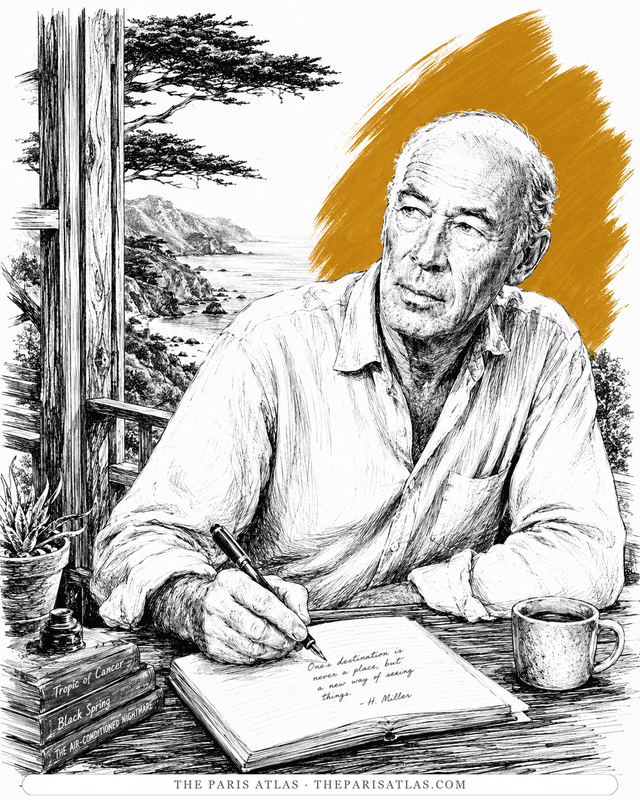
Henry Miller
The Brooklyn dropout who arrived in Paris broke at thirty-eight and wrote the exuberant, banned books that ended American censorship.
View author
Ernest Hemingway
Author of The Sun Also Rises and A Moveable Feast; his pared-down style, developed in 1920s Paris, became the most imitated in American prose.
View author