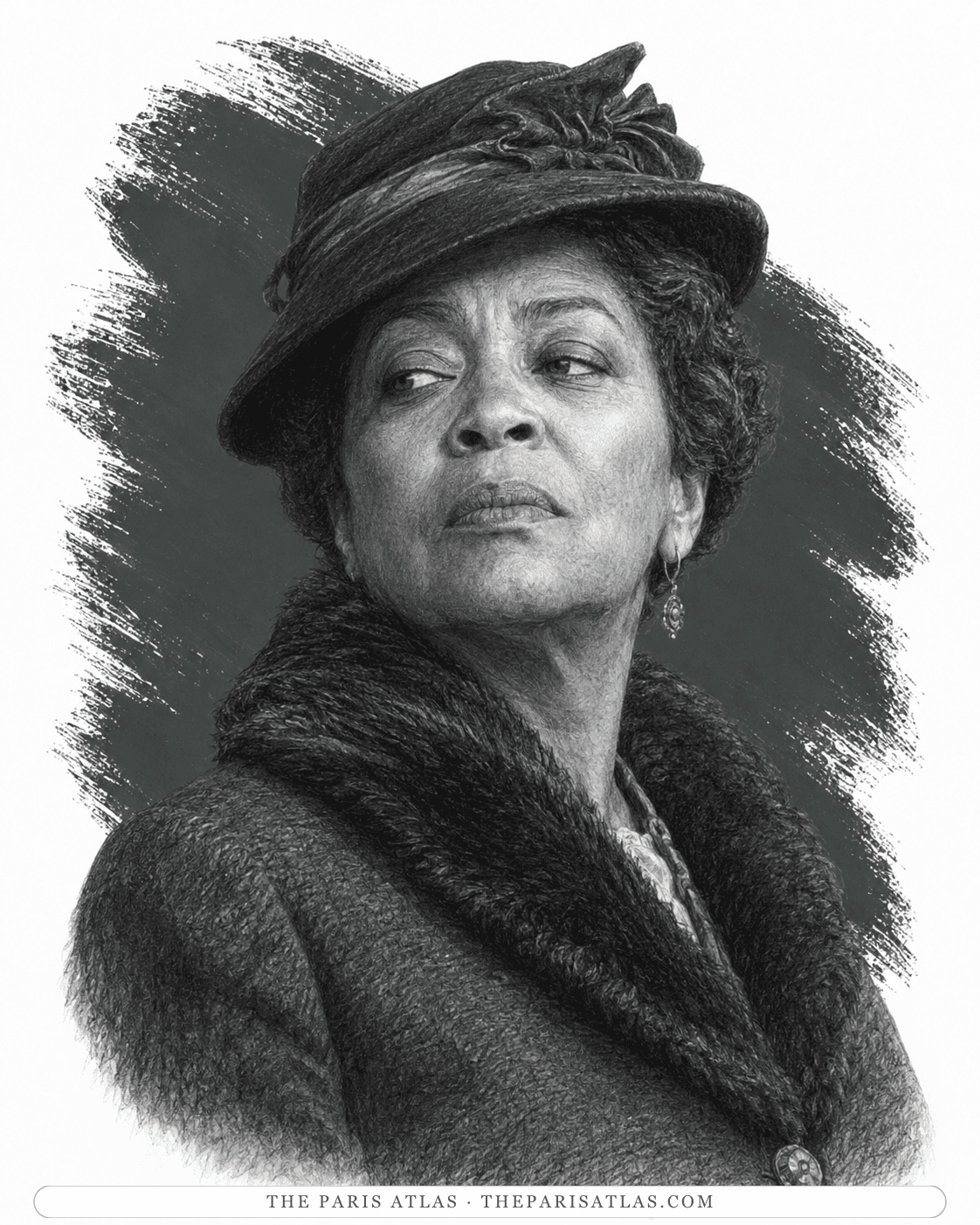
Florence
Gabriel's older sister, dying, and back in church for the first time in years. She has been keeping a letter for thirty years.
To get out and stay out. Her ambition from childhood, stated plainly in her section, was to walk out one morning through the cabin door and never come back.
The book

At a glance
- Gabriel Grimes's older sister; John's aunt, Harlem
- The rural South, about five years before Gabriel, to a mother who had been enslaved
- The morning her mother lay ill, having said she did not reckon on coming back
- Frank, for about ten years in New York. He left her, lived with another woman, and died in France in the war
- Cleaning offices at night
- Dying, and has stopped looking for a remedy
- A letter from Deborah, carried for years and never used
Who they are in the book
Spoiler-freeFlorence is Gabriel Grimes's older sister and John Grimes's aunt, and she walks into the Saturday night service at the start of James Baldwin's first novel having stayed away from her brother's church for years. She is there because she is dying and knows it. The novel's second part opens with her prayer, and it is the first of the three adult histories the book stops to tell.
She was born about five years before Gabriel, in the rural South, to a mother who had been enslaved and who took in white people's washing afterwards. Everything went to the manchild. Florence was kept at home to help with the washing, to cook, and to keep Gabriel quiet, and her mother did not think of it as sacrifice but as logic. Out of that came what the book calls her deep ambition: to walk out one morning through the cabin door and never return.
She did exactly that. On the morning she left, her mother lay in bed pleading with Gabriel, who had been drinking the night before, to come to the Lord. Her mother asked when she was coming back and Florence said she did not reckon on coming back. She went north, married a man called Frank, and stayed married to him for about ten years while trying to make him into someone else. He walked out, lived with another woman, and died in France in the war; Florence only found out long afterwards, because he had given the other woman's name as his next of kin.
Since then she has cleaned offices at night. She keeps a letter in her handbag that she has held for years without using, and she has brought it to church with her tonight.
How Florence Is Portrayed
- Why she is in church tonightThe message that came to Hezekiah came to her as she turned on her bed: set thine house in order, for thou shalt die and not live. It was repeated for many days and nights. She tried to evade it — first the remedies women told her about, then doctors, then rooms all over town where incense burned and people sold her white powders and herbs and cast spells to take the sickness away.
- The illnessA burning in her bowels that will not stop. It eats inward, takes the flesh visibly off her bones, and makes her vomit her food. One night she woke and found death standing in the corner of her narrow room, and she screamed and put the light on, and knew he would come back a little closer every night.
- How she arrivesAt her brother's flat, with a shopping bag of groceries on the kitchen table. She stands a little apart from the family kneeling over Roy, still in her hat and holding her handbag, with what John sees as a troubled, terrible face. At the church, the handbag lies on the altar while she prays.
- What she thinks of her brother's welcomeShe believes Gabriel rejoices not because humility might bring her to grace but because some private anguish has brought her low. Her pride stands up at the thought that he might be the Lord's anointed, and she would rather endure Hell than bow at that altar. She strangles it and stands with the others anyway, still singing.
- The skin creamsShe sits at her mirror at night rubbing bleaching cream into her skin while Frank lies in bed whistling. Staring at her own face, she thinks angrily that all these creams are a waste of money and never do any good. Frank yawns and tells her she is as black now as she was the day she was born.
- How she stands up to GabrielHe asks whether she wants him to slap her side of the head. She answers with a placidity as frightening as his rage, and guarantees him he will not be doing any more slapping in a hurry. When he raises the belt over Roy a second time, she catches it from behind and holds it.
- The garnet broochShe opens her door to Elizabeth and the baby wearing a heavy, old-fashioned garnet brooch. John reaches for it at once and babbles and spits at her as though he has known her all his short life.
- At workHead tied up in a rag, bucket and mop in her hands, marching grimly down the halls in what Elizabeth describes as a silent ferocity of dignity that barely escapes being ludicrous. She has nothing to do with the other women, has nothing to laugh or gossip about, comes to work, does her work, and leaves.
- FrankSkin the colour of caramel candy, straight cruel teeth, sang the blues and drank too much. He would shave off a moustache or put on a clean shirt or come to Uplift meetings if she asked, which early on convinced her that she controlled him. The impression, Baldwin writes, was entirely and disastrously false.
- What she says about menThat she has never seen it to fail: there is no woman born who does not get walked over by some no-account man and left in the dirt while he goes on about his business. And that the menfolk die and it is over for them, while the women keep living and try to forget what was done to them.
- The photograph on the mantelpieceTaken when she had just come north, hair worn high in the old-fashioned way and tied with a ribbon. When she visits she sometimes calls it to witness that she really had been beautiful once.
- The letterOld, folded, worn and torn, in Deborah's uncertain handwriting, kept in her handbag for years. She has thought of it all that time as an instrument she could use to complete her brother's destruction once he was cast down, and she has been waiting for what the book calls a savage opportunity.
The letter is the novel's held card.
She plays it on the walk home.
If you like Go Tell It on the Mountain


If you like James Baldwin
Explore authors with a similar voice, perspective, and influence.

Louis-Ferdinand Céline
The doctor of the Paris slums who wrote the century's blackest, funniest novel — and changed the sound of French prose.
View author
Henry Miller
The Brooklyn dropout who arrived in Paris broke at thirty-eight and wrote the exuberant, banned books that ended American censorship.
View author
Ernest Hemingway
Author of The Sun Also Rises and A Moveable Feast; his pared-down style, developed in 1920s Paris, became the most imitated in American prose.
View author