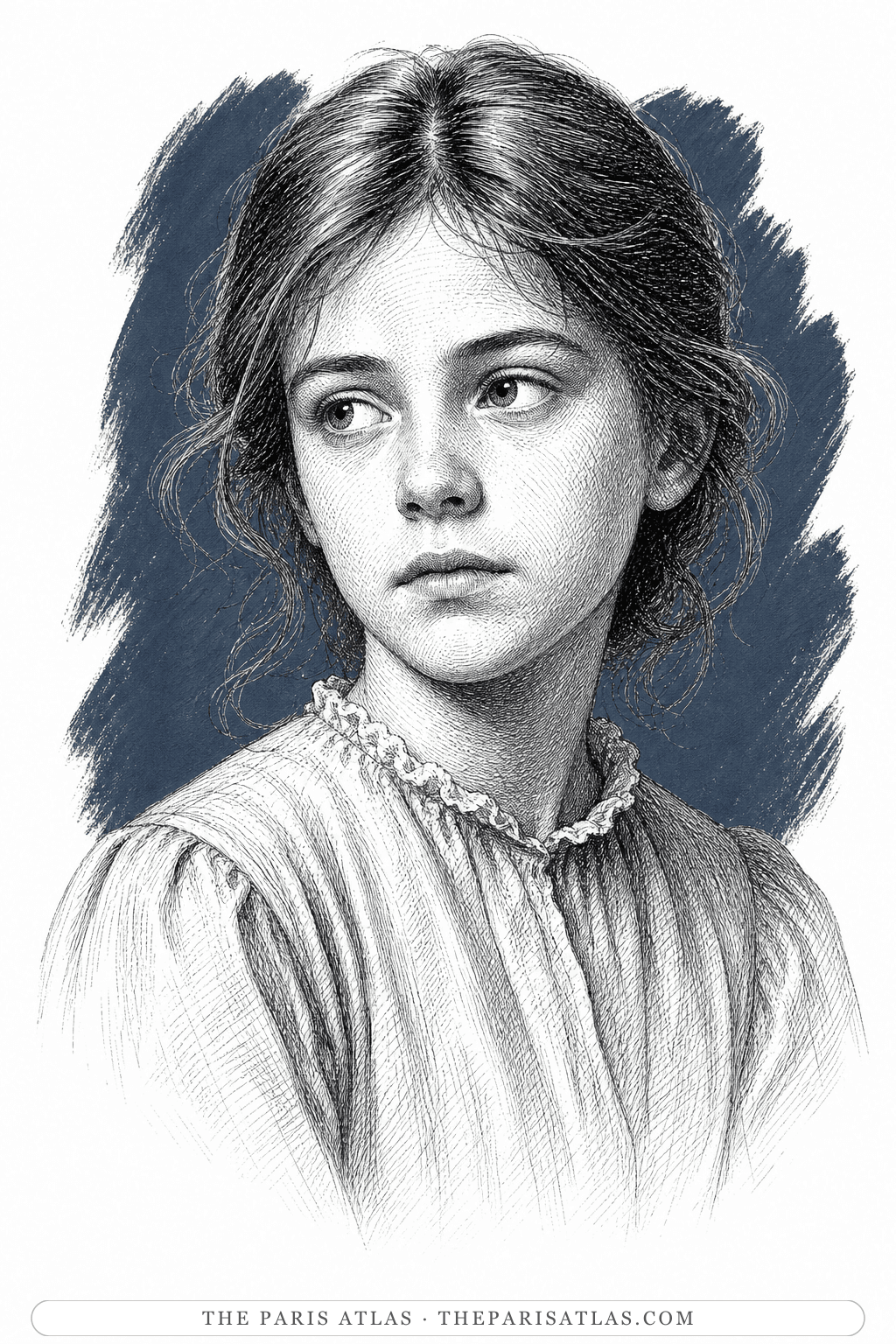
Julie
Wendell and Amelia's daughter, fourteen and never once at school — the closest thing in the book to Barnes herself.
Something outside the family. That is what Sophia finds her thinking in the deep of the garden — and it is why, of all the children, Julie is the one her grandmother cannot kiss.
The book

At a glance
- Only daughter of Wendell and Amelia
- Fourteen, in the chapter of the fight with Kate
- None — she and Timothy never once set foot in a school
- Sophia's favourite child
- Timothy, Hannel, Gaspard and Gaybert
- Elisha, Elsie and Aaron, Kate-Careless's children
- Djuna Barnes · The author herself, raised in the divided household at Cornwall-on-Hudson
Who they are in the book
Spoiler-freeJulie is an invented character in Ryder, the 1928 first novel by the American writer Djuna Barnes — the only daughter of Wendell Ryder and his wife Amelia, and fourteen years old in the chapter that gives her the most to do. She and her elder brother Timothy grew up, as the book puts it, without once setting foot under the lintel of learning.
Her closest bond is with her grandmother. Sophia reads aloud to the household every evening, skipping the death scenes because Wendell cannot bear them, and reads those same scenes privately to Julie, who falls asleep against her breast by the kerosene lamp. The book calls her Sophia's favourite child, and their attachment does not stay simple.
She is the book's version of Barnes herself, who grew up in the same divided household at Cornwall-on-Hudson.
How Julie Is Portrayed
- WadingOn the fishing expedition she takes off her three-ply stockings, rolls up her skirts and goes wading, crying "Oooooooo!" out of what the book calls the fear of maid-for-the-waters-of-the-world, flapping her arms and sitting backward into the brine.
- The reed whistleWendell cuts reed whistles on the same trip and presents her one; she draws forth a long wailing and goes fiddling on it as if it were a thing of beauty, while her father tells her that is no way to hold it and asks why she doesn't keep step. It is Julie who says "Now tell us a story", which brings on the fable of the Beast Thingumbob — and Julie who asks, at the end of it, "Is that all?"
- The death scenesAt the evening readings Wendell lies back on his spine saying that if there's a death-scene, skip it. Sophia saves those pages for Julie, reading a novel's deathbed word for word by the round kerosene lamp with Julie on her breast, the child's eye going over too, but slowly, until sleep pulls her away from her beloved.
- Never once at schoolShe and Timothy grew up without once setting foot under the lintel of learning. When the school authorities finally catch up with the household, it is over the six younger children; for Julie it is already too late to matter.
- The fight with KateWhen Wendell takes Kate's side in the quarrel of the chiselled head, Julie hurls herself from the house and locks herself tooth, foot and nail onto the mistress, all her hair about her, sobbing and digging into that mountainous flesh — she was but fourteen, and full of youth and right — crying "You, and you and you" at her father. The narrator says she looked on Kate less as the disease than as its manifestation, emanating directly from her father. Kate, close to three hundred pounds, finally knocks her sprawling with a sweep under the chin, while Wendell holds Amelia back by the apron and watches for sport.
- Noticed by the visitorsLaura Twelvetree, calling on Wendell, brings jujubes for Julie and remarks to him, "You have a little daughter... and she has no breasts. I've often noticed Julie."
- "You have betrayed me"Going among the eight children to tell each "I love you, and I will take care of you", Sophia goes further, to where Julie is in the deep of the garden, and says it — and cannot kiss her, as she had kissed the others, because Julie is thinking something outside the family. She leans her head on the child's breast instead, and Julie answers, "You have betrayed me."
- Her father's verdict, and Sophia'sWendell says she has always been a hussy and a stubborn girl. Sophia's answer: "She has always been you... I have seen you from the seed, and I have seen her, and you are exactly alike, except that she is unhung, and you are slung like a man; it will make the difference."
If you like Ryder


If you like Djuna Barnes
Explore authors with a similar voice, perspective, and influence.

Henry Miller
The Brooklyn dropout who arrived in Paris broke at thirty-eight and wrote the exuberant, banned books that ended American censorship.
View author
Louis-Ferdinand Céline
The doctor of the Paris slums who wrote the century's blackest, funniest novel — and changed the sound of French prose.
View author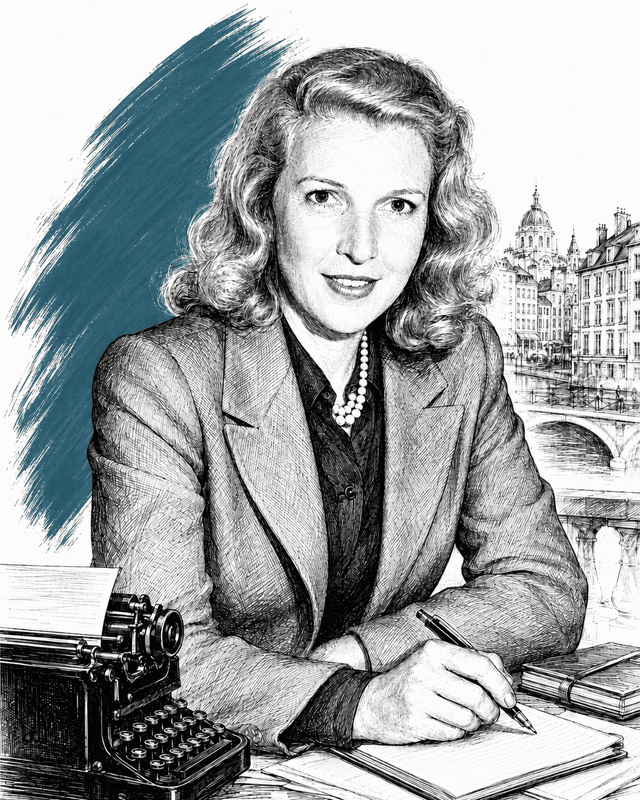
Martha Gellhorn
War correspondent who covered the Spanish Civil War, D-Day, and conflicts across five more decades; Hemingway's third wife, 1940–1945.
View author