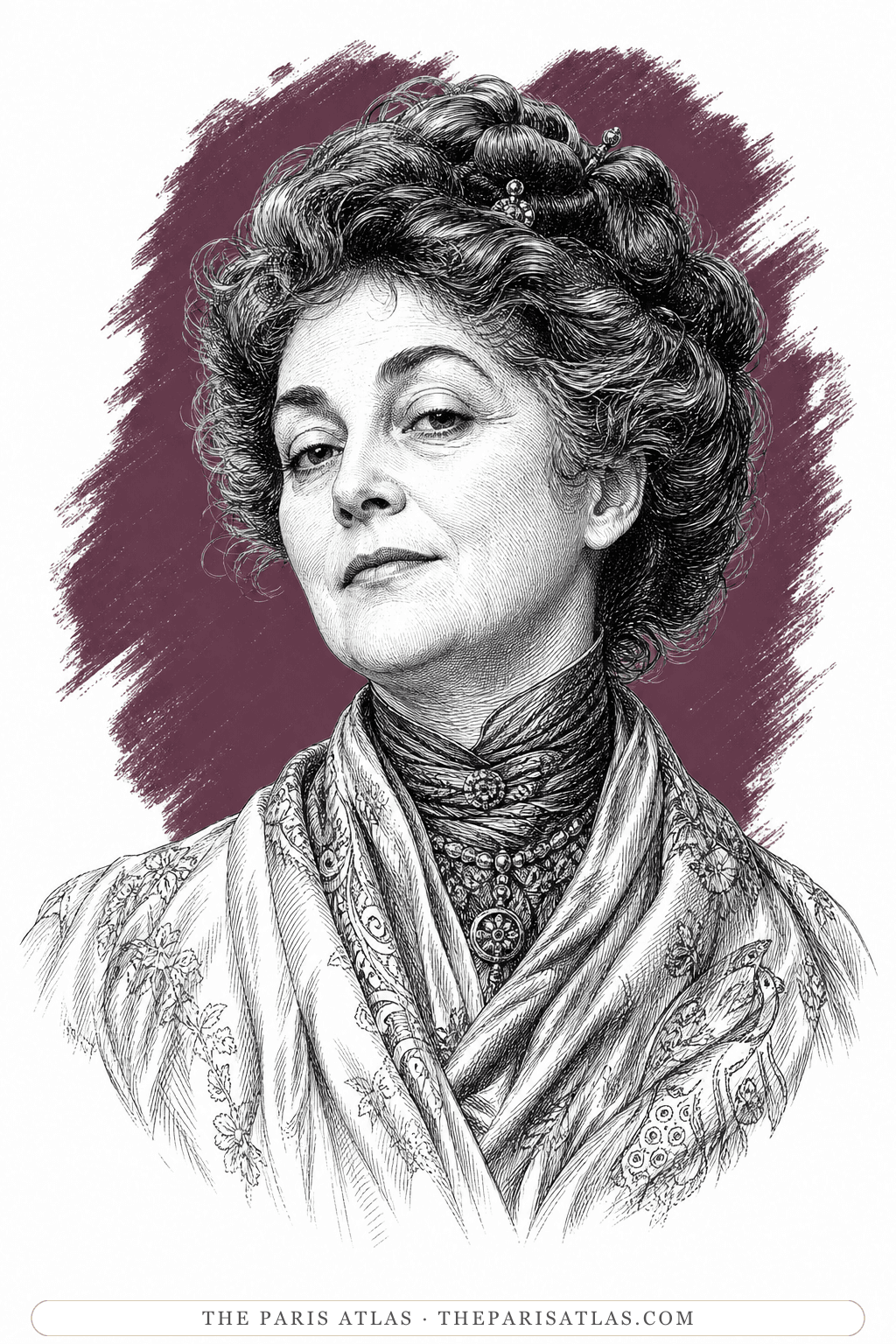
Sophia Grieve Ryder
Wendell's mother — salon hostess, wit, and the woman who kept the family alive for ten years by writing begging letters signed "Mother".
To be needed by her family and obeyed by it. The book says she gave herself to be devoured, but that in the devouring they had to acclaim her.
The book

At a glance
- Wendell's mother and the family's provider
- Eldest of fourteen; three sons — Gaybert, Aaron who died at six months, and Wendell
- Twice; the second husband, Alex Alexson, a Swede, was eventually turned out
- Held in her own bedroom, and none the worse for it
- "Mother" — on every begging letter, to every stranger
- Adam Bede, with her hand on the title
- Zadel Barnes · Journalist and suffrage campaigner; Barnes's paternal grandmother
Who they are in the book
Spoiler-freeSophia Grieve Ryder is an invented character in Ryder, the 1928 first novel by the American writer Djuna Barnes, and the strongest presence in it. She is the eldest of fourteen children of Jonathan Buxton Ryder, a Connecticut book-dealer, and of Cynthia, who was married at sixteen and had lost her mind by the time the last child came. Sophia grew up in a house of thin partitions, noticing everything, and turned what she noticed into a career of being entertaining.
By 1900 she is running a salon out of her own bedroom in London, its walls covered several inches deep in overlapping pictures of everyone she has ever admired, because she never removed one, only covered it over. She collects people by a single reliable trick: she tells a woman to call her Mother, and the woman does.
She is drawn from Barnes's grandmother Zadel Barnes, a journalist and suffrage campaigner who lived with the family and taught the children at home.
How Sophia Grieve Ryder Is Portrayed
- The five chamber-potsShe commissions five of them, lustre-finished, each lettered in flourished gold under the lip with a line of a rude verse, and uses them to take the measure of her callers: what a man says when he comes back into the room tells her what he has for poetry and what for observation. The fifth is her own, and carries the word "Amen".
- "Call me mother!"Her method with other women, and it never fails. When a guest's wife pulls back by so much as a gesture, Sophia crosses the room in her Liberty silks, head tilted, and says it. The older they are, the more appeased; the younger, the more eager. Amelia is caught this way, and so, years later, is Kate-Careless.
- The wallsGeorge Eliot, Brontë, Elizabeth Stanton, Ouida, Beatrice Cenci, a Samoan chief who gave her ten heathen teeth, Browning, Wilde — and, layered over all of them as her affections changed, photographs of the Swede she married second. She never took a picture down, so at forty the walls were an inch deep and at sixty a good two inches, and the originals were, like her, nothing erased but much submerged.
- The begging lettersWhen the money goes she keeps the household alive for ten years by writing hundreds of letters in elegant script, at a table her son built out of crates, with a pen made from a shingle and a hen feather and ink contrived of soot. They are addressed to rich men and, on one occasion, to a President, and every one of them is signed "Mother". Her family does not find out until long after her death.
- Beethoven in a dreamShe tells Wendell, when he is old enough, that she hated his father far too much to have conceived him by ordinary means, and that Beethoven walked towards her in a temple of music, melted into her human side and came out the other, hands still clasped behind his back, without so much as passing the time of day. Nine months later she had a son. Wendell says he will have it inscribed on his razor.
- The lecture on feetTold that Amelia has read very little, she delivers an impromptu history of the world by footwear: Peeping Tom on tiptoe, Salome whirling, Napoleon not shuffling. She ends it by saying she has gone to meet many destinies in little shoes, but none so harrowing as the day she went out for a Latin lesson and came back a mother.
- Beggar abroad, queen at homeShe goes to the city in irreproachable linen and a threadbare green-grey cloak thirty summers old, because the cloak asks more effectively than her words do. The book's summary of the arrangement is six words long: beggar at the gates, to be queen at home.
If you like Ryder


If you like Djuna Barnes
Explore authors with a similar voice, perspective, and influence.
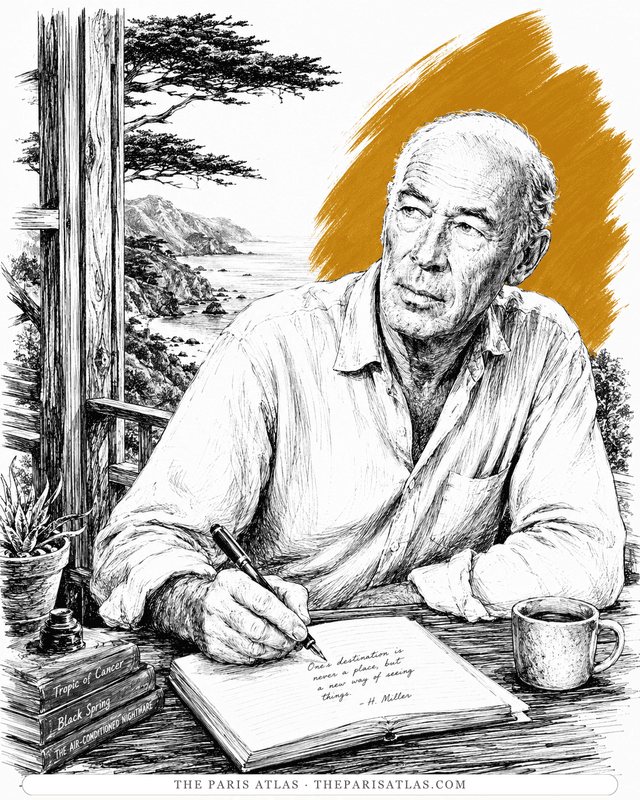
Henry Miller
The Brooklyn dropout who arrived in Paris broke at thirty-eight and wrote the exuberant, banned books that ended American censorship.
View author
Louis-Ferdinand Céline
The doctor of the Paris slums who wrote the century's blackest, funniest novel — and changed the sound of French prose.
View author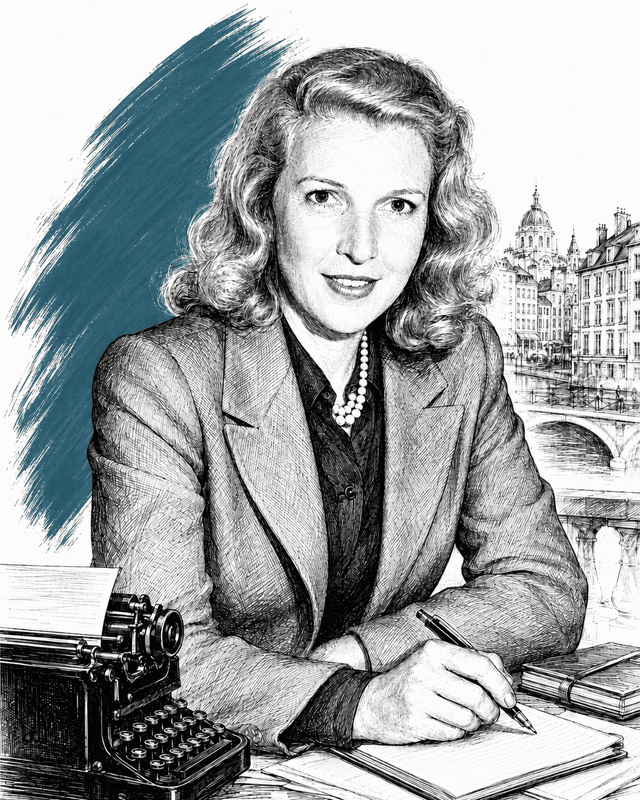
Martha Gellhorn
War correspondent who covered the Spanish Civil War, D-Day, and conflicts across five more decades; Hemingway's third wife, 1940–1945.
View author