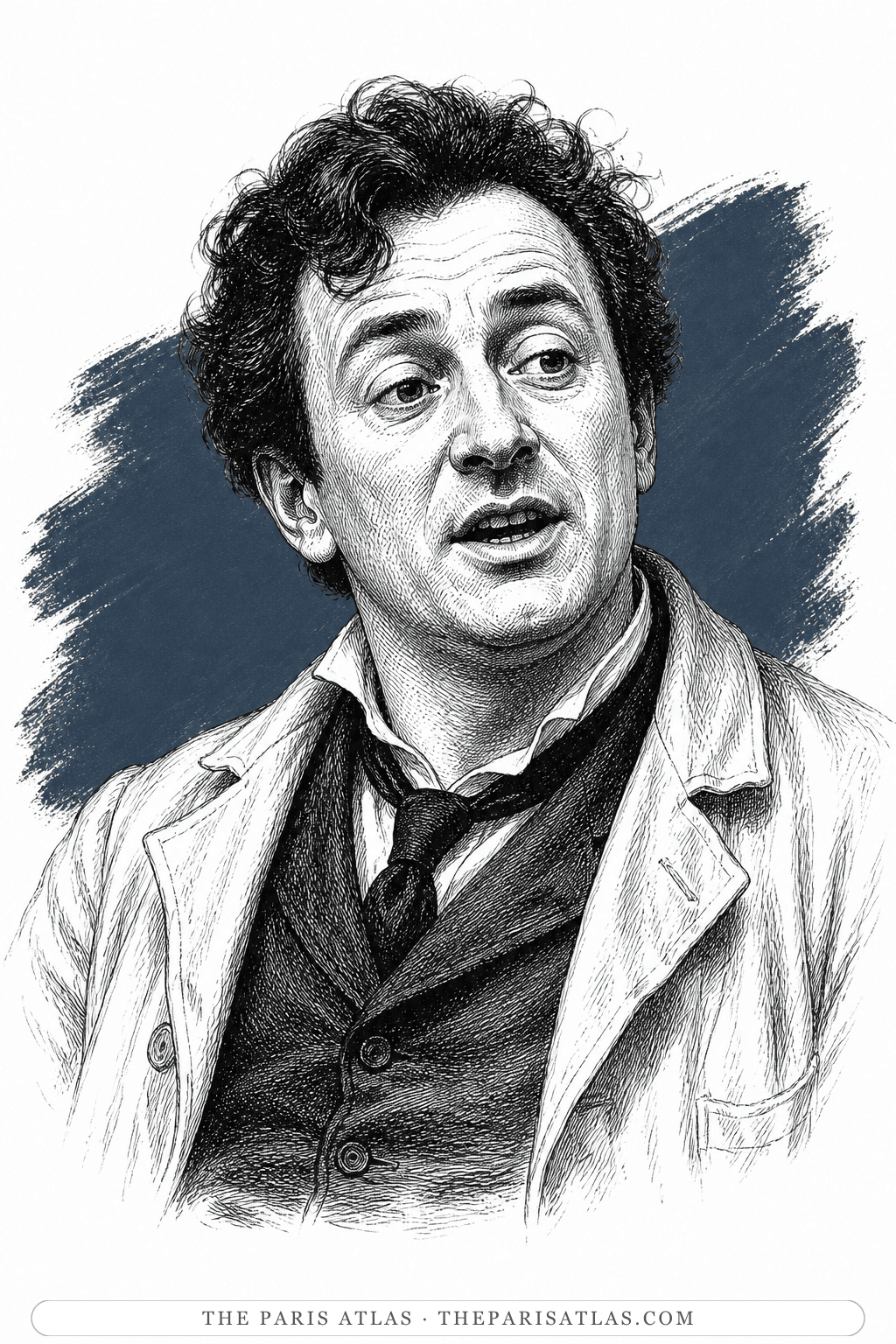
Dr Matthew O'Connor
Family physician to the Ryders, and the book's great talker. He delivers the children and then explains the universe. He turns up again in Nightwood.
To be listened to, and to be forgiven — in that order. He is on his way to and from Father Lucas's confessional through the whole of his longest chapter, and he does not stop talking on either leg of the journey.
The book

At a glance
- Family physician to the Ryders
- One of thirteen children; brother Felix died young of St Vitus's dance
- Father Lucas
- Nightwood (1936), where he does most of the talking
- That he is bottom up instead of head, and that no vintner has the receipt for it
Who they are in the book
Spoiler-freeDr Matthew O'Connor is an invented character in Ryder, the 1928 first novel by the American writer Djuna Barnes. He is the Ryders' family physician, an Irish Catholic from a family of thirteen children, and once he starts talking the book hands him the floor for whole chapters at a time.
He is the same character who appears eight years later in Nightwood, Barnes's best-known novel, doing much the same thing at greater length. Readers who meet him there first are usually surprised to find him already fully formed here, delivering babies in a log cabin above the Hudson.
What he says about himself in this book he says plainly. He describes himself as one of those creatures who have their bottom up instead of their head, says no proportion of wine could be measured out for such a reversal of the established order, and remembers going up the aisle at seventeen holding his satin robe about his backsides, tripping up to God like a good woman.
How Dr Matthew O'Connor Is Portrayed
- He does the deliveriesSent for at night by a child running down the road, he arrives on doctor's feet, asks for scissors and fine silken twine, sits on the edge of the bed, and tells Amelia she will not die. He holds the baby up, slaps it, turns it over and announces a boy.
- The one-line diagnosisWhen Wendell looks at his newborn son and says the babe is black, O'Connor answers that bile alone is father of its colour. Wendell says "Oh!" and the subject closes. It is the only correction anyone in the book delivers to Wendell without an argument.
- The thirteen O'ConnorsHis soliloquy opens on his own family: thirteen of them round the table until little brother Felix, who had St Vitus's dance, threw his soup into the air and died — and then thirteen little O'Connors filing behind the coffin crying into their gloves and their sleeves and their wrists, throwing the gloves into the grave, and understanding nothing.
- Father LucasThe priest he is going to confess to, remembered as a Moll of God who stroked his enormous belly and told the seventeen-year-old Matthew to keep himself pure. Asked whether he had been brought up in the Catholic Church, Matthew said no, and damn your eyes, he had come to it with a free heart — once a lady always an acrobat.
- Three great moments of historyDelivered to a boy carrying a pot of stolen honey. The first is Cleopatra, bored past rescue, reaching under the figs for the asp and putting it to her breast out of the remnant of maternal instinct she was allotted at birth. The second is Barbara Frietchie at her window as Stonewall Jackson rides past. The third is General Lee at the courthouse, unsheathing his sword, presenting it hilt first and saying: you know what you can do with this, don't you?
- The argument about tombsThe boy weeps that everything comes to the worm and asks what use his best efforts are above another's worst. O'Connor's answer is that thought is like a caged pigeon — you must let it go at death, but it was yours once, and it will go croaking off with something of your voice in it, while the man who never had the bird has nothing at all to set loose as he goes down.
- How he ripenedTold that his wisdom sounds ill-gotten and over-heady for a man so young, he agrees and explains: others come slowly to a bouquet, which is the correct way for a man to ripen, but he came to his fermenting overnight and broke his bottle long ago. He wipes away a tear before it reaches his moustache.
If you like Ryder


If you like Djuna Barnes
Explore authors with a similar voice, perspective, and influence.

Henry Miller
The Brooklyn dropout who arrived in Paris broke at thirty-eight and wrote the exuberant, banned books that ended American censorship.
View author
Louis-Ferdinand Céline
The doctor of the Paris slums who wrote the century's blackest, funniest novel — and changed the sound of French prose.
View author
Martha Gellhorn
War correspondent who covered the Spanish Civil War, D-Day, and conflicts across five more decades; Hemingway's third wife, 1940–1945.
View author