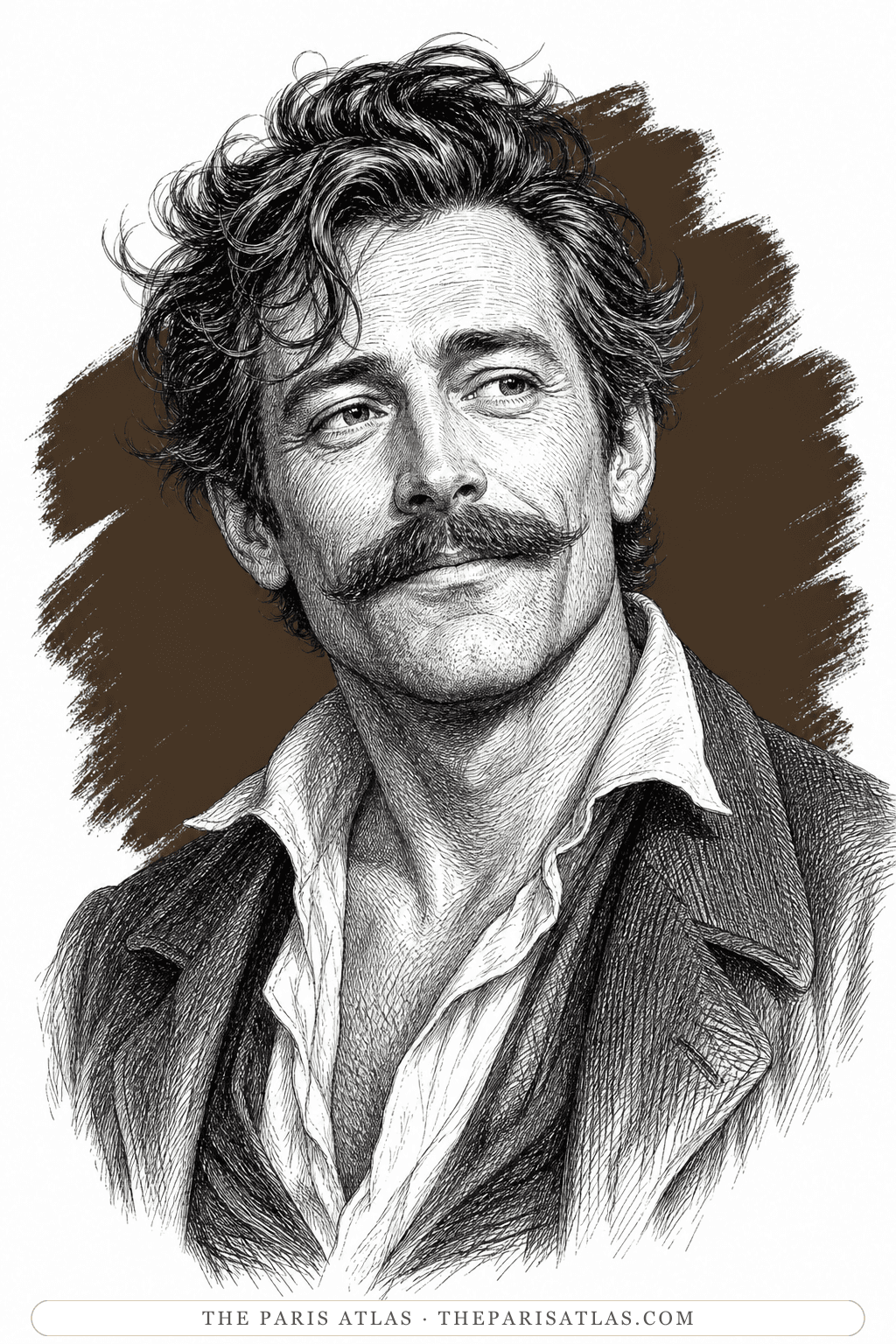
Wendell Ryder
The man the book is named for — a polygamist who has earned thirty shillings and ninepence in his life, keeps his children out of school, and can argue for anything.
More of everything, and no obligation attached to any of it. He tells anyone who will listen that no woman, however fanciful, can be content without his particular kind of attention, and he applies the theory at home.
The book

At a glance
- The Ryder of the title; Sophia's second son
- Winter 1865, to Sophia Grieve Ryder, who gave him her own surname
- Thirty shillings and ninepence, over three weeks as a drug clerk
- His mother, his wife Amelia, his mistress Kate-Careless, and children by both
- A two-room log cabin, fifteen feet by twenty-nine, in the pine woods above the Hudson
- Polygamy; free thought; home schooling; that he was fathered by Beethoven in a dream
- Wald Barnes · Cornwall-on-Hudson, New York
Who they are in the book
Spoiler-freeWendell Ryder is the invented central character of Ryder, the 1928 first novel by the American writer Djuna Barnes. He is the son of Sophia Grieve Ryder, born in the winter of 1865 and given his mother's surname rather than his father's, and he grows up in London among his mother's guests — a boy on the top stair of a marble staircase, listening. He believes that one woman is never enough for a man, and he arranges his adult life to prove it: a wife, a mistress, and children by both, in a two-room cabin in the hills above the Hudson.
He is not a villain and the book does not treat him as one. He is charming, endlessly articulate, tender with infants, and completely unwilling to earn a living. Three weeks as a drug clerk at ten shillings and threepence a week ended with him being sacked, and the book records that thirty shillings and ninepence was the whole sum ever paid to him for work done.
He is a version of Barnes's father, Wald Barnes, who believed in polygamy and moved his mistress into the family house at Cornwall-on-Hudson alongside his wife and children.
How Wendell Ryder Is Portrayed
- The names he gave himselfCalled John as a child, he asked for a better name and was handed a history of England to pick from. He chose Rufus, kept it three summers, then developed a passion for Black Gilbert. So many names followed that he had forgotten most of them by fifteen. Later, running a mail-order advice business, he traded as Tommy-Tapper.
- Fathering as a card gameThe Chaucerian chapter on his occupations has him dealing children like a pack of cards, black for each daughter and red for each son, aiming at a full fifty-two. He gives up chess for it on the grounds that the night is large with wenches, and keeps count.
- Never earning againSacked from the chemist's after three weeks — his fellow clerks said it was for delivering prussic acid to a nursing mother in Chiswick instead of bismuth — he vowed never again to support himself, and the book notes he kept the vow with a persistency worthy of a better cause.
- Standing in the trapdoorThe day his mistress first walks into the cabin, Wendell appears above the company standing naked astride the three-foot loft opening with the ladder drawn up, announces that they may know their destiny, and laughs. Everyone's eyes come down. Amelia's do not, until she says "My God!" and they do.
- Dressing the child that cannot hearA baby is born who does not cry, hear, or startle at anything. Wendell dresses it himself, in a passage that lists every band, pin and button in the order he fastens them, repeating that nothing must choke or ruck or tighten, and walks it five hundred paces from the hearth to the door and back with his tears falling like soft rain. It is the least defended thing he does in the book.
- The school board and the wellSummoned to explain why his children do not attend school, he tells the room that the Board of Education would be satisfied if a child could recite Hamlet backwards, describes each of his children in turn to a hall full of neighbours, and then invites everybody to go and look into the school's own well, where three rats and a cat are floating. The meeting ends with the crowd shouting about the pump, and Wendell driving home.
- Arguing with Molly DanceHe goes to buy a dog and stays to argue theology with a breeder who believes Henry James was a horse-thief and Caesar betrayed Jesus. He cannot move her an inch, and the chapter gives her the better of it: he is always, she says, for taking away the divine privileges.
Wald Barnes, the model, kept the arrangement going at Cornwall-on-Hudson for years. Barnes wrote the household twice: here, and again thirty years later in the verse play The Antiphon, which is harder to read as anything but the same family. What else happened in that house is disputed, and the disagreement is old; nothing outside the family's own papers establishes it.
If you like Ryder


If you like Djuna Barnes
Explore authors with a similar voice, perspective, and influence.
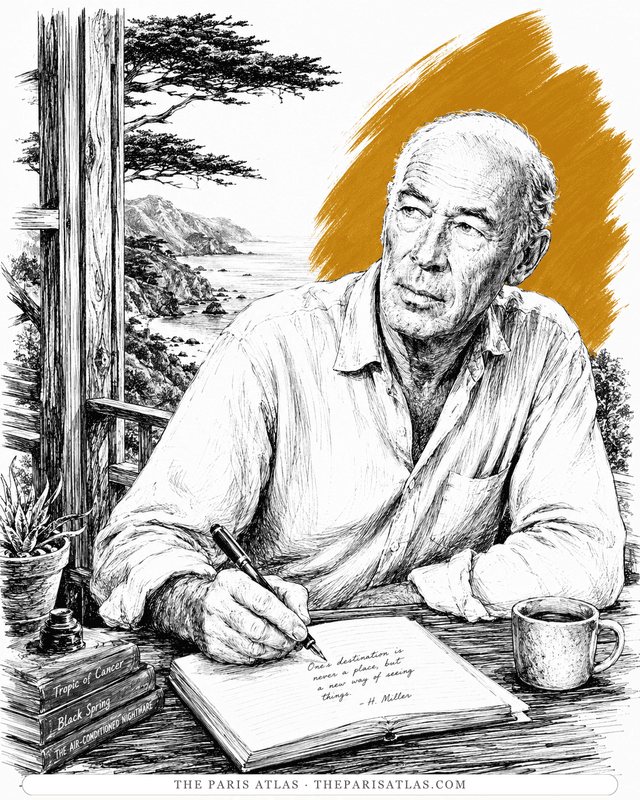
Henry Miller
The Brooklyn dropout who arrived in Paris broke at thirty-eight and wrote the exuberant, banned books that ended American censorship.
View author
Louis-Ferdinand Céline
The doctor of the Paris slums who wrote the century's blackest, funniest novel — and changed the sound of French prose.
View author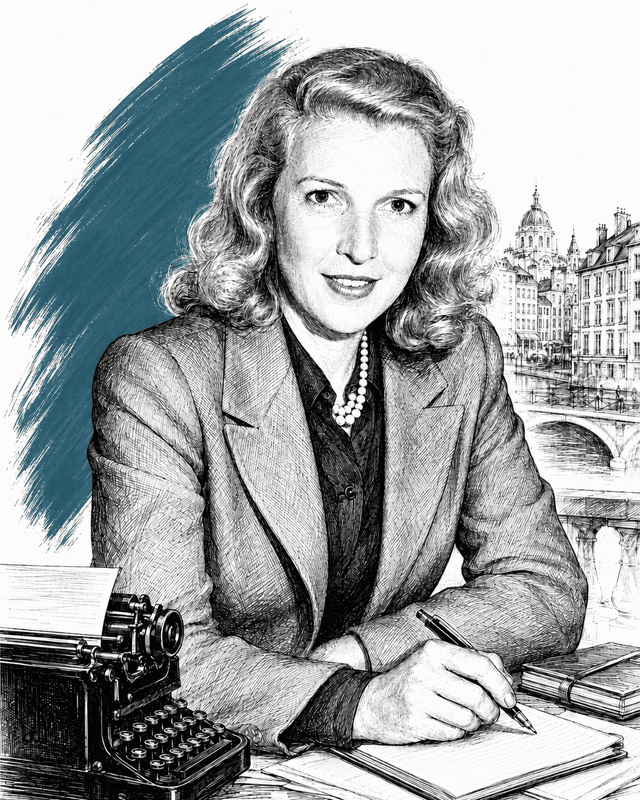
Martha Gellhorn
War correspondent who covered the Spanish Civil War, D-Day, and conflicts across five more decades; Hemingway's third wife, 1940–1945.
View author