Sky Mirror
by Anish Kapoor
A concave dish of polished stainless steel about six metres across, weighing more than ten tonnes, tilted up towards the sky on the forecourt of Nottingham Playhouse. Anish Kapoor made it in 2001, and it was the first of the mirrored public works that later included Cloud Gate in Chicago. Because it is concave it shows the world upside down. He has made several later works called Sky Mirror, and they are different objects at different sites.
- 2001
- Polished stainless steel, cold-forged, on a water feature
- Nottingham PlayhouseNottingham, United Kingdom
About Anish Kapoor
What the sculpture is
Sky Mirror is a dish, not a ball. The Nottingham Post describes it as nearly six metres in diameter and weighing ten tonnes, and Nottingham Playhouse gives six metres and more than ten tonnes. The reflecting face is concave, which is what turns the reflection upside down.
It is made from strips of stainless steel. The Nottingham Post records that it was manufactured in Finland by a process of cold forging and then finely polished to give the reflective surface.
The mounting is substantial. The dish is attached to a water feature by 18 stainless steel bolts, each of them 1.6 metres long, and the forecourt it stands on took 150 cubic metres of concrete with ten tonnes of steel reinforcement.
The commission and the money
Nottingham Playhouse commissioned it. The BBC reported at the unveiling that the work received £921,000 in National Lottery funding, which it described as the largest sum given to any single artwork. The sculpture was part of a £1.2 million refurbishment of the theatre.
The theatre defended the cost in public. Venu Dhupa, then its executive director, said the hope was that the work would become an icon, and framed it as an invitation: we're saying to a citizen of Nottingham, come and celebrate your city.
Anish Kapoor credits a different person with making it happen. Speaking at the twentieth anniversary in 2021 he said the work was installed with the help and enthusiasm of the then director of the Playhouse, Ruth Mackenzie.
A mirror that could start fires
A six-metre concave mirror is a burning glass. The BBC's report on the unveiling was headlined on exactly that problem: in summer the sun striking the polished surface would make it act like a magnifying glass, with a risk to birds and to passers-by.
The answer was a screen. A giant sunscreen was erected on the roof of the theatre to shield the dish, and the BBC noted that it was designed to act as a backdrop to the sculpture and to be in keeping with it.
The behaviour had been tested first. The Nottingham Post records that before installation the safety of the reflections and the work's resistance to bad weather were checked using a smaller sculpture manufactured the same way.
The first of the mirrors
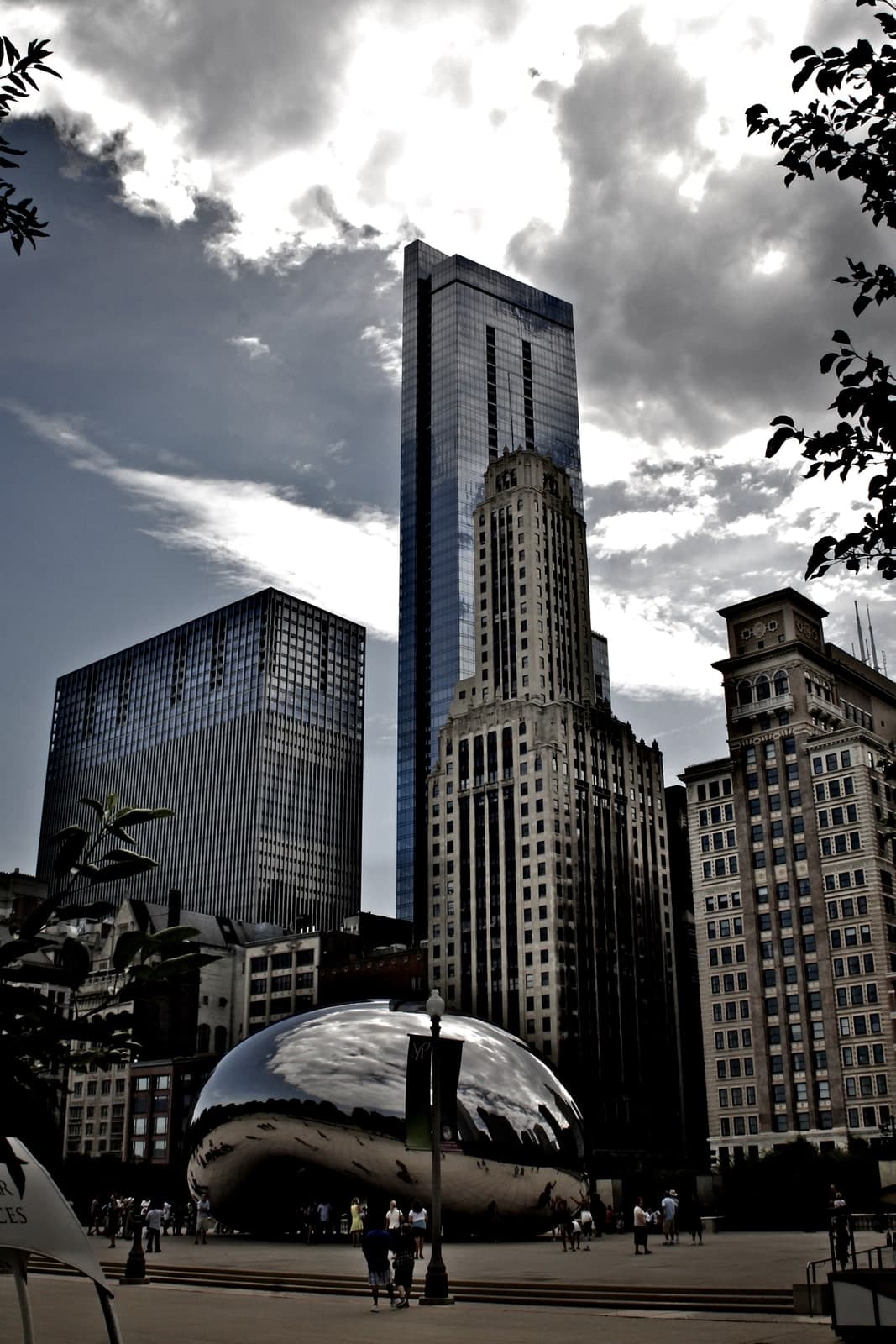
Sky Mirror came before the famous ones. The Nottingham Post records that it became the first of a series of works in which Anish Kapoor used reflective surfaces, a series that includes Cloud Gate in Chicago.
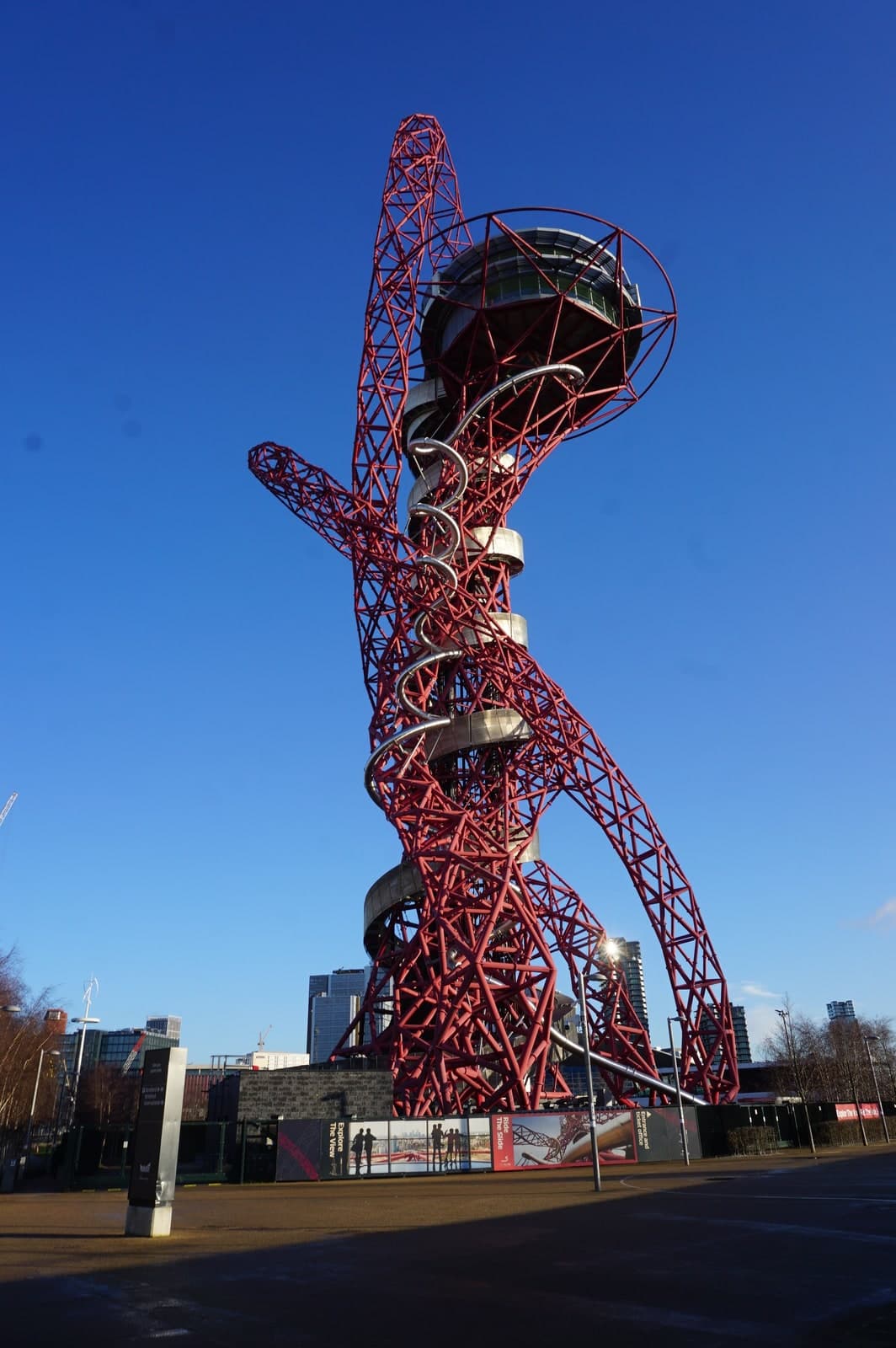
At the time it stood alone. The BBC reported in 2001 that Sky Mirror would be the artist's only work on permanent public display in the United Kingdom, which stopped being true when Temenos went up in Middlesbrough and the ArcelorMittal Orbit in London.
The device is simple and the effect is not. Anish Kapoor described it in 2021 as in many ways a confusing object. Its concavity, he said, creates a surface and spatial field that is hard to determine. Set in the city centre, he added, it invites communal participation in a moment of fracture and distortion. He summarised it as bringing the sky to the ground and turning the world upside down.
Which Sky Mirror this is
Anish Kapoor has repeated the title. The Nottingham work of 2001 is the original. A larger version was shown at the Rockefeller Center in New York in 2006 and in Kensington Gardens in London in 2010. His own work listing also includes a Sky Mirror of 2009 in the Pavilion Gardens for the Brighton Festival, at 270 by 270 by 151 centimetres.
The sizes are not close. Lisson Gallery lists a Sky Mirror of 2015 in stainless steel at 259 by 300 by 132 centimetres, a tabletop object beside the six-metre dish in Nottingham. A reader comparing figures across versions will get nonsense unless the version is named.
One of the later ones reached France. A Sky Mirror was among the six works Anish Kapoor showed in the gardens of the Château de Versailles from 9 June to 1 November 2015, an exhibition remembered for the attacks on a different work in it, Dirty Corner. That was not the Nottingham dish, which has never left its forecourt.
Twenty years on the forecourt
The work stayed and the argument died. Nottingham Playhouse's own statement calls it a fantastic tourist attraction for the city and says the theatre and the sculpture each have their own identity while both belong to what the Playhouse delivers.
Local affection followed. The BBC's Nottingham service reported it as a favourite city landmark within a few years of its unveiling, and the Nottingham Post marked its twentieth anniversary in 2021 with the artist's own recollection.
It remains where it was installed, on the forecourt at Wellington Circus, in the open air and free to approach.
Close reading
Reading the work, detail by detail
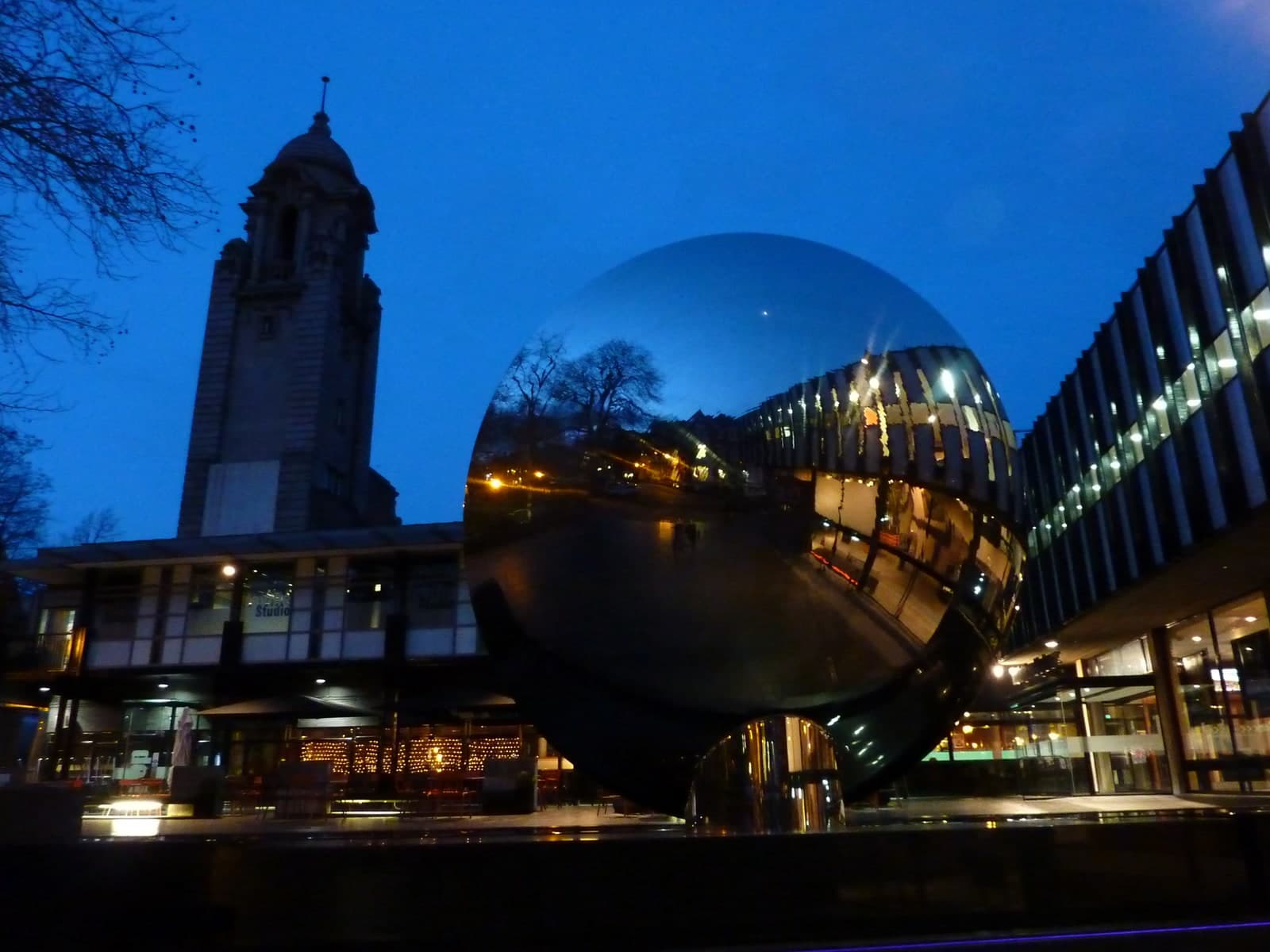
The photograph is taken at dusk from the theatre forecourt, slightly below the dish and to one side. Almost everything visible inside the disc is a reflection of what stands behind and around the camera, inverted by the concave face. The back of the dish, its supports and the water feature beneath it are largely out of frame or in darkness.
1.The dish holds an inverted world
The whole face of the disc is filled with an image that is the wrong way up: trees hang downward, a lit street runs across the upper part, and the sky sits below them. A concave mirror inverts what it reflects beyond its focal point. None of the content is on the sculpture; all of it is the street behind the photographer.
2.Bare trees, hanging downwards
Leafless trees appear across the upper part of the disc with their crowns pointing towards the bottom of the frame. They are winter trees on the far side of Wellington Circus. Their position within the disc is a function of where the photographer stood, and shifts with every step a viewer takes.
3.Street lamps, drawn into a curve
A line of orange lamps runs across the disc and bends as it goes, following the curvature rather than the straight street it belongs to. Below the lamps a stretch of wet road and pavement is visible. The warm orange is sodium street lighting, and it is the strongest colour anywhere in the photograph.
4.The theatre wraps round the right edge
Towards the right edge of the disc the reflection of a long glazed frontage is stretched and bent around the rim, its window bays narrowing as they approach the edge. That is Nottingham Playhouse itself, the building the sculpture was commissioned for, appearing in its own forecourt sculpture.
5.The lower dish goes dark
Below the middle the disc is nearly black, with only faint smears of light on it. That part of the concave face is angled to reflect the dark ground and the unlit forecourt rather than the sky or the lamps. It is a reflection of shadow, not a different finish on the steel.
6.The rim cuts a clean circle
The top edge of the dish reads as a clean unbroken curve against the blue of the sky, with no frame or lip standing proud of it. The Nottingham work is about six metres across and weighs more than ten tonnes, and at this angle the plate shows the outline but gives no view of the back of the dish or its fixings.
7.Where the dish meets its setting
At the foot of the disc the mirrored face runs down into a dark horizontal band across the bottom of the frame. The Nottingham Post records that the dish is fixed to a water feature by 18 stainless steel bolts, each 1.6 metres long, but neither the bolts nor the water is legible in this light.
8.The tower behind, not reflected
A stone tower with a domed lantern stands to the left of the dish, seen directly rather than in reflection. It is behind the sculpture from this viewpoint and does not appear in the disc. The pairing shows how narrow the mirrored view is: the dish returns only what lies in front of it.
Timeline
2001
Sky Mirror is unveiled outside Nottingham Playhouse on 27 April, funded with £921,000 of National Lottery money as part of a £1.2 million refurbishment.
2001
A sunscreen is erected on the theatre roof to stop the concave dish concentrating sunlight on birds and passers-by.
2004
Cloud Gate, the best known of the mirrored works that followed, is installed in Millennium Park in Chicago.
2006
A larger Sky Mirror is shown at the Rockefeller Center in New York.
2010
A Sky Mirror is shown in Kensington Gardens in London.
2015
A Sky Mirror is among the six works Anish Kapoor shows in the gardens of the Château de Versailles, from 9 June to 1 November.
2021
The twentieth anniversary is marked in Nottingham; Anish Kapoor credits Ruth Mackenzie, the theatre's director at the time, with getting the work installed.
Where to see it
Nottingham Playhouse
Nottingham, United Kingdom
A public viewing address has not yet been confirmed for this holding.
On permanent public display outdoors on the theatre forecourt at Wellington Circus. Later works titled Sky Mirror are separate objects at other sites.
Frequently asked questions
Where is Anish Kapoor's Sky Mirror?
The original of 2001 stands on the forecourt of Nottingham Playhouse at Wellington Circus in Nottingham, in the open air and free to approach. Later works of the same title have been shown in New York, London, Versailles and elsewhere, and they are different objects.
How big is Sky Mirror and what is it made of?
The Nottingham work is about six metres in diameter and weighs more than ten tonnes. It is made from strips of stainless steel, manufactured in Finland by cold forging and then finely polished. It is fixed to a water feature by 18 stainless steel bolts, each 1.6 metres long.
Why does Sky Mirror show everything upside down?
Because the reflecting face is concave rather than flat or convex. A concave mirror inverts what it reflects beyond its focal point, so the sky appears at the bottom of the dish and the ground above it. Anish Kapoor described the work as bringing the sky to the ground and turning the world upside down.
How much did Sky Mirror cost?
It received £921,000 in National Lottery funding, which the BBC reported at the time as the largest amount given to any single artwork. It was part of a £1.2 million refurbishment of Nottingham Playhouse, which commissioned it.
Is it true that Sky Mirror can start fires?
A concave mirror six metres across concentrates sunlight, and the risk was taken seriously. The BBC reported at the unveiling that in summer the sun would make the surface act like a magnifying glass, and that a giant sunscreen was put on the roof of the theatre to shield it. The behaviour was tested beforehand on a smaller sculpture made the same way.
Which Sky Mirror was at Versailles?
Not this one. A Sky Mirror was one of the six Anish Kapoor works shown in the gardens of the Château de Versailles from 9 June to 1 November 2015, but the Nottingham dish of 2001 has never left its forecourt. The Versailles exhibition is chiefly remembered for the repeated attacks on another work in it, Dirty Corner.
More by Anish Kapoor
If you like Anish Kapoor
Explore sculptors from the same movements and circles.
Arman
French-American artist, lifelong friend of Yves Klein, and a founder of New Realism.
View artist
Jean Arp
Strasbourg-born sculptor and poet — Hans in German, Jean in French, both all his life — who co-founded Dada at the Cabaret Voltaire in 1916, composed collages by dropping torn paper 'according to the laws of chance', and settled at Meudon outside Paris in a house his wife Sophie Taeuber-Arp designed.
View artist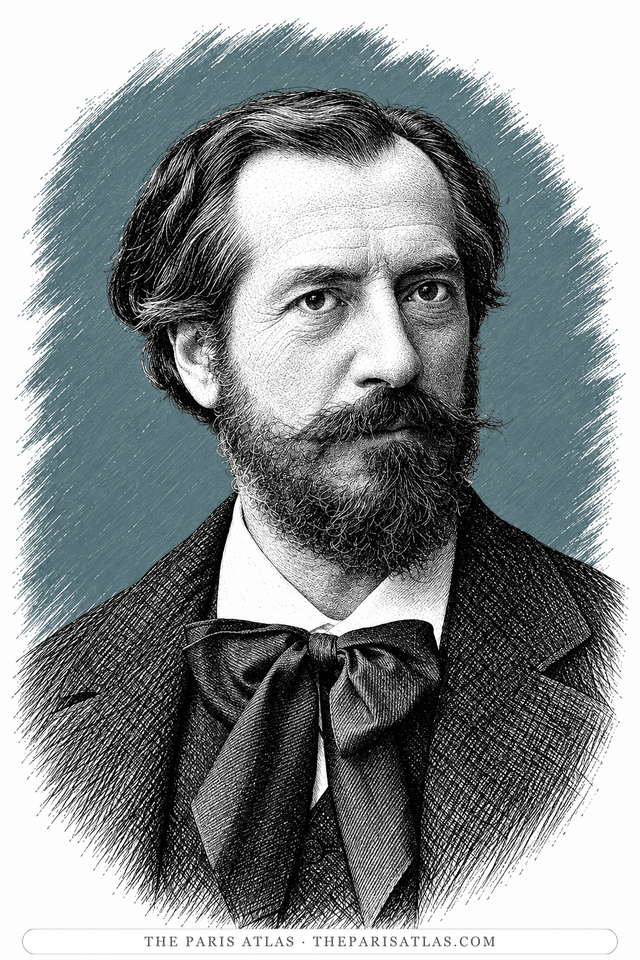
Frédéric Auguste Bartholdi
Frédéric Auguste Bartholdi was a French sculptor best known for designing the Statue of Liberty, dedicated in New York Harbor in 1886. Born in Colmar and based in Paris, he created public monuments that gave visible form to ideas of freedom, resistance and national memory. His other major works include the Lion of Belfort and the fountain in Lyon's Place des Terreaux.
View artist
References
The sources below include collection records, catalogues, scholarly research, and primary materials that informed this page. They document Sky Mirror, its making, and its place in cultural history.


1Fire-starting sculpture unveiled
PeriodicalBBC News, 2001Used forThe unveiling on 27 April 2001: the £921,000 of National Lottery funding described as the largest for a single artwork, the £1.2 million refurbishment, Nottingham Playhouse as commissioner, Venu Dhupa's statement, the magnifying-glass risk and the roof sunscreen, and the claim that it was then the artist's only permanent public work in the United Kingdom.
220 years on, this unique Nottingham sculpture still captures the sky and those passing by
PeriodicalNottingham Post, 2021Used forThe physical facts: nearly six metres across, ten tonnes, strips of stainless steel cold-forged in Finland and polished, 18 bolts of 1.6 metres, 150 cubic metres of concrete and ten tonnes of reinforcement, the test on a smaller sculpture, the Nottingham Playhouse statement, and Anish Kapoor's twentieth-anniversary remarks crediting Ruth Mackenzie.

3Anish Kapoor
WebsiteLisson GalleryUsed forThe gallery's listing of a Sky Mirror of 2015 in stainless steel at 259 × 300 × 132 cm, used here to show how far the versions differ in size.
4Biography
WebsiteAnish Kapoor StudioUsed forThe dated record of later Sky Mirror showings and of the 2015 Versailles exhibition.
5Anish Kapoor à Versailles : qu'y voit-on vraiment ?
PeriodicalLes Inrockuptibles, 2015Used forThe Versailles exhibition of 9 June to 1 November 2015 and its six works, one of which was a Sky Mirror.
6Copyright, Designs and Patents Act 1988, section 62: representation of certain artistic works on public display
Official recordThe National Archives, legislation.gov.uk, 1988Used forThe United Kingdom freedom-of-panorama provision, read in full rather than in summary: it covers sculpture permanently situated in a public place, which this work is, and is why a freely licensed photograph of it can lawfully exist. It is recorded rather than relied on, being United Kingdom law.
These references provide the documented foundation for this work's history and interpretation. Claim-level citations remain attached to the specific claims they support.
 Explore more resources