Anne of Austria
The queen of France, twenty-six or twenty-seven, Spanish-born and watched by her husband and his minister, who gives Buckingham the studs.
To keep her honour intact in a court where her husband and his minister both want it damaged.
The book
The Three Musketeers
Alexandre Dumas
At a glance
- Twenty-six or twenty-seven in 1625
- Donna Estafania, her last Spanish woman; Laporte, her valet; Constance Bonacieux, her seamstress
- Anne of Austria · 1601–1666 · Valladolid, Spain
Who they are in the book
Spoiler-freeAnne of Austria was the real queen of Louis XIII, and the novel takes her at twenty-six or twenty-seven, in what the narrator calls the full splendour of her beauty. She has been stripped of her Spanish women by the king's jealousy and the cardinal's persecution, and she is loved from a distance by the English minister Buckingham. The twelve diamond studs she gives him are the king's gift, and the plot of the first half is the race to get them back onto her dress.
How Anne of Austria Is Portrayed
- The portrait, Chapter XIITwenty-six or twenty-seven, with emerald eyes full of sweetness and majesty, a small rosy mouth with the slightly protruding underlip of the House of Austria, and chestnut hair worn plainly with much powder.
- Buckingham at her feet, Chapter XIIIn the Louvre, in a plain white satin robe, she tells the duke that everything separates them, the sea, the enmity of kingdoms and the sanctity of vows, and that they must never meet again. He kisses the hem of her robe.
- The keeper of the seals, Chapter XVIOn the king's order the chancellor Séguier searches her for Buckingham's letter, and she gives it up from her bodice rather than be touched.
- The ring, Chapter XXIIAt the ballet she takes d'Artagnan's hand behind a tapestry and leaves a ring in it, which he later sells for seven thousand livres to equip the four.
If you like The Three Musketeers


If you like Alexandre Dumas
Explore authors with a similar voice, perspective, and influence.
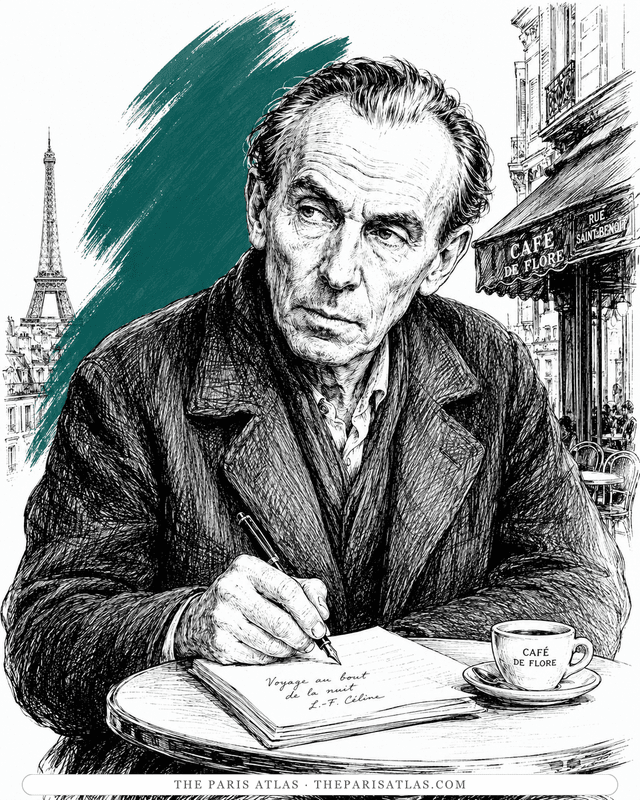
Louis-Ferdinand Céline
The doctor of the Paris slums who wrote the century's blackest, funniest novel — and changed the sound of French prose.
View author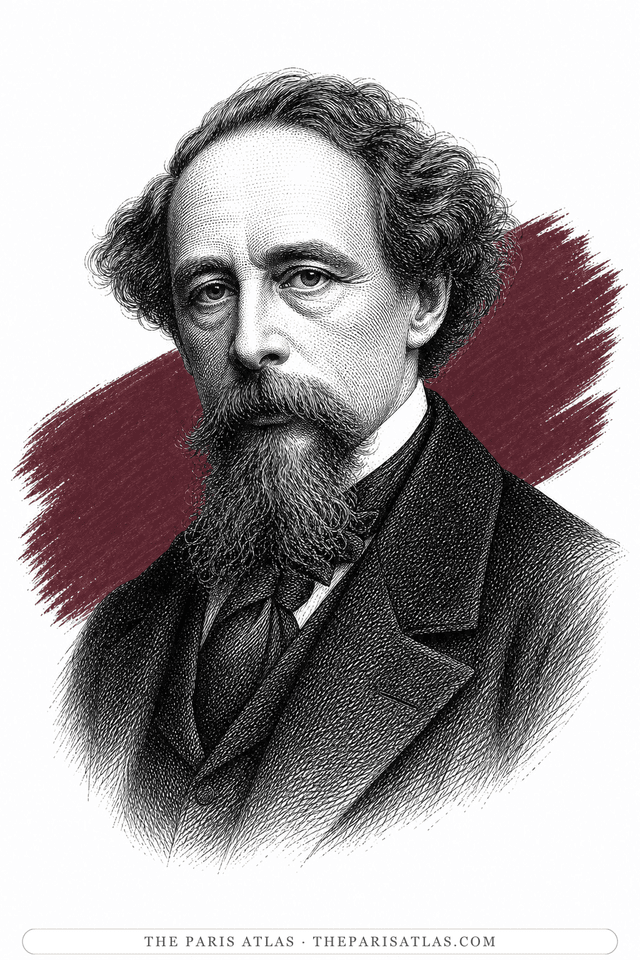
Charles Dickens
The most popular English novelist of the nineteenth century, who was never a Paris resident in the ordinary sense but kept coming back for twenty-five years: one winter in a rented mansion on the rue de Courcelles, a second winter on the Champs-Élysées writing Little Dorrit, repeated compulsive visits to the Paris Morgue — the riverside building where the city displayed its unidentified dead to the public — and a novel of the French Revolution, A Tale of Two Cities, that has shaped how English readers picture Paris ever since.
View author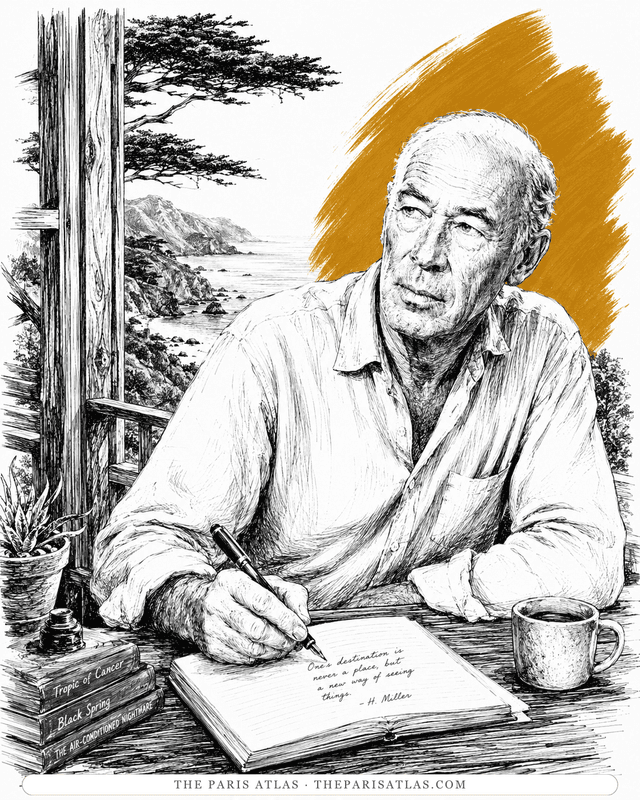
Henry Miller
The Brooklyn dropout who arrived in Paris broke at thirty-eight and wrote the exuberant, banned books that ended American censorship.
View author