John Felton
The Puritan officer set to guard Milady, who in five days becomes her instrument and stabs Buckingham at Portsmouth.
To serve God and his commander, until Milady persuades him the two are opposed.
The book
The Three Musketeers
Alexandre Dumas
At a glance
- Lieutenant, the officer Lord de Winter trusts with Milady's guard
- Puritan
- John Felton
Who they are in the book
Spoiler-freeJohn Felton was the real killer of the Duke of Buckingham at Portsmouth in August 1628. Dumas makes him a young naval officer of severe faith, plain hair and marble brow, whom Lord de Winter trusts with Milady's guard. She reads him in a glance as a Puritan and plays a persecuted one. The five chapters of her captivity are the record of his undoing.
How John Felton Is Portrayed
- The Puritan, Chapter LIIMilady recognises his kind by the plain hair, the extreme simplicity of dress and the brow polished like marble, and answers his mention of her Mass with disdain for the corrupted Catholic Lord de Winter.
- The knife, Chapters LVI and LVIIHe brings her the knife she asked for; she turns it on her own breast so that he will believe her, and the wound is real enough to need a physician.
- Portsmouth, Chapter LIXHe walks into the duke's presence, pushes his way past him, and drives the knife into his side. The chapter is dated in its title: 23 August 1628.
- Paying with his head, Chapter LXVAt the trial Lord de Winter says that Felton is at that moment perhaps paying with his head for Milady's crime.
He kills Buckingham on 23 August 1628 and is arrested on the spot. Lord de Winter tells him that Milady's ship has sailed without him.
If you like The Three Musketeers


If you like Alexandre Dumas
Explore authors with a similar voice, perspective, and influence.
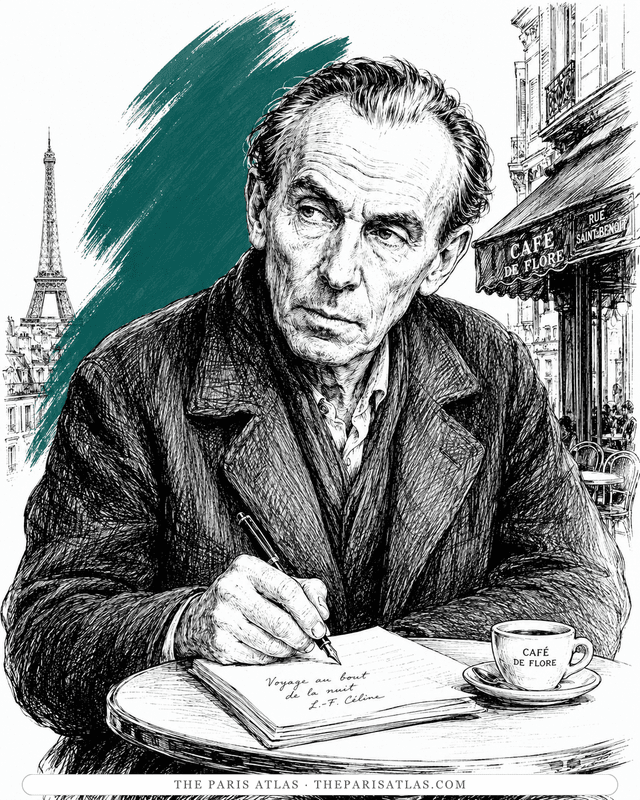
Louis-Ferdinand Céline
The doctor of the Paris slums who wrote the century's blackest, funniest novel — and changed the sound of French prose.
View author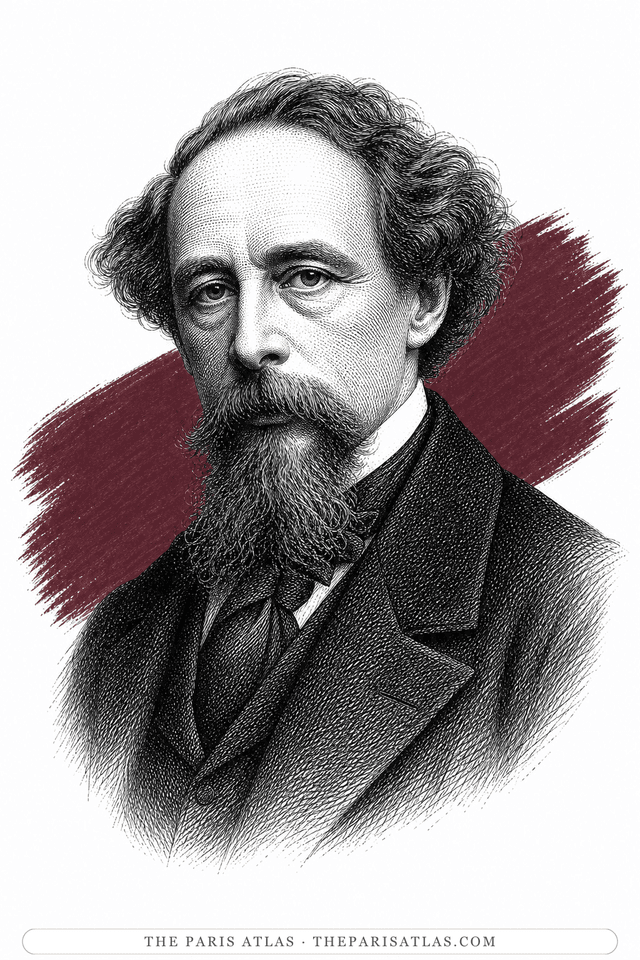
Charles Dickens
The most popular English novelist of the nineteenth century, who was never a Paris resident in the ordinary sense but kept coming back for twenty-five years: one winter in a rented mansion on the rue de Courcelles, a second winter on the Champs-Élysées writing Little Dorrit, repeated compulsive visits to the Paris Morgue — the riverside building where the city displayed its unidentified dead to the public — and a novel of the French Revolution, A Tale of Two Cities, that has shaped how English readers picture Paris ever since.
View author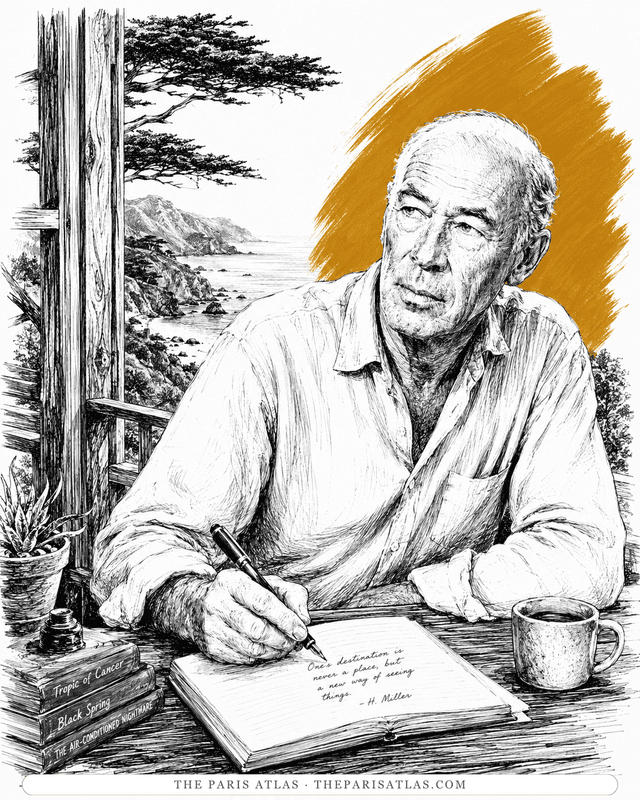
Henry Miller
The Brooklyn dropout who arrived in Paris broke at thirty-eight and wrote the exuberant, banned books that ended American censorship.
View author