Athos
The eldest of the three, a nobleman under an assumed name who never speaks of women and drinks alone at night.
To be left alone with his wine and his silence, and, when that fails, to see justice done on the woman who ruined him.
The book
The Three Musketeers
Alexandre Dumas
At a glance
- Scarcely thirty
- The Comte de la Fère, a lord of Berry
- Two small rooms in the Rue Férou, near the Luxembourg
- Grimaud, who obeys signs and is thrashed when he misreads them
- Remains a musketeer under d'Artagnan until 1633, then leaves the service after a journey to Touraine
Who they are in the book
Spoiler-freeAthos is scarcely thirty, handsome, silent and grave, and the other musketeers treat him as their natural head. He lives in two small rooms in the Rue Férou. On the wall hang a jewelled sword from the time of Francis I, which he will not sell in his worst poverty, and a portrait of a nobleman of the reign of Henry III. His servant Grimaud has been trained to obey a gesture. He drinks steadily and speaks of women only in bitter words.
The name is borrowed. He is the Comte de la Fère, a great lord of Berry, and the book lets the reader learn why he left that name behind before it lets the other characters know. Once the secret is out he takes charge of everything that follows, from the paper he forces out of Milady to the trial he conducts on the Lys.
How Athos Is Portrayed
- The portrait, Chapter VIIScarcely thirty, of great personal beauty and intelligence, and no one knows whether he has ever had a mistress. His reserve, roughness and silence make almost an old man of him. He never speaks to Grimaud except on extraordinary occasions and thrashes him without anger when a gesture is misread.
- The rooms in the Rue Férou, Chapter VIITwo small chambers a few steps from the Luxembourg, kept by a young hostess who looks at him in vain. On the wall hangs a richly embossed sword of the time of Francis I whose hilt alone is worth two hundred pistoles. Porthos would give ten years of his life for it; Athos offers him everything else in his pockets instead.
- The story of the count, Chapter XXVIIDrunk at an inn, he tells d'Artagnan of a friend, a count of Berry, who at twenty-five married a girl of sixteen. Out hunting she fell from her horse; he cut open her dress and found a fleur-de-lis on her shoulder. The count tied her hands and hanged her on a tree. Athos forgets to keep up the fiction of the friend.
- The paper, Chapter XLVAt the Red Dovecot he puts a pistol to Milady's forehead and gives her one second to hand over the paper Richelieu has signed. He reads it by the lamp, tells her he has drawn the viper's teeth, and rides off across the fields to be back before the cardinal.
- The bastion wager, Chapter XLVITo talk in private he bets Monsieur de Busigny that he and his three friends will breakfast in the bastion Saint-Gervais and hold it for an hour by the watch, whatever the enemy does to dislodge them.
- The judge, Chapters LXV and LXVIHe stops d'Artagnan's pistol with the words that this woman must be tried, not assassinated. He names her Charlotte Backson, Comtesse de la Fère, Milady de Winter, and asks each man in turn what penalty he demands. On the bank he pays the executioner so it may be plain they act as judges.
- The commission, Chapter LXVIIOffered the lieutenancy, he answers that for Athos it is too much and for the Comte de la Fère too little, and writes d'Artagnan's name on the blank.
Athos quotes
All for one, one for all.
Friend, be a man! Women weep for the dead; men avenge them!
this woman must be tried, not assassinated
Over Constance's body he tells Lord de Winter that Milady is his wife. He tracks her to the house on the Lys, presides over her trial and accuses her of the brand. At the execution he pardons her for his lost honour and his ruined future, then draws his sword on d'Artagnan when the younger man wavers. In the epilogue he stays in the Musketeers until 1633 and leaves under the pretext of an inheritance in Roussillon.
If you like The Three Musketeers


If you like Alexandre Dumas
Explore authors with a similar voice, perspective, and influence.
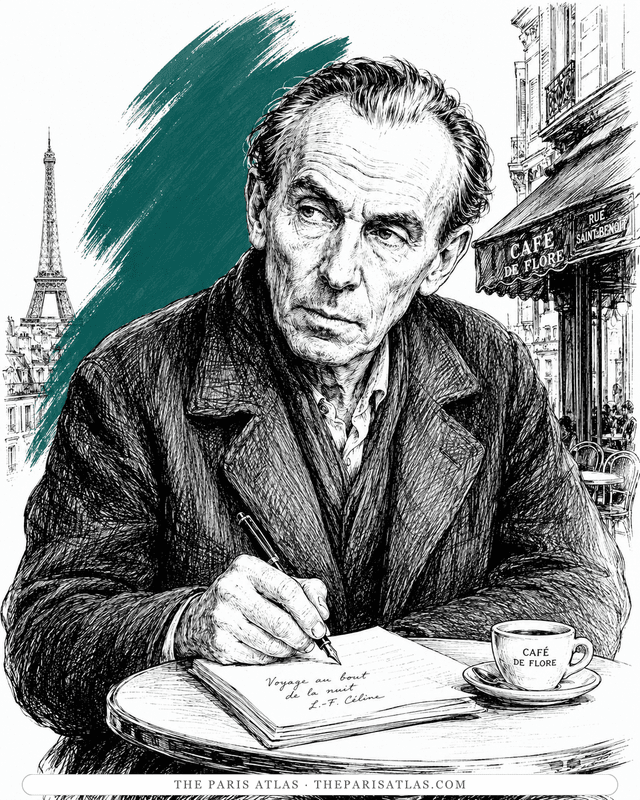
Louis-Ferdinand Céline
The doctor of the Paris slums who wrote the century's blackest, funniest novel — and changed the sound of French prose.
View author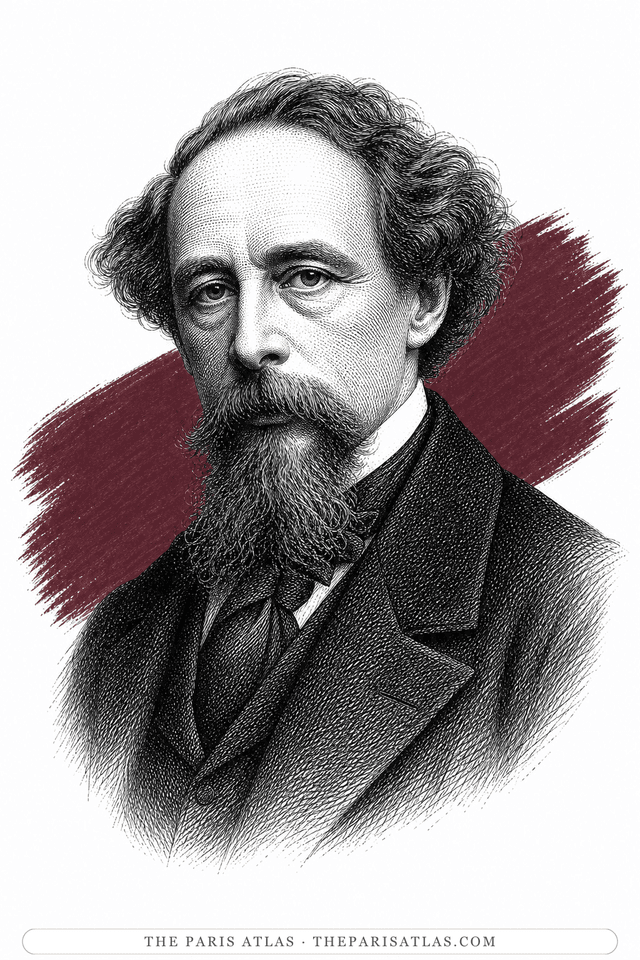
Charles Dickens
The most popular English novelist of the nineteenth century, who was never a Paris resident in the ordinary sense but kept coming back for twenty-five years: one winter in a rented mansion on the rue de Courcelles, a second winter on the Champs-Élysées writing Little Dorrit, repeated compulsive visits to the Paris Morgue — the riverside building where the city displayed its unidentified dead to the public — and a novel of the French Revolution, A Tale of Two Cities, that has shaped how English readers picture Paris ever since.
View author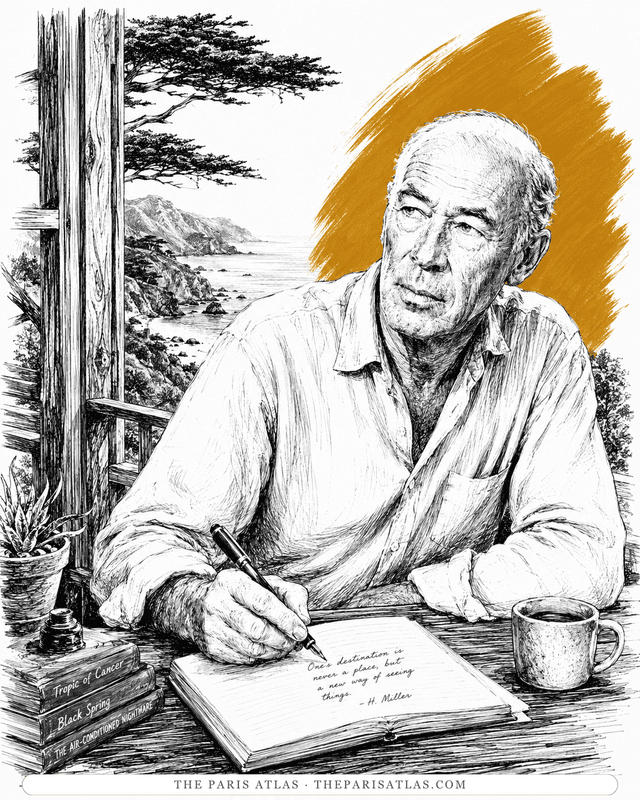
Henry Miller
The Brooklyn dropout who arrived in Paris broke at thirty-eight and wrote the exuberant, banned books that ended American censorship.
View author