Milady de Winter
Richelieu's agent, a blonde Englishwoman of great beauty who lives at No. 6 Place Royale and carries a brand on her shoulder.
Never to be known for what she is, and to destroy anyone who has seen the mark on her shoulder.
The book
The Three Musketeers
Alexandre Dumas
At a glance
- Fair, blue-eyed, of great beauty; the narrator gives her the most beautiful light hair imaginable
- No. 6 Place Royale, Paris
- Cardinal Richelieu
- Kitty, who betrays her to d'Artagnan
- Charlotte Backson; Comtesse de la Fère; Milady de Winter, Baroness of Sheffield
Who they are in the book
Spoiler-freeMilady is in the book from the first chapter, sitting in a carriage at Meung while the man who will be Rochefort tells her to return to London and warn the cardinal if Buckingham leaves. She lives in the Place Royale, passes for the sister-in-law of an English lord, speaks French like a Frenchwoman and has, the narrator says, the most beautiful light hair imaginable. She cuts two studs from Buckingham's doublet at a ball at Windsor and is in Paris again in time to be courted by d'Artagnan.
She is the reason the book runs as dark as it does. When she is insulted she does not faint, she avenges herself, and the second half of the novel is her vengeance: poisoned wine, a seduced gaoler, a murdered minister, a poisoned rival. Her past comes out at her trial, and it is worse than anyone but Athos has guessed.
How Milady de Winter Is Portrayed
- At Meung, Chapter IHer blonde head appears at the window of a heavy carriage outside the inn. The stranger tells her to return to London and to inform the cardinal at once if the duke leaves England.
- The Place Royale, Chapters XXX and XXXIShe lives at No. 6 Place Royale, then the fashionable quarter, as the sister-in-law of Lord de Winter. She has the most beautiful light hair imaginable and speaks French so purely that d'Artagnan takes her for a compatriot.
- I avenge myself, Chapter XXXVLearning that the Comte de Wardes has mocked her, she tells Kitty that she does not faint when she is insulted; she avenges herself.
- The brand, Chapter XXXVIIWhen d'Artagnan tears her nightdress the fleur-de-lis is on her round white shoulder. She snatches a gold-hafted poniard from a casket on the dressing table and drives him behind the furniture until he escapes into Kitty's room.
- The Anjou wine, Chapter XLIIA dozen bottles arrive at La Rochelle with a letter from Villeroy in the friends' name. The soldier Brisemont drinks first and dies in agony on the floor.
- Five days with Felton, Chapters LII to LVILocked in Lord de Winter's house, she reads the gaoler as a Puritan and plays one: psalms sung through the door, a tale of ruin at Buckingham's hands, and a knife pressed to her own breast. By the fifth day Felton is hers.
- The names, Chapter LXVAthos gives them at the trial: Charlotte Backson, who was first Comtesse de la Fère and afterwards Milady de Winter, Baroness of Sheffield. The executioner of Lille adds the first one, a nun of the Benedictines of Templemar.
Milady de Winter quotes
this woman must be tried, not assassinated
When I am insulted I do not faint; I avenge myself!
She was a nun who seduced a young priest into stealing from his church, escaped prison by seducing the gaoler's son, and was branded by the executioner of Lille, the priest's brother. As the priest's supposed sister she married the Comte de la Fère, who hanged her when he found the brand. She survived, married Lord de Winter's brother in England and poisoned him. In the novel she has Buckingham killed by Felton, poisons Constance at Béthune, and is tried in a house on the Lys and beheaded by the same executioner, who drops her body in the river.
If you like The Three Musketeers


If you like Alexandre Dumas
Explore authors with a similar voice, perspective, and influence.
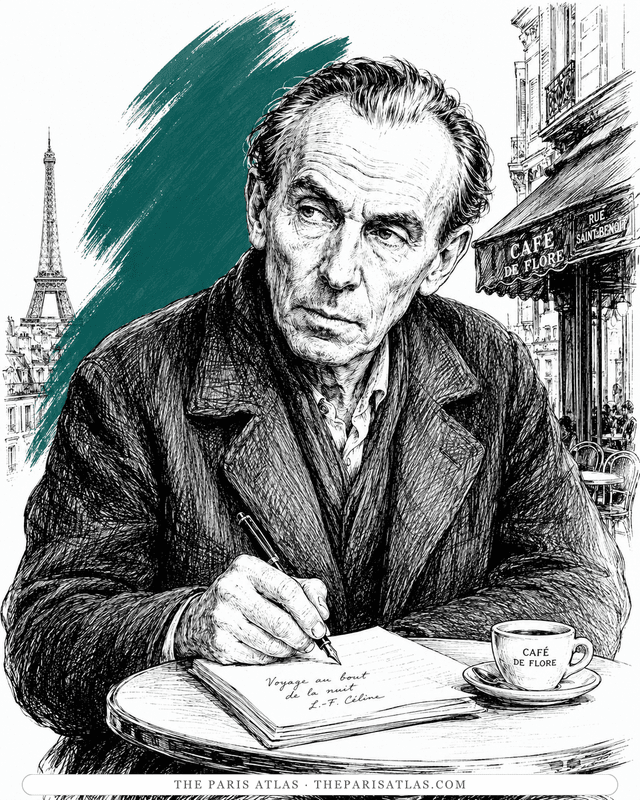
Louis-Ferdinand Céline
The doctor of the Paris slums who wrote the century's blackest, funniest novel — and changed the sound of French prose.
View author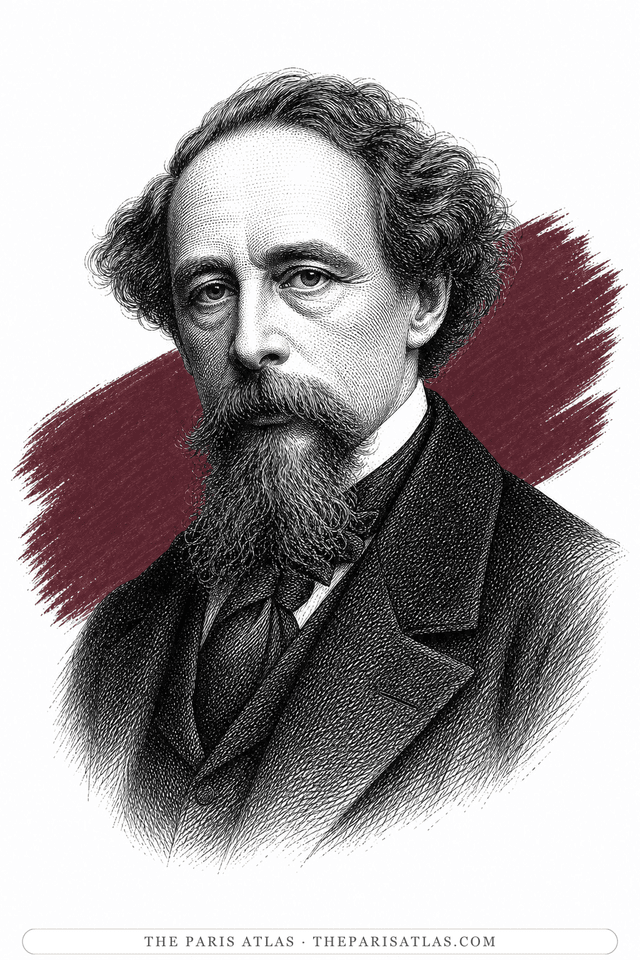
Charles Dickens
The most popular English novelist of the nineteenth century, who was never a Paris resident in the ordinary sense but kept coming back for twenty-five years: one winter in a rented mansion on the rue de Courcelles, a second winter on the Champs-Élysées writing Little Dorrit, repeated compulsive visits to the Paris Morgue — the riverside building where the city displayed its unidentified dead to the public — and a novel of the French Revolution, A Tale of Two Cities, that has shaped how English readers picture Paris ever since.
View author
Henry Miller
The Brooklyn dropout who arrived in Paris broke at thirty-eight and wrote the exuberant, banned books that ended American censorship.
View author