The Comte de Rochefort
The man of Meung: the cardinal's equerry with a scar on his temple, who steals d'Artagnan's letter in the first chapter and arrests him in the last.
To serve the cardinal and to avoid, as long as possible, the young Gascon who keeps trying to fight him.
The book
The Three Musketeers
Alexandre Dumas
At a glance
- Equerry to Cardinal Richelieu
- A scar on his temple
Who they are in the book
Spoiler-freeRochefort is the stranger in the violet doublet who laughs at d'Artagnan's horse at the inn in Meung, has him beaten, and takes the letter to Tréville out of his doublet. He is not named until the last chapter, and for most of the book d'Artagnan knows him only as the man with the scar on his temple. He is the cardinal's equerry and Milady's contact; he arrives at the Béthune convent minutes after she has poisoned Constance.
How The Comte de Rochefort Is Portrayed
- The man of Meung, Chapter IA gentleman of forty or forty-five in a violet doublet, who rarely laughs, mocks the yellow pony from an inn window and, when d'Artagnan draws, has the host's men beat him senseless.
- The scar, Chapters VIII and XBonacieux describes him: a noble of lofty carriage, black hair, swarthy complexion, piercing eye, white teeth and a scar on his temple. D'Artagnan cries out that it is his man of Meung.
- At Béthune, Chapter LXIThe chapter ends on spurs on the stairs and a man in the doorway; Milady cries out with joy. He is her brother, she has just told Constance.
- The arrest and the handshake, Chapter LXVII and epilogueHe arrests d'Artagnan in the king's name on the road to La Rochelle and, at the cardinal's order, greets him as a friend. In the epilogue they fight three times, d'Artagnan wounds him three times, and they embrace.
If you like The Three Musketeers


If you like Alexandre Dumas
Explore authors with a similar voice, perspective, and influence.
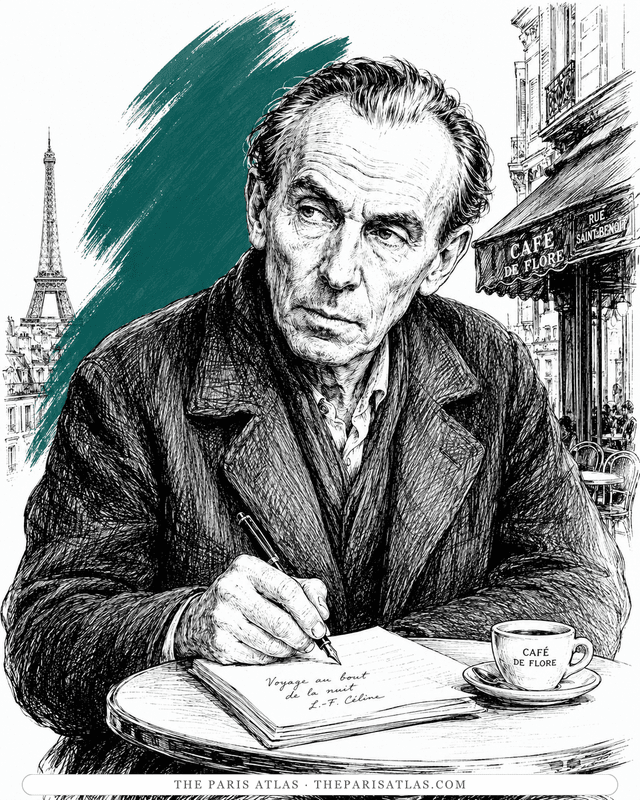
Louis-Ferdinand Céline
The doctor of the Paris slums who wrote the century's blackest, funniest novel — and changed the sound of French prose.
View author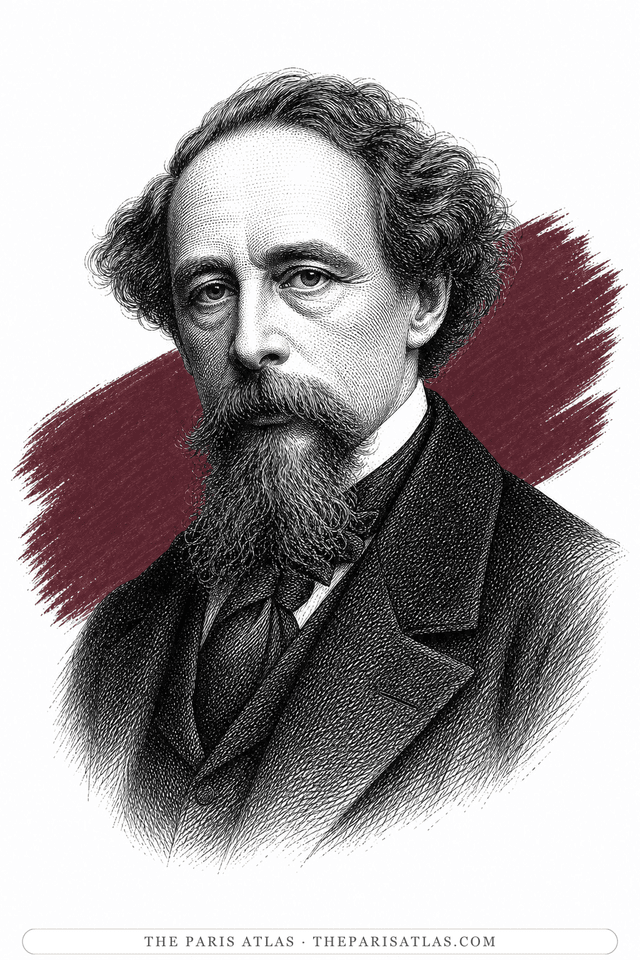
Charles Dickens
The most popular English novelist of the nineteenth century, who was never a Paris resident in the ordinary sense but kept coming back for twenty-five years: one winter in a rented mansion on the rue de Courcelles, a second winter on the Champs-Élysées writing Little Dorrit, repeated compulsive visits to the Paris Morgue — the riverside building where the city displayed its unidentified dead to the public — and a novel of the French Revolution, A Tale of Two Cities, that has shaped how English readers picture Paris ever since.
View author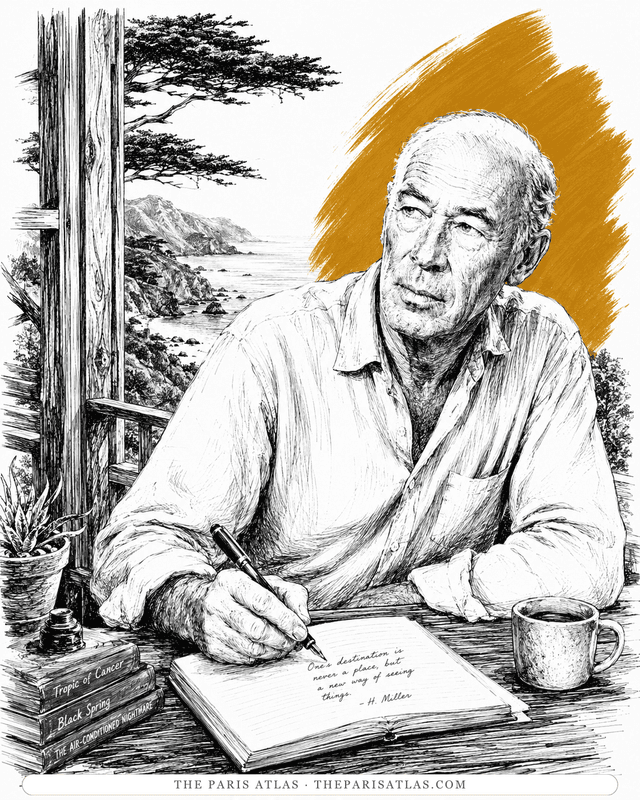
Henry Miller
The Brooklyn dropout who arrived in Paris broke at thirty-eight and wrote the exuberant, banned books that ended American censorship.
View author