Tombstones
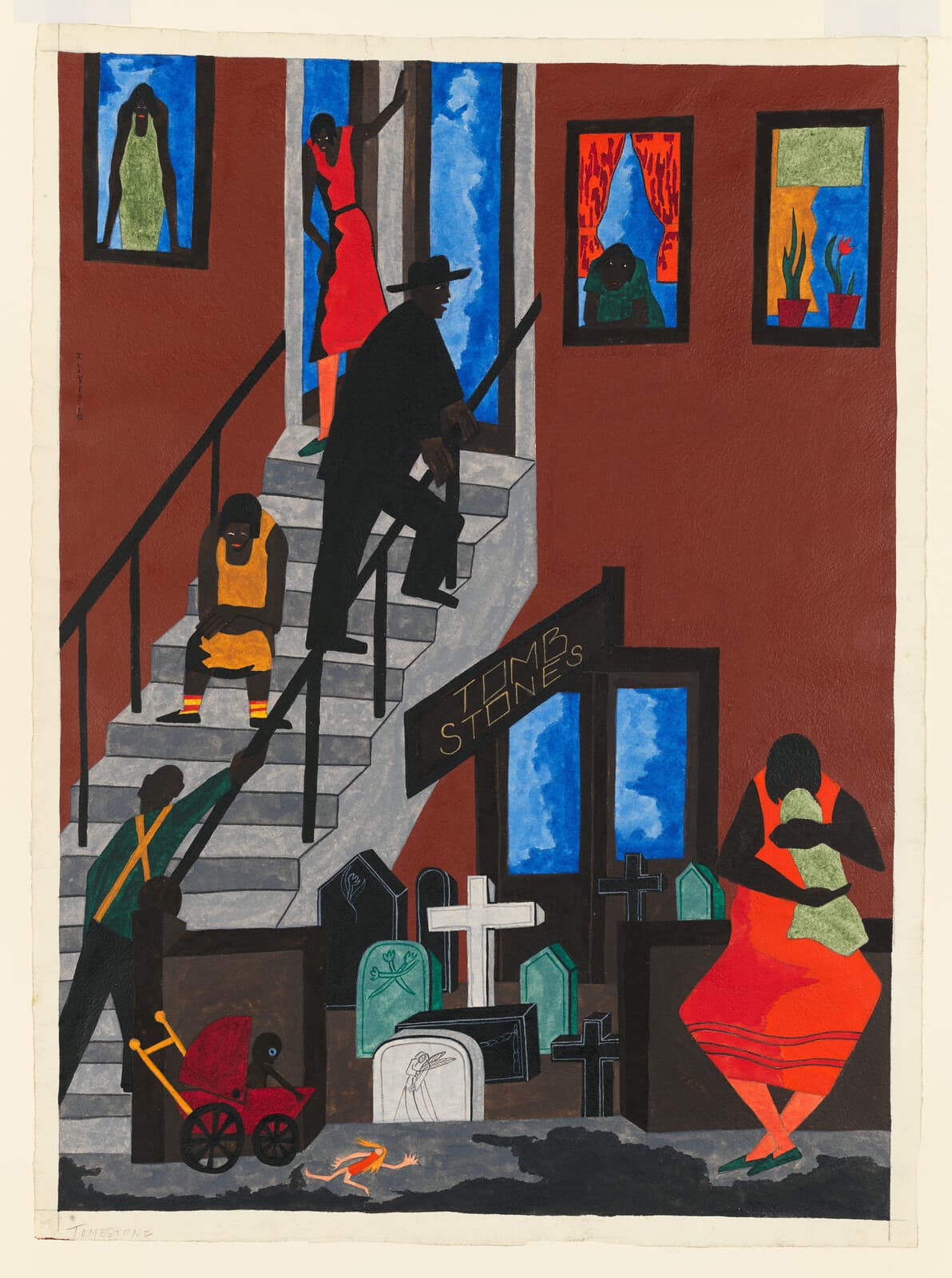
A Harlem apartment building on a hot day, with neighbours on the stoop and at the windows, and a shop in the basement selling gravestones. A baby sits in a carriage at one side and a mother rocks an infant at the other, with the stones for sale in between. Jacob Lawrence painted Tombstones in 1942. The Whitney Museum of American Art showed the painting in its 1943 annual exhibition and owns it today.
- 1942
- Gouache (opaque watercolour) on paper
- Whitney Museum of American ArtNew York, United States
About Jacob Lawrence
What the painting shows
The front of a red-brown apartment building. A grey stone stoop climbs from the street at the bottom left to an open doorway at the top, with a black iron railing running up beside it.
Nine people are spread over the building. A woman leans in the doorway, a man in a black suit and hat leans on the railing, and a woman sits on the steps. A boy in suspenders stands at the bottom, women look out of three windows, and there is a child in a carriage and a mother with a baby.
In the basement is a shop. Its black signboard reads TOMB STONES, and its stock stands in front of it behind a low wall: crosses, rounded and pointed stones, one white stone carved with an angel. A doll with orange hair lies sprawled on the pavement in front.
Jacob Lawrence painted the picture in gouache, a water-based opaque paint, on a sheet of paper about 78 centimetres tall and 58 wide.
From the cradle to the grave
The Whitney Museum of American Art reads the picture as the whole of a life laid out on one stoop. At the left is the cradle, the child in the red carriage. At the right is a mother holding her baby, which the museum calls Madonna-like. In the middle are the gravestones for sale.
The museum's teaching guide finds the same idea in smaller things. The potted plants in the top right window, one green and one in flower, suggest stages of growth. The diagonal of the stoop and the angle of the shop sign lead the eye up to the doorway and the windows.
The same guide gives the history behind the picture. Disease spread quickly in the crowded northern cities where Black migrants settled. The death rate for Black residents was consistently higher than for white residents, so a gravestone shop under an apartment building was not a strange sight.
"What was there"
The Whitney's audio guide calls the picture a life cycle in progress on a city stoop. The guide says Jacob Lawrence showed, without preaching, that death was a visible presence in Harlem.
Gwendolyn Knight, the painter Jacob Lawrence married in 1941, put it plainly on the same guide: "I think Jake just recorded what was there."
Gwendolyn Knight added that much of what was there was not pleasant, "because we didn't live in a society that was very pleasant; and he happened to be such a good artist that it was very moving, very touching, and very real."
A single picture, not a series
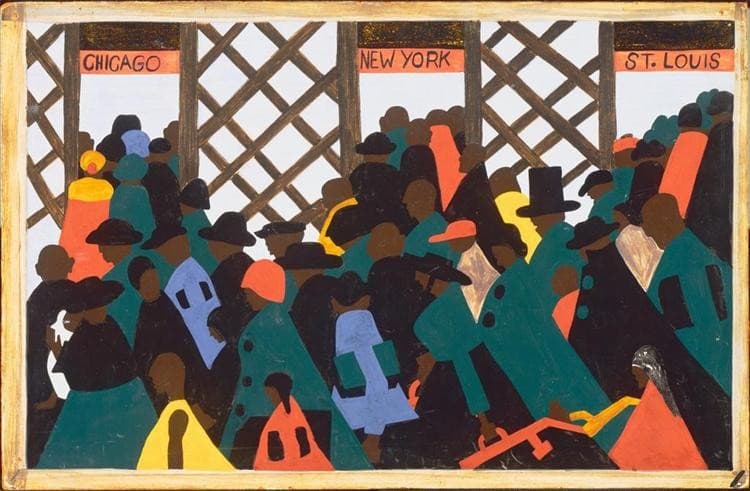
Jacob Lawrence is known for series: sixty panels on the Great Migration, forty-one on Toussaint L'Ouverture. The Whitney quotes his belief that you cannot "tell a story in a single painting." Tombstones is one of the times he tried anyway.
Jacob Lawrence painted Tombstones in 1942, a year after Japan bombed Pearl Harbor, when he was painting the streets and rooms of Harlem. In October 1943 he was drafted into the United States Coast Guard.
How it is painted
The Whitney describes the colour as uninflected: each area is one flat colour, with no shading inside it. People are dark silhouettes with a few pale marks for eyes and mouths. The carvings on the gravestones and the lettering on the sign are drawn in fine lines on top.
Two things break the flatness. The sky in every window and door is painted in mottled patches of blue and white, so the building seems, as the Whitney's audio description puts it, full of sky. The pavement at the bottom is broken by ragged black shapes that could be shadows or puddles.
Jacob Lawrence signed the painting on the wall at the left edge, in small capitals running downward: J. LAWRENCE 42.
At the Whitney
The Whitney Museum of American Art showed Tombstones in its 1943 Annual Exhibition of Contemporary American Art, from 23 November 1943 to 4 January 1944. The museum owns the painting as a purchase, accession number 43.14.
The painting has been shown there many times since. Those shows include Over the Line: The Art and Life of Jacob Lawrence in 2001–03, Modern Life: Edward Hopper and His Time in 2010–11, and Edges of Ailey in 2024–25.
The museum lists the painting as not on view today. Jacob Lawrence died in 2000 and the painting is in copyright. The reproduction here is the museum's own photograph, shown under fair use for commentary.
Close reading
Reading the work, detail by detail
Tombstones is a Harlem stoop on a summer day, with a shop selling gravestones in the basement. Up close there are nine people, a baby in a carriage, a doll lying on the pavement, and the stones themselves, carved with angels and flowers.
1.The shop sign
A black signboard juts out over the basement door with TOMB STONES painted on it in thin yellow capitals, the word broken over two lines. The Whitney's audio guide calls it the sign over the store in the basement. The door and window below the sign show bright blue sky and white cloud, not a dark shop.
2.A mother and baby
On the low wall at the right a woman in an orange-red dress holds a baby wrapped in a pale green blanket against her face. The Whitney calls the mother and baby Madonna-like, like a mother and child in a church painting. Her head is bent right down onto the baby, so neither face shows. A black cross and a green gravestone stand just behind her.
3.A child in a red carriage
At the bottom left a small child sits in a red baby carriage with a yellow handle. The child's one visible eye is a pale blue circle, and one arm reaches out over the side. The Whitney's audio description says the child is reaching for a doll that has fallen on the pavement.
4.A doll on the pavement
On the grey pavement lies a small doll with orange hair and a red dress, arms and legs flung wide. The doll is the only light-skinned figure in the painting. The doll lies just below the gravestones, and the way it is sprawled is hard not to read as a small fall, or a small death.
5.The stones for sale
Behind the low wall the stonecutter's stock stands in rows: a white cross, black crosses, rounded and pointed stones in black and green, and a long black block. The Whitney's label says the painting runs from the cradle to the grave, and the grave is here, at the centre, in the shape of things for sale.
6.An angel on a white stone
The white stone at the front is carved with a thin line drawing of an angel with long feathered wings. The green stone behind it carries a crossed spray of flowers, and the black block beside it is marked with a chain pattern. Jacob Lawrence draws the carvings in fine lines on top of the flat colour.
7.A man in black on the stoop
Halfway up the steps a man in a black suit and a wide black hat leans on the railing with both hands. The Whitney's audio guide says he is chatting up a smiling woman in one of the apartments. His black shape is the largest single dark mass in the painting.
8.A woman in the doorway
At the top of the stoop a woman in a red dress, orange stockings and green shoes leans in the open doorway, one arm up on the frame. A jagged black line runs down one side of her dress. The line may be a shadow or part of the dress; the Whitney's audio description notices it too and does not decide.
9.A woman in the top left window
In the window at the top left stands a woman in a light green dress, seen from head to knee, with blue sky and white cloud behind her. The Whitney's audio description says she leans on the sill and looks down toward the foot of the stairs.
10.A window with orange curtains
In another window, between orange curtains patterned in dark red, a woman in a green dress leans out on her elbows. Her face is a dark oval with two small pale eyes, turned down to the street.
11.Two plants in a window
The window at the top right has no one in it, only two potted plants on the sill: a spiky green plant, and one with a single red flower like a tulip. The Whitney's teaching guide suggests the plants stand for stages of growth too, a small echo of the baby and the gravestones below.
12.A woman sitting on the steps
A woman in an orange-yellow dress sits on the steps with her hands folded in her lap. The Whitney's audio description calls her sullen. Her socks are striped orange and red, one of the few patterns in the picture.
13.A boy in suspenders
At the foot of the stoop a boy in a green shirt and orange suspenders reaches up to grab the iron railing. We see him from behind, so he has no face at all. The black railing runs up the steps in one long diagonal, and the eye follows it from the street to the doorway at the top.
14.The signature
Jacob Lawrence signed the painting on the red-brown wall at the left edge, in small black capitals running downward: J. LAWRENCE 42. The signature is easy to miss against the wall, just above the stair railing.
15.A title in pencil
Below the painted scene, on the bare cream margin of the paper, a word is pencilled in small capitals. The word seems to read TOMBSTONE. The Whitney's record does not transcribe the word, and who wrote it is not recorded.
16.The dark pavement
Along the bottom runs the grey pavement, broken by ragged black shapes. The shapes could be shadows, puddles or cracks. Their rough edges stand out in a painting made almost entirely of clean, hard-edged pieces.
17.Sky where the shop should be
Every window and door in the building, the gravestone shop's included, is filled with bright blue and white, like sky with clouds. The Whitney's audio description says the building could be full of sky. The blue is painted in mottled patches, unlike the flat colour everywhere else.
Timeline
1942
Jacob Lawrence paints Tombstones in gouache on paper and signs it J. LAWRENCE 42.
1943
Jacob Lawrence is drafted into the United States Coast Guard in October.
1943–44
Shown in the Whitney's 1943 Annual Exhibition of Contemporary American Art, 23 November 1943 to 4 January 1944. The Whitney owns the painting as a purchase, accession number 43.14.
2001–03
Shown at the Whitney in Over the Line: The Art and Life of Jacob Lawrence.
2024–25
Shown at the Whitney in Edges of Ailey, 25 September 2024 to 9 February 2025.
Where to see it
Whitney Museum of American Art
New York, United States
A public viewing address has not yet been confirmed for this holding.
Listed as not on view by the Whitney Museum of American Art in September 2026. Displays change, so check the museum's own record before making a special visit.
Frequently asked questions
What is Tombstones about?
Life and death on one Harlem stoop. Neighbours sit on the steps and lean from the windows of an apartment building whose basement shop sells gravestones. The Whitney Museum of American Art reads the painting as running from the cradle, a baby carriage at the left, to the grave, the stones for sale in the middle.
Is Tombstones part of a series?
No. The Whitney describes the painting as one of the times Jacob Lawrence worked outside the series format he is best known for, even though he believed you cannot tell a story in a single painting.
What is the doll on the pavement?
A small doll with orange hair and a red dress lying sprawled on the ground, the only light-skinned figure in the picture. The Whitney's audio description says the child in the carriage is reaching for the doll.
What did Gwendolyn Knight say about the painting?
On the Whitney's audio guide she said, "I think Jake just recorded what was there." She added that much of it was not pleasant because society was not pleasant, but that Jacob Lawrence was such a good artist that the result was very moving and very real.
Where is Tombstones?
The Whitney Museum of American Art in New York, accession number 43.14. The museum lists the painting as not on view, so check before a visit.
More by Jacob Lawrence
If you like Jacob Lawrence
Explore painters from the same movements and circles.
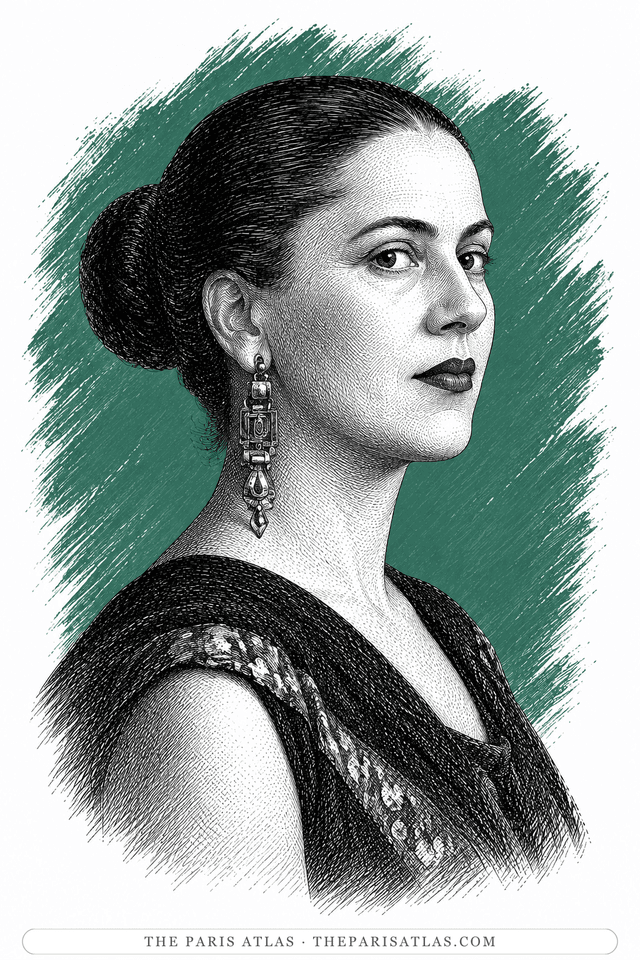
Tarsila do Amaral
Brazilian painter who spent the 1920s moving between São Paulo and Paris, studied Cubism under André Lhote, Albert Gleizes and Fernand Léger, and used what she learned to paint Brazilian towns, railways, plants and bodies. Her 1928 painting Abaporu prompted the manifesto that gave the Anthropophagic movement its name.
View artist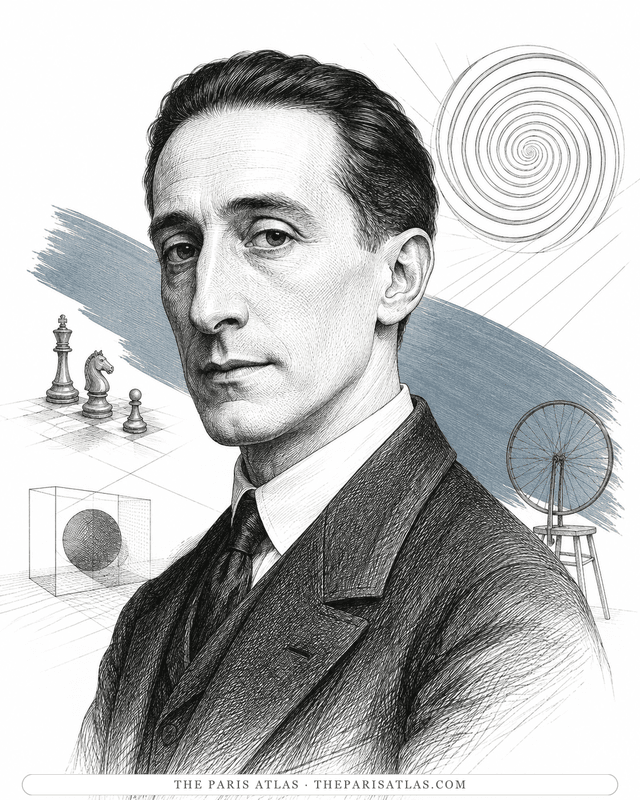
Marcel Duchamp
The century's quietest revolutionary — readymades, the abandonment of painting, chess on a Paris rooftop in Entr'acte, and one anemic film of spinning puns signed Rrose Sélavy.
View artist
Vincent van Gogh
Dutch painter who lived in Montmartre with his brother Theo from March 1886 to February 1888 — the two years in which his dark Dutch palette turned into colour. He painted more than 200 pictures in Paris and died at Auvers-sur-Oise, north of the city, in 1890.
View artist
References
The sources below include collection records, catalogues, scholarly research, and primary materials that informed this page. They document Tombstones, its making, and its place in cultural history.


1Jacob Lawrence, Tombstones (1942) — object record, 43.14
Official recordWhitney Museum of American Art, New YorkUsed forThe holding museum's record and its two audio tracks.

2Jacob Lawrence: Exploring Stories
WebsiteWhitney Museum of American Art, 2002Used forThe Whitney's teaching resource: the Madonna and child, the plants as stages of growth, and the death rate in northern cities.
3Jacob Lawrence, USCG biography
Official recordUnited States Coast GuardUsed forJacob Lawrence's draft into the Coast Guard in October 1943.
4Images and permissions
WebsiteWhitney Museum of American Art, New YorkUsed forWeb source consulted for documented facts and historical context presented on the Tombstones page.
5Represented artists
WebsiteArtists Rights Society, New YorkUsed forWeb source consulted for documented facts and historical context presented on the Tombstones page.
These references provide the documented foundation for this work's history and interpretation. Claim-level citations remain attached to the specific claims they support.
 Explore more resources