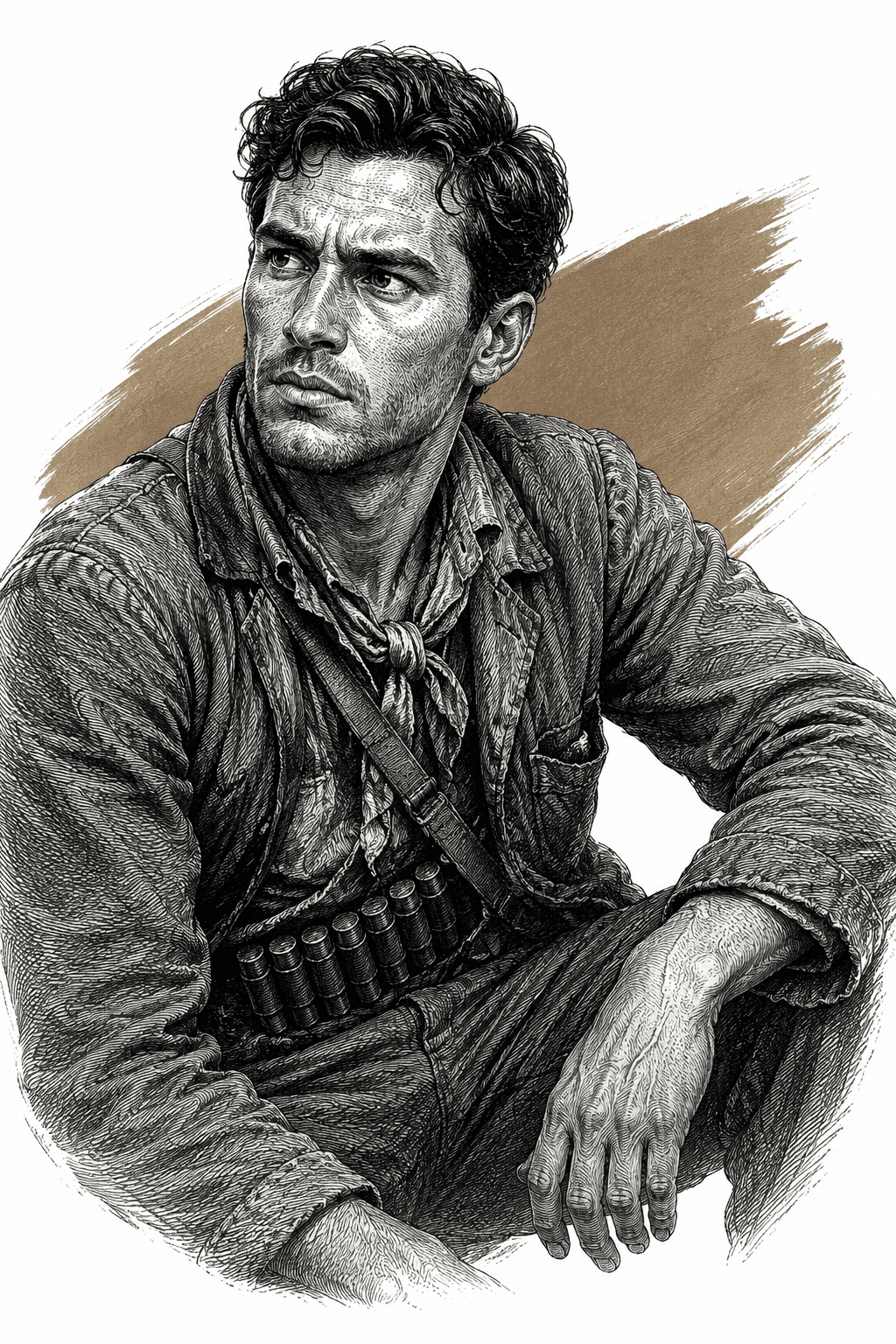
Agustín
A guerrilla in Pablo's band who swears in every sentence, works the automatic rifle, and is the first person to warn Robert Jordan what Pablo will do.
Something worth doing, and clear orders about it. "If it is necessary that one should die for the thing of tomorrow one goes gladly and with the heart light."
The book

At a glance
- Agustín — fighter in Pablo's band, and the one who can work the automatic rifle
- That the bridge means nothing to him, that he is bored in these mountains, and that he will do whatever is needed
- On the first night, to guard the explosives — which nobody else thought to say
- Maria, since the train; never said so to her
- Pilar highest, Fernando dependable, the gypsy and Pablo as the two weak elements
Who they are in the book
Spoiler-freeAgustín is one of the fighters in the guerrilla band that lives in a cave in the mountains north of Madrid, on the wrong side of the line, during the Spanish Civil War. He is the man who can actually operate the band's automatic rifle. He is bored there, says so, and would go anywhere that offered something to do. The arrival of Robert Jordan, an American with two packs of explosive and orders to blow a bridge, is the first interesting thing that has happened in a year.
He is also the loudest example of a decision Hemingway made about language in this book. Agustín attaches an obscenity to almost every noun he uses and uses the same word as a verb; rather than print the word or leave a blank, the published text substitutes the word "obscenity" itself, so a Spanish fighter's speech comes out as "I obscenity in the milk of thy tiredness." The novel knows this is funny and lets Robert Jordan say so to his face. The "thy" is a second decision of the same kind: Spanish has a familiar word for "you" that English lost, so when Spaniards speak to each other in this book Hemingway writes them in the old English familiar forms, thee and thou, to keep the difference audible.
What Agustín does over three days is take the newcomer seriously. He warns him, argues with him, tells him the truth about every other person in the cave, and asks him one personal question and then never raises it again.
How Agustín Is Portrayed
- The way he talksHe couples an obscenity to every noun as an adjective and uses the same word as a verb, so steadily that Jordan wonders whether he can produce a straight sentence. When Jordan finally says the word aloud, Agustín laughs in the dark. "It is a way of speaking I have. Maybe it is ugly. Who knows? Each one speaks according to his manner."
- "Guard well thy explosive"On Jordan's first night, standing sentry above the camp, Agustín says the bridge means nothing to him and that he is sick of these mountains and will go wherever he is sent. Then he adds the only piece of advice anyone gives Jordan that turns out to matter: "But I would say one thing. Guard well thy explosive."
- He asks about Maria onceHe tells Jordan that he has wanted Maria since she came off the train and has never said a word to her, that Pilar guarded her like a convent, and that Jordan walked in and was handed her. Then he closes the subject himself: "It is nothing tragic with me," he heard Agustin say. "That I should never have the Maria is nothing. I will go with the whores as always."
- The band, one at a timeAsked whether the band can be relied on, he goes through them individually with no flattery in any direction. Primitivo is a dependable value. "The Pilar is much, much more than thou canst imagine." Anselmo, Andrés and Eladio are sound, Eladio very quiet. Fernando is duller than anyone can imagine and will do anything he is told. Then the summary: "We have two weak elements. The gypsy and Pablo."
- The onionJordan slices a raw onion into a sandwich at dawn and Agustín is appalled by it. "What hast thou against the onion?" "The odor. Nothing more. Otherwise it is like the rose." Jordan then plays with a line of Gertrude Stein's about roses, with his mouth full, and Agustín tells him to rinse it out with wine and observes that he is very different from the last dynamiter they had.
- "Buena caza, Inglés"On the morning of the bridge he holds the road above with the automatic rifle while Jordan runs down the slope with a heavy pack in each hand. What he shouts after him is a hunting phrase: "Buena caza, Inglés. Buena caza!" Jordan, running, thinks: nice hunting, like hell.
If you like For Whom the Bell Tolls


If you like Ernest Hemingway
Explore authors with a similar voice, perspective, and influence.
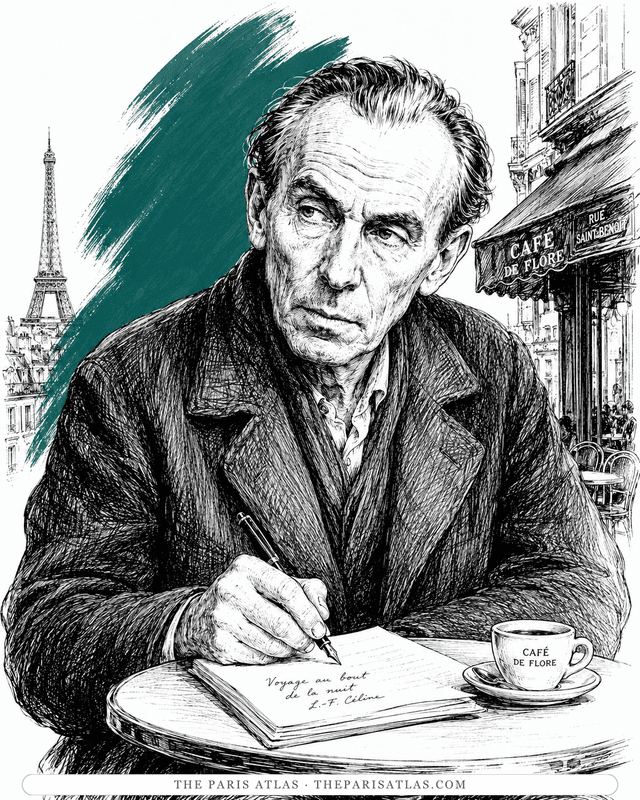
Louis-Ferdinand Céline
The other great stylist the Great War produced — where Hemingway cut the language down, Céline set it on fire. The same wound, opposite treatments.
View author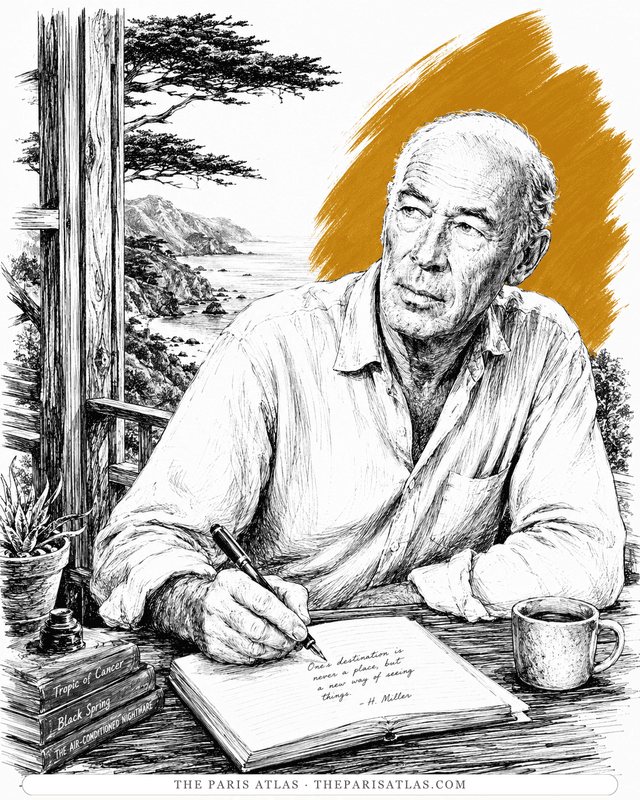
Henry Miller
Paris on no money a decade later, with the restraint removed. Miller called Hemingway's Paris a tourist's Paris; readers get to referee.
View author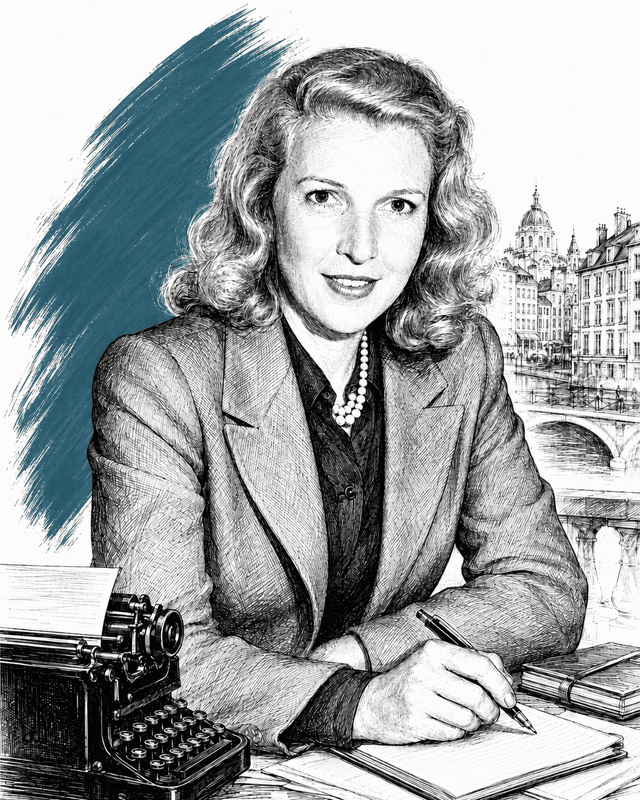
Martha Gellhorn
War correspondent who covered the Spanish Civil War, D-Day, and conflicts across five more decades; Hemingway's third wife, 1940–1945.
View author