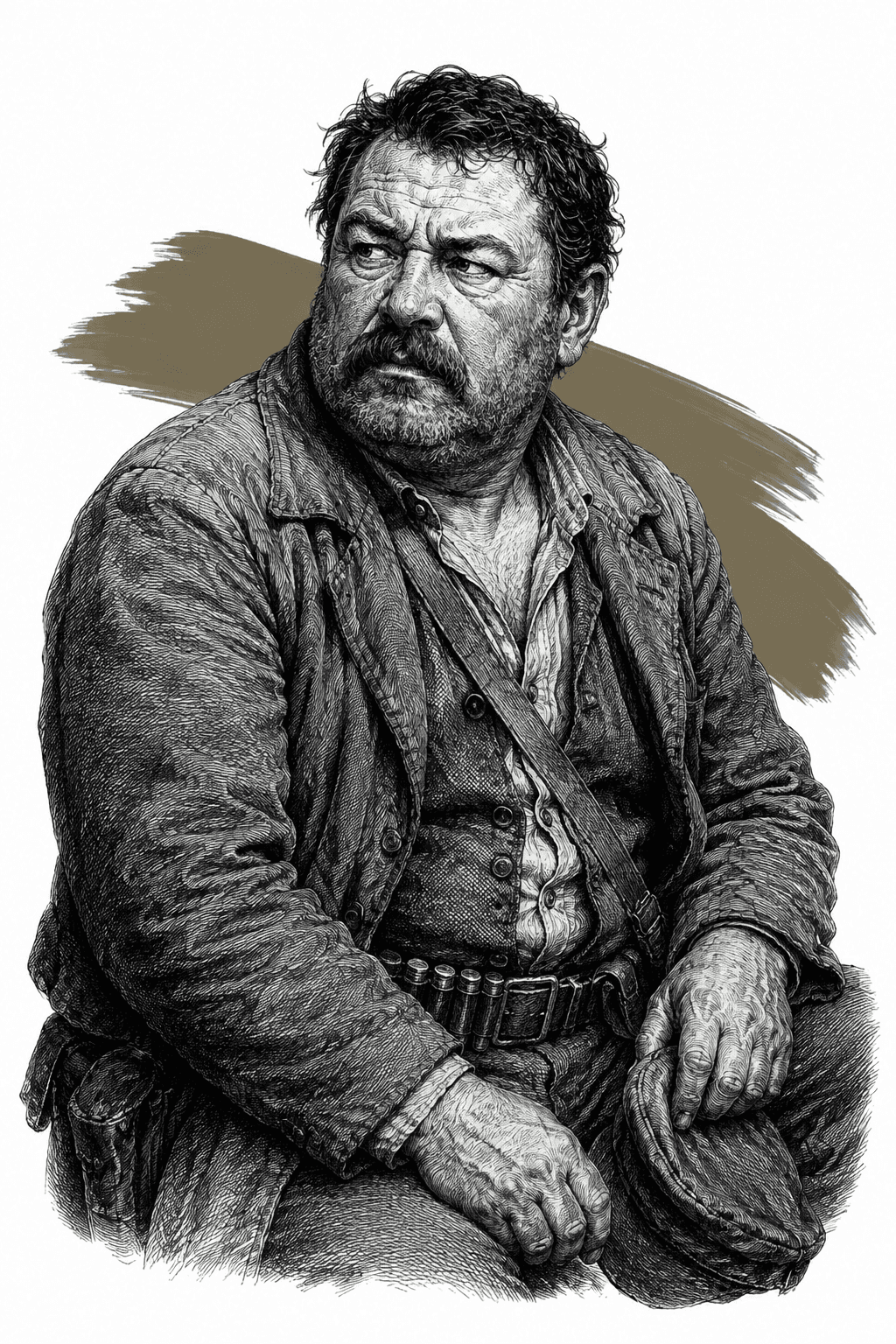
Pablo
The guerrilla leader who has stopped wanting to fight. He killed on a scale nobody in the band has forgotten, and now cares mainly about his horses.
To keep his horses, his valley and his skin, and to be left alone in them. Anselmo puts it plainly: Pablo would like to retire the way a bullfighter retires, and cannot.
The book

At a glance
- Pablo — leader of the band in name, and its worst problem
- Five horses, which he acquired by killing the cavalrymen riding them
- Organised the killing of the fascists in his own town at the start of the war
- Steadily, from the cave's wineskin, in front of everyone
- Pilar, who commands the band once he stops wanting to
- Anything that brings soldiers into these mountains — which is exactly what the bridge will do
Who they are in the book
Spoiler-freePablo leads a band of guerrillas fighting for the Spanish Republic from a cave in the mountains north of Madrid, behind the line held by the fascist side in the Spanish Civil War. Or he did. He was the most effective and the most frightening man in his part of the province in the first year of the war. By the time the novel opens he has five horses, a cave, a valley nobody comes into, and a settled determination that nothing should change.
What changes that is Robert Jordan, an American demolition expert who walks into the camp with two packs of explosive and orders to destroy a bridge in the valley below. Pablo is the first person in the cave to work out what that will cost the band — soldiers in these mountains, the horses gone, nowhere left to go — and he says so on the first evening, in front of everyone. He is not stupid and he is not a coward in any simple way. The trouble is that he says it while drunk, and that everybody knows what he is really protecting.
He stays hard to place for three days. He is a drunk, a killer and a liability, and he is also the only man there who has ever planned an operation, and the best rider among them.
How Pablo Is Portrayed
- First sightHe comes down the rocks like a goat, bare-headed, a carbine over his back, and stands there being admired. His nose has been broken and his mouth is cut at one corner, with the scar running through his beard. Anselmo grins and says he is the boss here and a very strong man. Jordan smiles back and records his own reaction exactly: "He did not like the look of this man and inside himself he was not smiling at all."
- The horsesThere are five in a rope corral — three bays, a sorrel and a buckskin — and Jordan understands that he is expected to praise them. Later that night Jordan overhears him in the dark, alone with the big white-faced bay stallion, calling it his big good little pony and comparing its neck to the viaduct of his home town. "Thou art no woman nor a fool," Pablo told the bay horse.
- What he did in his townIn Pilar's account, the two lines of villagers with flails and the walk to the cliff were Pablo's design, down to putting the men with sickles at the far end. His own review of the day afterwards, eating stew, was that it had gone well except for the priest, who had been frightened at the last minute. "To me he was a great disillusionment. All day I had waited for the death of the priest."
- "More than the bubonic plague"Rafael the gypsy sums up that first year philosophically: "Pablo killed more than the bubonic plague." Anselmo adds the rest of it — that Pablo has the riches now, that he drinks very much, and that he would like to retire like a matador and cannot, because crossing to the other side of the lines would mean losing the horses and going into the army.
- "Lazy, a drunkard and a coward"Pilar delivers the verdict to his face in front of the whole band: "From one year of war thou hast become lazy, a drunkard and a coward." Then she asks who is for the bridge, and the brothers, the gypsy and Anselmo answer one after another, and Pablo sits there and hears himself deposed.
- Nobody's friendRafael, who drinks with him, asks Jordan quietly why he did not kill Pablo when the moment came, and explains that nobody would have minded: "Three or four times we waited for you to kill him. Pablo has no friends." Jordan had had the idea and dropped it, mostly because he did not know how the woman would take it.
His explanation to Pilar is four words longer than it needs to be and completely convincing:
If you like For Whom the Bell Tolls


If you like Ernest Hemingway
Explore authors with a similar voice, perspective, and influence.

Louis-Ferdinand Céline
The other great stylist the Great War produced — where Hemingway cut the language down, Céline set it on fire. The same wound, opposite treatments.
View author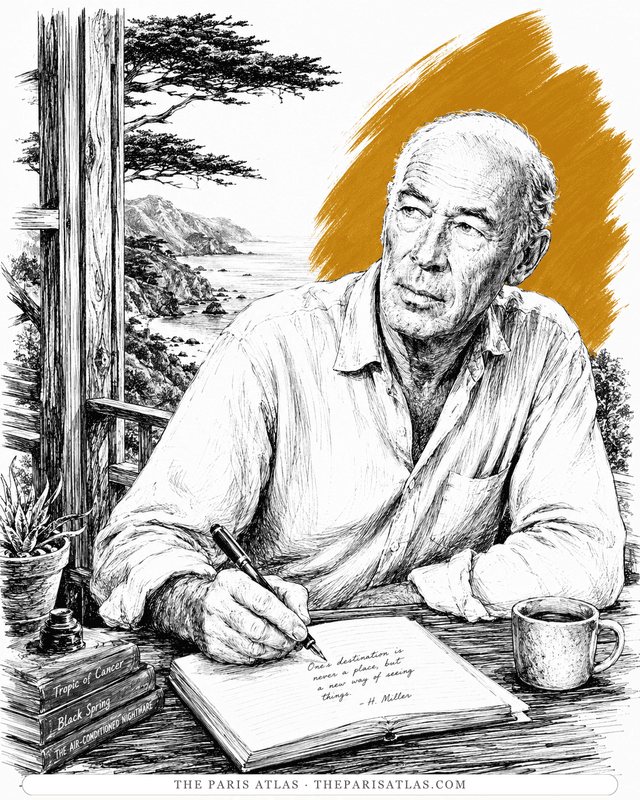
Henry Miller
Paris on no money a decade later, with the restraint removed. Miller called Hemingway's Paris a tourist's Paris; readers get to referee.
View author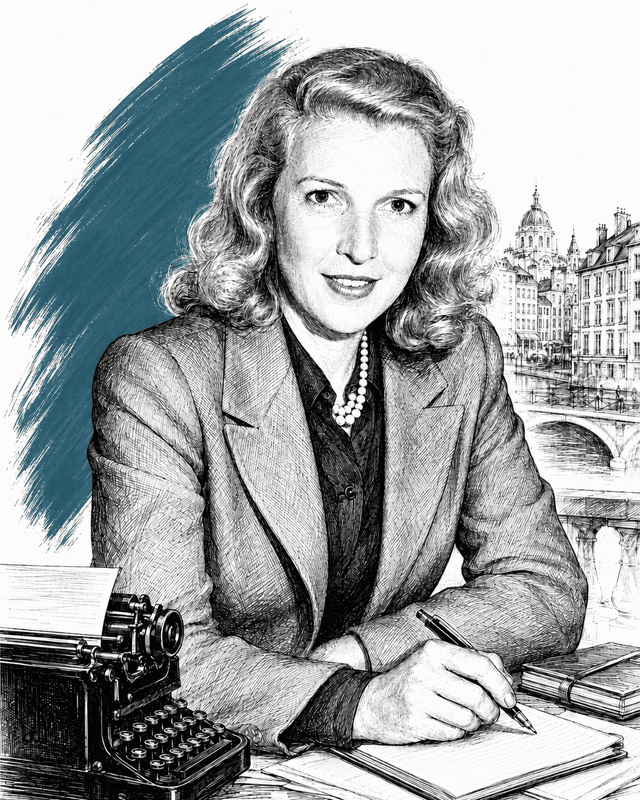
Martha Gellhorn
War correspondent who covered the Spanish Civil War, D-Day, and conflicts across five more decades; Hemingway's third wife, 1940–1945.
View author