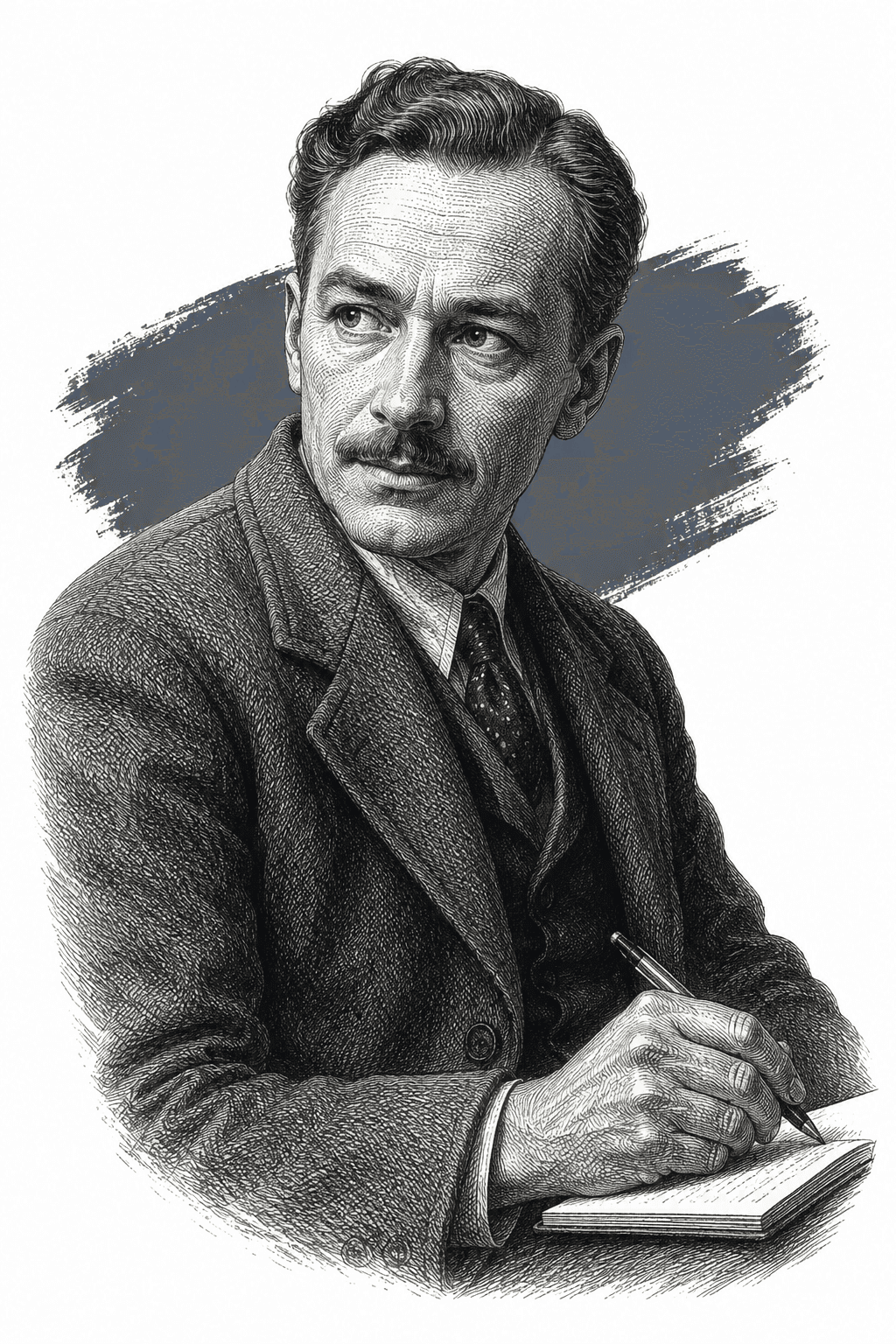
Karkov
A Soviet journalist in Madrid and one of the most powerful men in Republican Spain. Robert Jordan learned how the war actually worked by listening to him.
To have someone intelligent to talk to honestly, at a time and place where that is dangerous. He takes Robert Jordan's political education on as a project, and keeps asking him what he has actually read.
The book

At a glance
- Karkov — Soviet journalist in Madrid, and one of the three most powerful men in Spain
- Pravda, in direct communication with Stalin
- The Hotel Gaylord's, with sentries on the door and a secret policeman at the concierge's desk
- Poison in one side of his cigarette case
- A place to continue his studies in the Soviet Union, which Jordan does not take
- Comic — small, badly dressed for it, spitting slightly through bad teeth
- Mikhail Koltsov, Pravda's correspondent in Spain
Who they are in the book
Spoiler-freeThe Soviet Union backed the Spanish Republic in its civil war, and Karkov is the man it has in Madrid. He writes for Pravda, the Soviet Communist Party newspaper, and is in direct communication with Stalin. In practice that makes him, as the book says, one of the three most important men in Spain. He appears mostly in the memories of Robert Jordan, the American demolition expert whose three days in the mountains the novel covers, in the passages where Jordan is lying awake and thinking rather than working.
He is small, with tiny hands and feet, black riding boots, grey breeches and a grey tunic, and he talks through bad teeth in a way that spits slightly. Jordan thought he looked comic the first time he saw him, which he says in the same breath as calling him the cleverest man he has ever met.
Their friendship is the book's back channel to the politics. Whatever Robert Jordan understands about the Communist Party's role in the Republic, the purges going on in Moscow, or the difference between what is being said about the war and what is being done in it, he learned at a hotel table from Karkov.
How Karkov Is Portrayed
- "The most intelligent man he had ever met"Jordan's verdict is unhedged, and comes immediately after he has described how ridiculous the man looked: "Karkov was the most intelligent man he had ever met." What he credits him with is brains, inner dignity, outer insolence and humour, in about that order.
- Gaylord'sThe Hotel Gaylord's is where the Russians in Madrid lived, and where Karkov holds court. Jordan found it indecently luxurious and corrupt, then accepted it, then enjoyed it. Sentries at the door frisk everyone they do not recognise. It is the place where Jordan stopped believing the communiqués and started believing the gossip.
- The cigarette caseHe was once given the job of poisoning the wounded Russians in a Madrid hospital rather than let them be captured if the city fell. Jordan objects that suddenly poisoning people is not simple. "Oh, yes, it is when you carry it always for your own use." Then he opens his cigarette case and shows Jordan what is in one side of it.
- Destroyed, not assassinatedAsked about political killing he produces a paragraph of party formula about hyenas and wreckers and dregs of humanity, smiles through it, and then undercuts himself: "But I still believe that political assassination can be said to be practised very extensively." Pressed, he explains the distinction with a straight face: "These are destroyed. They are not assassinated. You see the difference?"
- His wife and his mistressAt a party at Gaylord's he crosses the room to his wife — a thin, dark woman in a severely cut militiawoman's uniform — bows, shakes her hand and says something in Russian nobody can hear, and the insolence goes out of his eyes for a moment. Then he sees his mistress across the room, walks over with short precise steps, bows and shakes her hand in a way that could not be told from a copy of the first.
- The dispatchA French commissar has confiscated Robert Jordan's message to Golz and locked up the couriers as suspected fascists. Karkov walks into the room and ends it in two sentences: "Just give me the dispatch, Comrade Marty. It has been delayed enough." Marty asks what dispatch, knows as he says it how stupid it sounds, and puts the paper on the table.
Karkov is generally identified with Mikhail Koltsov, who covered the Spanish Civil War for Pravda and acted as Stalin's personal channel to Madrid. Hemingway knew him there. Koltsov was recalled to Moscow during Stalin's purges, arrested and shot — an ending the novel, written before any of that was public, does not know about its own character.
If you like For Whom the Bell Tolls


If you like Ernest Hemingway
Explore authors with a similar voice, perspective, and influence.

Louis-Ferdinand Céline
The other great stylist the Great War produced — where Hemingway cut the language down, Céline set it on fire. The same wound, opposite treatments.
View author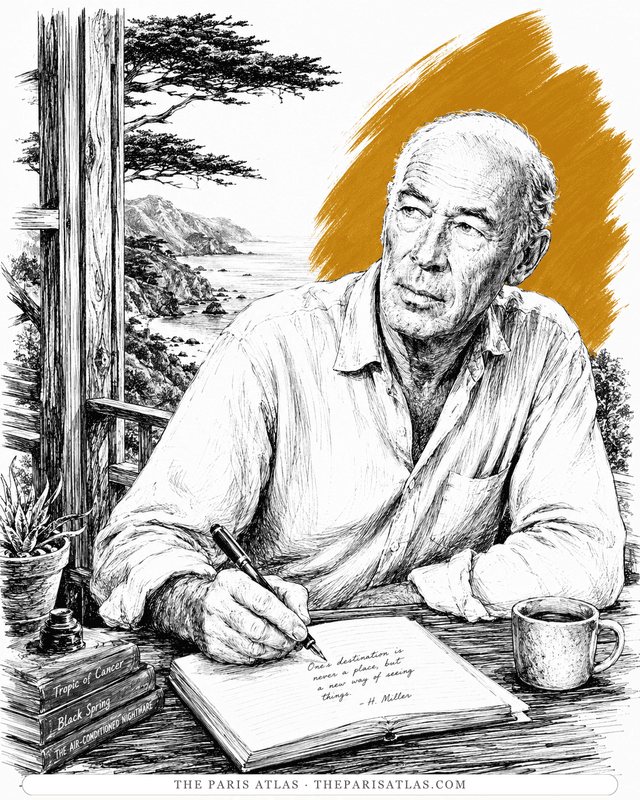
Henry Miller
Paris on no money a decade later, with the restraint removed. Miller called Hemingway's Paris a tourist's Paris; readers get to referee.
View author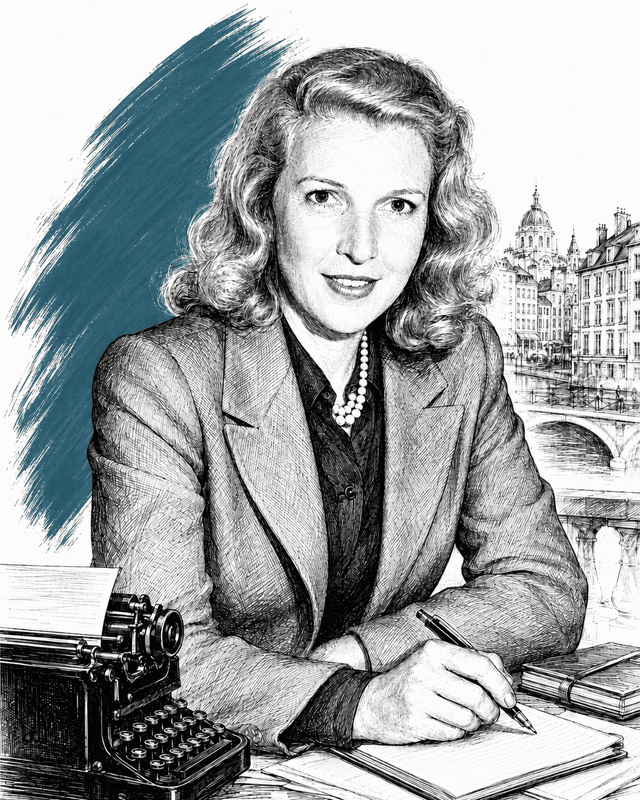
Martha Gellhorn
War correspondent who covered the Spanish Civil War, D-Day, and conflicts across five more decades; Hemingway's third wife, 1940–1945.
View author