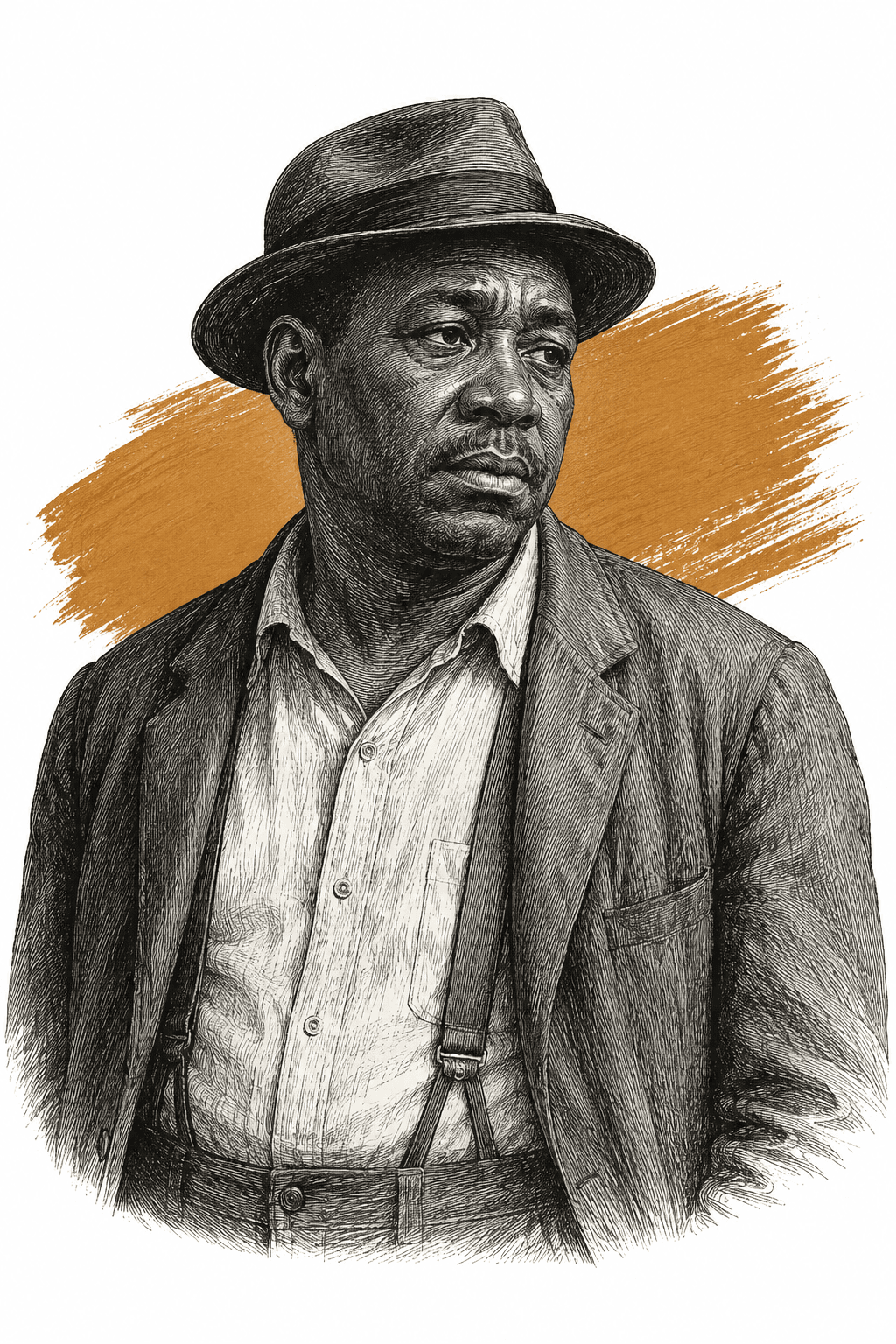
Mr. Freeman
Her mother’s boyfriend in St. Louis, who raped eight-year-old Marguerite; his death after the trial begins her years of silence.
For Vivian Baxter to come home.
The book

At a glance
- Vivian Baxter’s boyfriend in St. Louis
- Foreman in the Southern Pacific yards
- The South
- One year and one day, served for part of an afternoon
Who they are in the book
Spoiler-freeMr. Freeman was Vivian Baxter’s boyfriend in St. Louis and a foreman in the Southern Pacific yards. He lived with her, or she and the children lived with him — Maya Angelou says she never quite knew which. He brought in the household’s necessities while Vivian Baxter made extra money cutting poker games. He was a Southerner, big and slightly flabby, and he moved gracefully, in Angelou’s phrase, like a big brown bear.
Most of what the book records of him is waiting. He sat in the big chair in the evenings and waited for Vivian Baxter to come home, and did nothing else while he waited: no newspaper, no foot tapping to the radio. When her key rattled the door he came up out of the chair like a man out of sleep, already asking whether she had had a good time. He seldom spoke to the children at all.
One morning, after Vivian Baxter had gone out early and Marguerite Johnson had fallen asleep again in her mother’s bed, he put his hand between the eight-year-old’s legs, made her hold him, then pulled her onto his chest and masturbated. Afterwards he poured water on the sheet and told her she had wet the bed. He also told her he would kill Bailey if she said anything. Some weeks later he sent her brother off to play baseball, sent her out for milk, and raped her. He washed her in the bath, said he had not meant to hurt her, told her not to tell a soul, and sent her on to the library to act natural.
She told Bailey in the hospital. Bailey told Grandmother Baxter, and Freeman was arrested. In court a lawyer asked whether that had been the first time the accused touched her, and she said no, which was untrue. He was sentenced to a year and a day and was out the same afternoon.
How Mr. Freeman Is Portrayed
- What he didA foreman in the Southern Pacific yards. He kept the St. Louis household in necessities; Vivian Baxter, a trained nurse who was not working as one, brought in the rest from gambling parlors.
- The look of himA Southerner, big, and a little flabby. His chest embarrassed the child when he walked around the flat in his undershirt. For his size he moved gracefully, which is the one thing about him she describes with any pleasure.
- WaitingHe sat in the big chair and waited for Vivian Baxter, and Angelou says he put his whole self into it — no paper, no radio, nothing but the waiting. When he heard her at the door he came alive and asked, always in the same words, whether she had had a good time.
- Silence toward the childrenHe hardly spoke to Marguerite or Bailey. For a period after the first assault the child began saying good evening to him deliberately when he came in from the yards, putting feeling into it, and he did not notice her.
- What he said to keep her quietIn the bed he told her he was not going to hurt her, and afterwards that he would kill Bailey if she said anything. In the bath he told her he had not meant to hurt her, that she must not tell a soul, and that she should put her bloomers on, go to the library and act natural. In the doorway of her sickroom that evening he leaned over her and twice said “If you tell,” without finishing the sentence.
- In courtHe sat and twisted round in his chair to look threats at her that Angelou calls empty, because by then she knew he could not touch Bailey. He was sentenced to one year and one day.
His lawyer, or someone, got him released the day of the verdict. That afternoon a white policeman came to Grandmother Baxter’s door and said Freeman had been found dead on the lot behind the slaughterhouse. It looked as though he had been dropped there, the policeman said; some said he had been kicked to death. Grandmother Baxter told the two children they had heard nothing and that she never wanted the man’s name spoken in her house again, then went back to the kitchen to make apple strudel.
The book does not say who killed him. It has already described the Baxter brothers going into a saloon armed to settle a lesser insult to their sister, and Angelou writes that the arrest spared him her pistol-whipping uncles.
Marguerite drew a different conclusion. She had lied on the stand, a man was dead, and she decided her words had done it — that her breath carrying her words out might poison people. She stopped speaking to everyone but Bailey for nearly a year. Angelou also records, at fifteen and again in the last chapter, that the guilt stayed with her, and that thanks to Freeman she felt nothing much the first time she went to bed with anyone.
If you like I Know Why the Caged Bird Sings


If you like Maya Angelou
Explore authors with a similar voice, perspective, and influence.
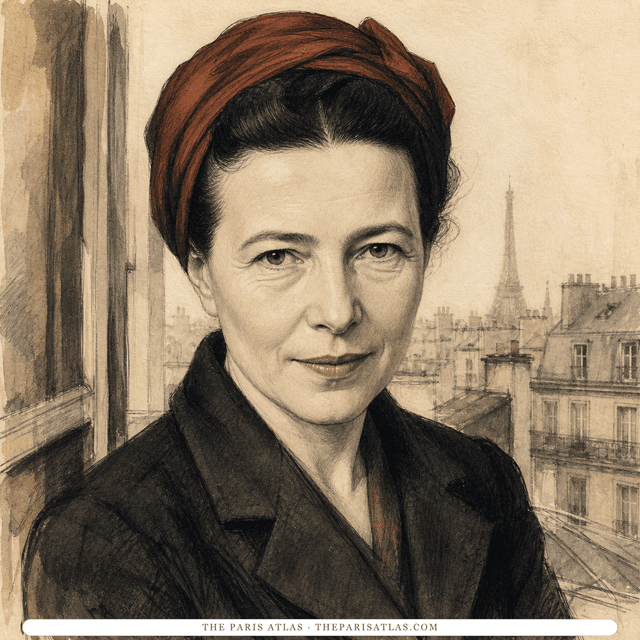
Simone de Beauvoir
French writer and philosopher whose novels, memoirs, and social analysis examined freedom, gender, responsibility, aging, and the material conditions that shape a life.
View author
Louis-Ferdinand Céline
The doctor of the Paris slums who wrote the century's blackest, funniest novel — and changed the sound of French prose.
View author
Henry Miller
The Brooklyn dropout who arrived in Paris broke at thirty-eight and wrote the exuberant, banned books that ended American censorship.
View author