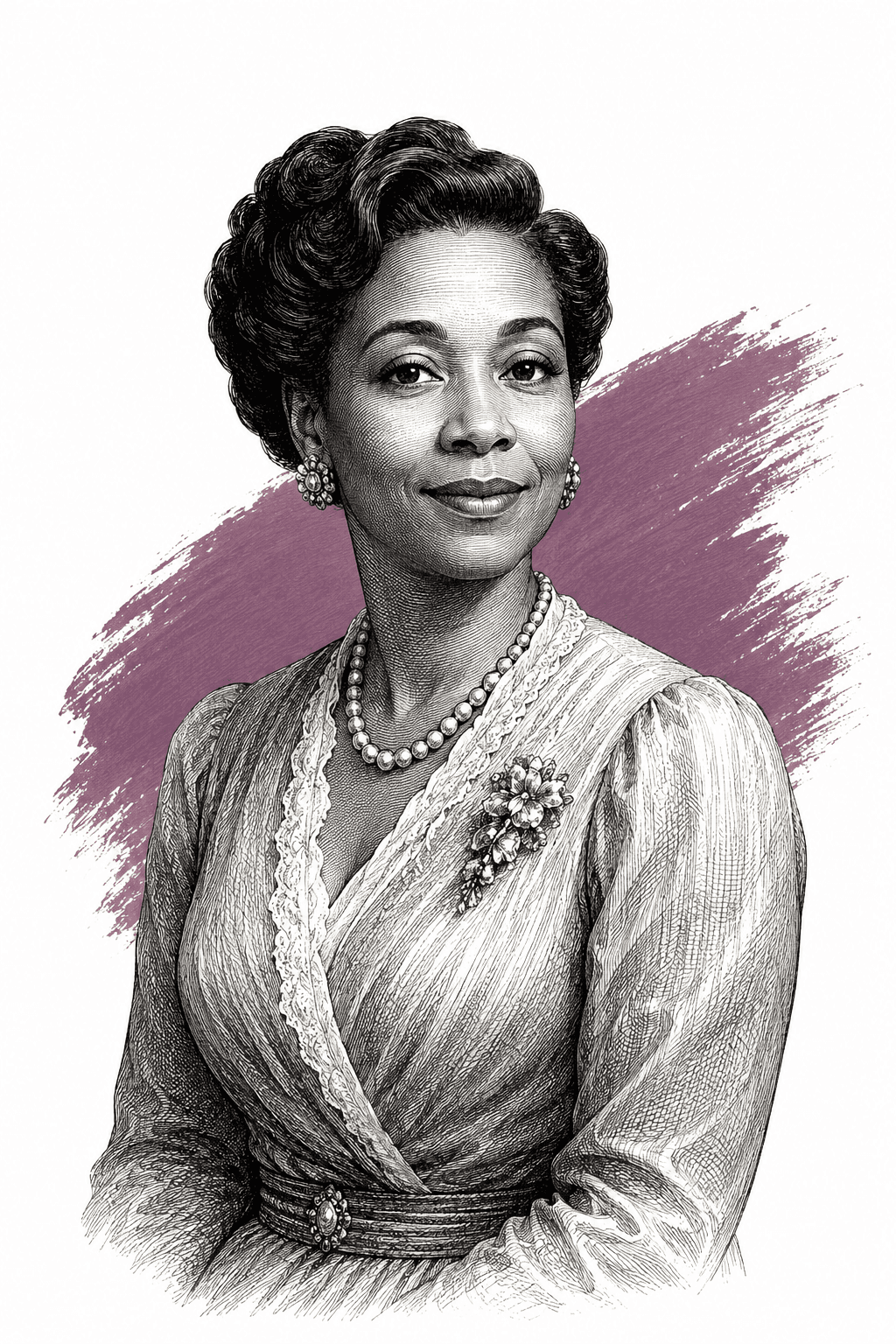
Mrs. Bertha Flowers
The Stamps neighbor who gave Marguerite back her voice by making her read poetry aloud.
To get a child who has stopped speaking to speak, which she goes about with cookies, a book and an instruction to read it out loud.
The book

At a glance
- A bungalow up the hill in Stamps, Arkansas
- A member of the family’s church, nor an intimate of Annie Henderson
- A bookcase, and lends from it on terms
- The first person to throw her a life line
Who they are in the book
Spoiler-freeMrs. Bertha Flowers lived in a bungalow up the hill from the Store in Stamps, Arkansas, and Maya Angelou calls her the aristocrat of Black Stamps. She was thin without the taut look of wiry people, wore printed voile dresses and flowered hats, and wore gloves. Angelou says she seemed to carry a private breeze around with her through the Arkansas summer, and describes her as their side’s answer to the richest white woman in town.
She did not encourage familiarity. Nobody, Angelou writes, would have thought of getting close enough to ruffle her dress. She never saw her laugh, only smile — a slow widening of thin black lips over small even teeth, then a slow effortless closing again.
She appears at the point in the book where Marguerite Johnson has stopped speaking to anyone but her brother. Angelou introduces her as the first person to throw her a life line. She asked Annie Henderson to send the child up to her house with the groceries, and asked to be allowed to call her Marguerite rather than Sister. There were tea cookies made that morning and lemonade in the icebox — an icebox with ice in it on an ordinary day, in a town where most families bought ice a few Saturdays a summer.
Then she read aloud. She took A Tale of Two Cities off the shelf, a book the child had already read and rated as a romance, and read the first page. Angelou says she heard poetry for the first time in her life, and that what she was being taught was that a page is not finished until a human voice has been through it. Bertha Flowers lent her books on condition they came back unharmed, and delivered what the two of them afterwards called lessons in living.
How Mrs. Bertha Flowers Is Portrayed
- How she dressedPrinted voile dresses and flowered hats, as right for her, Angelou says, as denim overalls for a farmer. She wore gloves. Her skin was a rich black that looked as though it would peel like a plum if it were snagged, which no one was ever near enough to do.
- She did not encourage familiarityAngelou never saw her laugh. She smiled often — a slow widening, small white teeth, a slow effortless close — and when the smile was turned on the child it was treated as an event.
- How she and Annie Henderson spokePassing the Store she said “Good day, Mrs. Henderson” in a soft carrying voice, and Annie Henderson answered “How you, Sister Flowers?”, verb omitted. The granddaughter burned with shame at the grammar and at the title. It did not occur to her for years that the two women were as alike as sisters and separated only by schooling.
- Her houseA little bungalow up the rocky road, reached by a footpath she walked ahead on, swinging her arms and picking her way over the stones. The smell of the kitchen surprised the child, who had never connected her with food or eating or any other common experience.
- The invitationShe told Annie Henderson she had been meaning to talk to the girl anyway, then set out cookies and lemonade for a conversation she had planned in advance. Angelou did not question at the time why she had been singled out, and did not think until much later that her grandmother might have asked for it.
- Reading aloudShe opened A Tale of Two Cities and read the first page. Angelou, who had read the book already, says she heard poetry for the first time in her life. Then Bertha Flowers stopped and waited, and it became clear that a response was expected. The child, who had not spoken to anyone but her brother in months, had to speak.
- The loan of booksLent on terms. Angelou reports being told that no excuse would be accepted for a book returned badly handled, and imagining, at ten, that death would be too kind and brief a punishment for the offence.
- Lessons in livingShe told the child to be intolerant of ignorance but understanding of illiteracy, that people who never went to school were often better educated than college professors, and to listen carefully to what country people called mother wit, because the homely sayings carried the collective wisdom of generations.
Mrs. Bertha Flowers quotes
Words mean more than what is set down on paper. It takes the human voice to infuse them with the shades of deeper meaning.
But bear in mind, language is man's way of communicating with his fellow man and it is language alone which separates him from the lower animals.
She said that I must always be intolerant of ignorance but understanding of illiteracy.
If you like I Know Why the Caged Bird Sings


If you like Maya Angelou
Explore authors with a similar voice, perspective, and influence.
Simone de Beauvoir
French writer and philosopher whose novels, memoirs, and social analysis examined freedom, gender, responsibility, aging, and the material conditions that shape a life.
View author
Louis-Ferdinand Céline
The doctor of the Paris slums who wrote the century's blackest, funniest novel — and changed the sound of French prose.
View author
Henry Miller
The Brooklyn dropout who arrived in Paris broke at thirty-eight and wrote the exuberant, banned books that ended American censorship.
View author