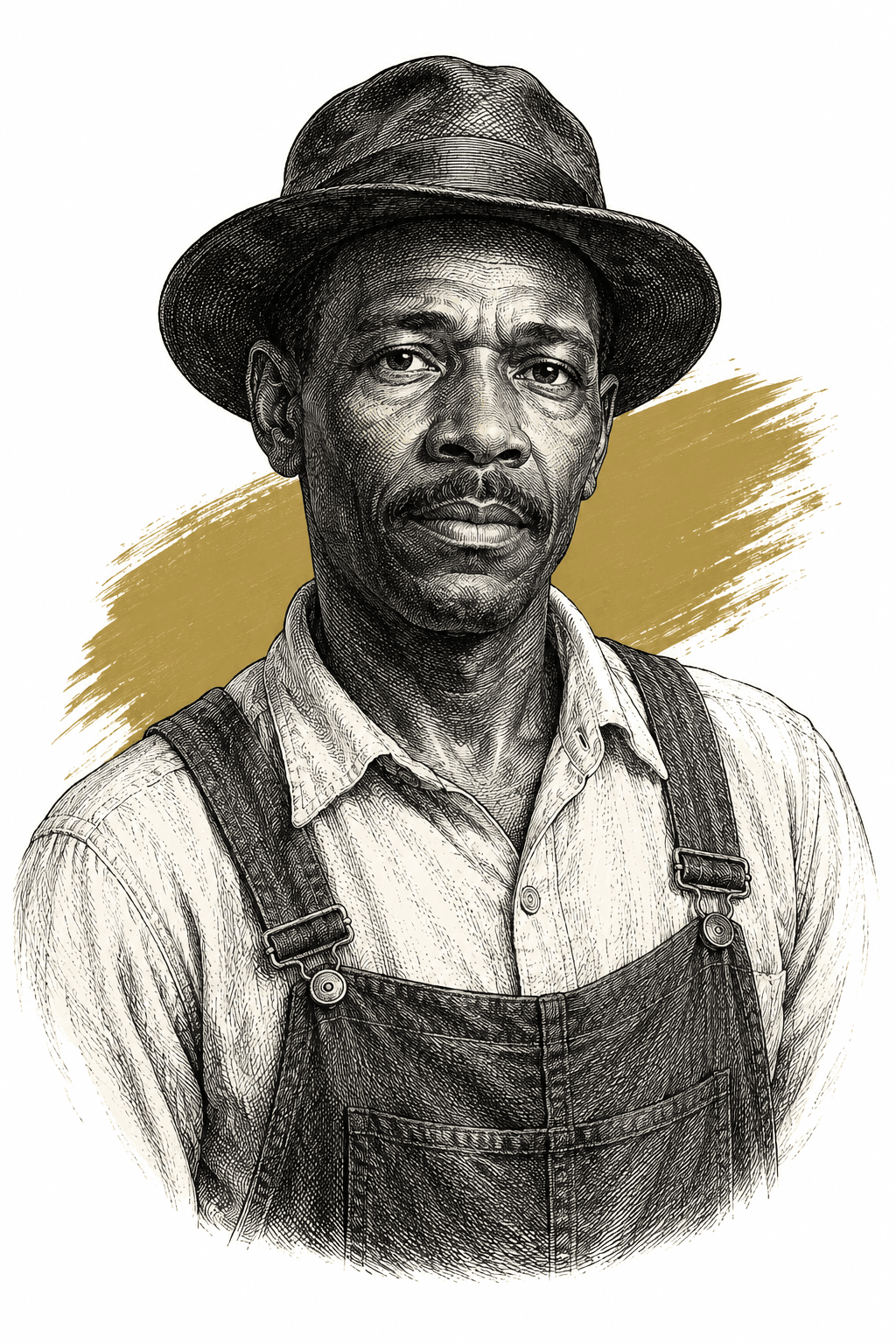
Uncle Tommy
One of the Baxter uncles, a natural comedian who told her he would rather she have a good mind than a cute behind.
That his niece back her own mind, which he tells her often and in the same words.
The book

At a glance
- One of the six Baxter children; Vivian Baxter’s brother
- Her favourite of the uncles
- Stayed in the big house in Oakland with Uncle Billy and Grandmother Baxter
Who they are in the book
Spoiler-freeUncle Tommy was one of Vivian Baxter’s brothers and one of the six Baxter children whose reputation held up their mother’s position in St. Louis. Maya Angelou says plainly that he was her favourite. He was gruff and chewed his words the way his father did, and he strung ordinary sentences together in a way that came out either as profanity or as comic poetry. He was a natural comedian, and never waited for the laugh he knew was coming.
He is also the uncle who told her, more than once, not to worry about not being pretty. He had seen plenty of pretty women digging ditches, he said, or worse; she was smart, and he would rather she had a good mind than a cute behind. The line is one of the few pieces of praise the child records from that year in St. Louis.
He was also one of the men the family’s reputation was built on. When a man cursed Vivian Baxter in the street one night, her brothers had him tracked down and went to the saloon where he was drinking. Uncle Tommy took the door, another brother took the toilet door, and the eldest walked over to the table. All of them, Angelou notes, were obviously carrying guns.
How Uncle Tommy Is Portrayed
- How he talkedGruff, and chewing his words like his father. Angelou says ordinary sentences came out of him sounding either like the most profane curses or like comical poetry, and that he never waited for the laugh.
- The handball gameComing home from work he would turn the corner and pretend not to see the children, then take the ball out of the air with a cat’s deftness and tell them to put their minds where their behinds were and he would let them on his team. At the steps he would wind up and throw the ball over the light post.
- What he said about her looksRitie, don’t worry because you ain’t pretty. Plenty pretty women he had seen digging ditches or worse. She was smart. He swore to God he would rather she had a good mind than a cute behind.
- At the saloonWhen the Baxter brothers went after the man who had cursed their sister, Uncle Tommy stood by the door while the eldest walked to the table. They were all carrying guns, and their sister was invited to do the beating herself.
- Baxter bloodHe argued that the family’s binding quality was felt by the children before anyone taught it to them, and offered as evidence the story of Bailey teaching his sister to walk before he was three because she was his sister and it had to be done.
Uncle Tommy quotes
I swear to God, I rather you have a good mind than a cute behind.
If you like I Know Why the Caged Bird Sings


If you like Maya Angelou
Explore authors with a similar voice, perspective, and influence.
Simone de Beauvoir
French writer and philosopher whose novels, memoirs, and social analysis examined freedom, gender, responsibility, aging, and the material conditions that shape a life.
View author
Louis-Ferdinand Céline
The doctor of the Paris slums who wrote the century's blackest, funniest novel — and changed the sound of French prose.
View author
Henry Miller
The Brooklyn dropout who arrived in Paris broke at thirty-eight and wrote the exuberant, banned books that ended American censorship.
View author