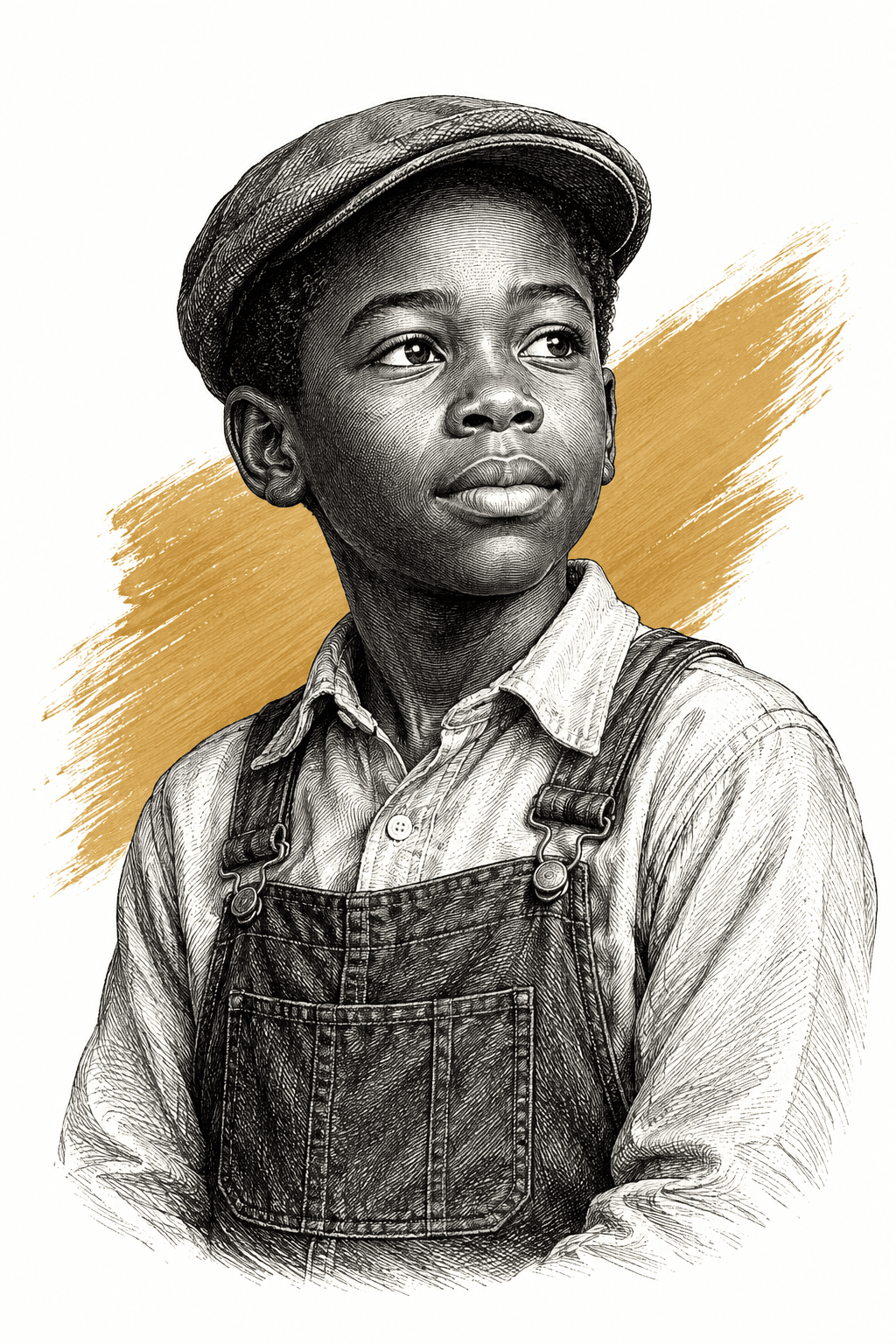
Bailey Johnson Jr.
Her older brother by a year and her closest ally; it was Bailey who gave her the name Maya.
To be wanted by his mother, whom he calls Mother Dear.
The book

At a glance
- One year
- Junior by his parents; Ju by Uncle Willie
- Yes, from the St. Louis years
- Eap
Who they are in the book
Spoiler-freeBailey Johnson Jr. was Maya Angelou’s brother, older by a year, and the person the book puts at the center of her childhood. He is the one who named her: having established that she was his sister, he refused to call her Marguerite and addressed her instead as “Mya Sister,” which shortened to “My” and was later elaborated into “Maya.” The Baxter uncles told her he had taught her to walk before he was three, on the grounds that she was his sister and it was his job.
Angelou describes him as everything she thought she was not — small, graceful and smooth, with skin praised as velvet-black and hair that fell in curls. He stuttered. The two of them were sent together to Stamps and came back from St. Louis together, and in the store they were a double act: Bailey could imitate the visiting elder, Reverend Howard Thomas, soundlessly and to the life, cheeks puffed and head wobbling, in front of Uncle Willie and without ever being caught.
He is also the practical one. When his sister was working for a white employer who had renamed her Mary, it was Bailey who asked which plates the woman liked best and told her exactly what to drop. In the hospital in St. Louis it was Bailey who told her she had to name the man who had hurt her, or he would do it to another girl, and who answered her fear that the man would kill him by saying he would not let him. She believed him, she says, because Bailey did not lie to her.
What he wanted was their mother. He sat through a film twice in Stamps because a white actress on the screen resembled her, came home hours after dark and took a whipping for it, and a year later caught a freight train meaning to reach California and got stranded in Baton Rouge for a fortnight.
How Bailey Johnson Jr. Is Portrayed
- Beside his sisterSmall, graceful and smooth where she was big and elbowy. His skin was called velvet-black and his hair fell in black curls, while hers was described as steel wool. And yet he loved her, she writes, and having no sisters to share him with struck her as luck worth thanking God for.
- The stutterHe stuttered as a child in St. Louis and was constantly told to slow down and start again. Angelou pairs it with her own nightmares as the two symptoms of the same childhood. Years later, when he came into the store having just seen a dead man pulled from a pond, she notes that he talked so fast he forgot to stutter.
- A mimicHe could do Reverend Howard Thomas without making a sound — cheeks puffed out until they looked like wet brown stones, head wobbling side to side — and could do it in front of Uncle Willie without being caught. Only the two of them knew what they were watching.
- The plan against Mrs. CullinanWhen his sister could not think how to get out of being called Mary by her white employer, Bailey had her describe the contents of the cupboard and pick out the woman’s favourite pieces. She dropped the fish-shaped casserole and two of the green glass coffee cups on the tiled floor, exactly as instructed.
- What he readMark Twain behind the stove, and Huckleberry Finn on the stormy night a neighbour turned up at the back door with a ghost story. After The Fall of the House of Usher the two of them swore a pact that neither would let the other be buried without making absolutely, positively sure — his phrase — that the person was dead.
- Chasing his motherHe stayed late at the Stamps cinema to see a film a second time because the white star, Kay Francis, looked like their mother, and told his sister so at the pig pen without warning. He walked home along the railroad track and ran across the crossing just ahead of the night freight. A year later he caught one.
- In the hospital in St. LouisHe told her she had to say who had done it or the man would hurt another little girl. When she said the man would kill him, he said the man could not kill him because he would not let him. She told him, and he took the information to Grandmother Baxter — using, as he put it later that day, the old brain he was born with.
- Sixteen in San FranciscoHe came back from a summer away with a new vocabulary, dropping slang into his sentences like dumplings into a pot, and a set of friends in zoot suits and wide-brimmed hats who drank sloe gin in the front room. Angelou says he was glad to see her but did not act much like it.
Bailey Johnson Jr. quotes
all knowledge is spendable currency, depending on the market.
At sixteen he acquires a diamond ring on his little finger, a Harris tweed coat with raglan sleeves and a white prostitute, all of it, Angelou argues, an attempt to match the men in his mother’s circle. Vivian Baxter orders him out of the house on a thin excuse and he goes on an equally thin one. He leaves at one o’clock in the morning, calling her Mother Dear on the way out and leaning on the word.
If you like I Know Why the Caged Bird Sings


If you like Maya Angelou
Explore authors with a similar voice, perspective, and influence.
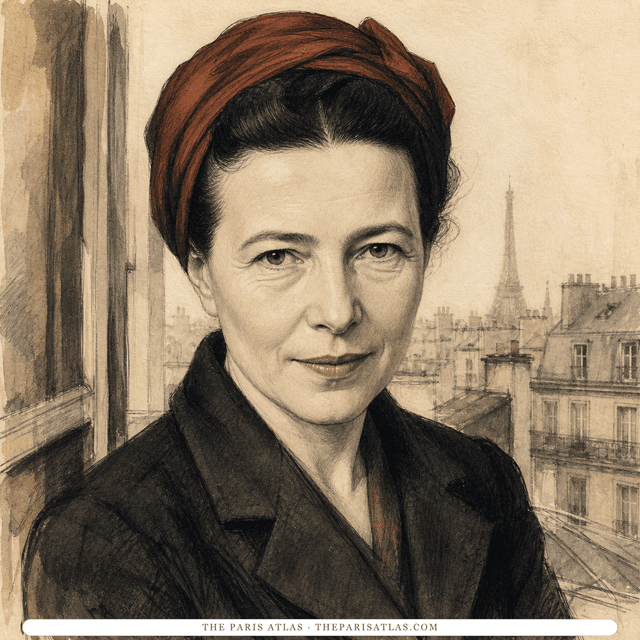
Simone de Beauvoir
French writer and philosopher whose novels, memoirs, and social analysis examined freedom, gender, responsibility, aging, and the material conditions that shape a life.
View author
Louis-Ferdinand Céline
The doctor of the Paris slums who wrote the century's blackest, funniest novel — and changed the sound of French prose.
View author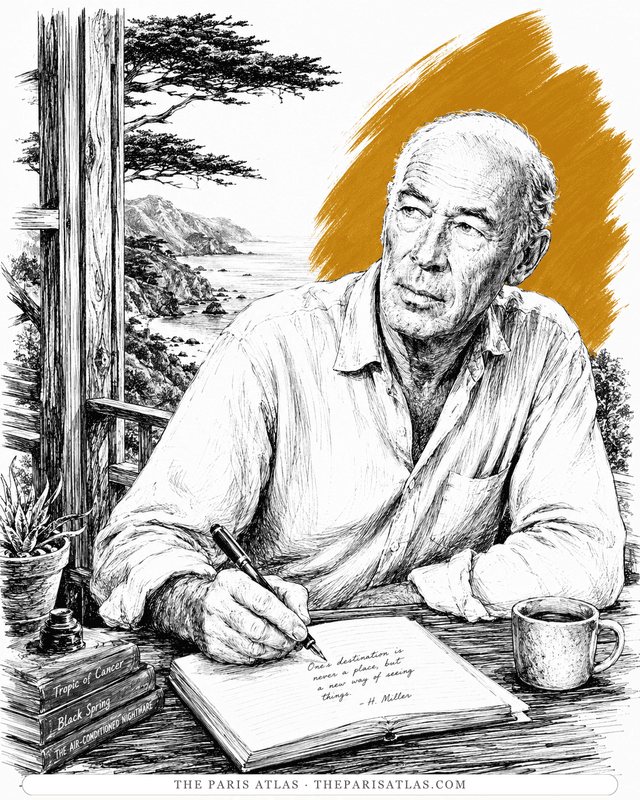
Henry Miller
The Brooklyn dropout who arrived in Paris broke at thirty-eight and wrote the exuberant, banned books that ended American censorship.
View author