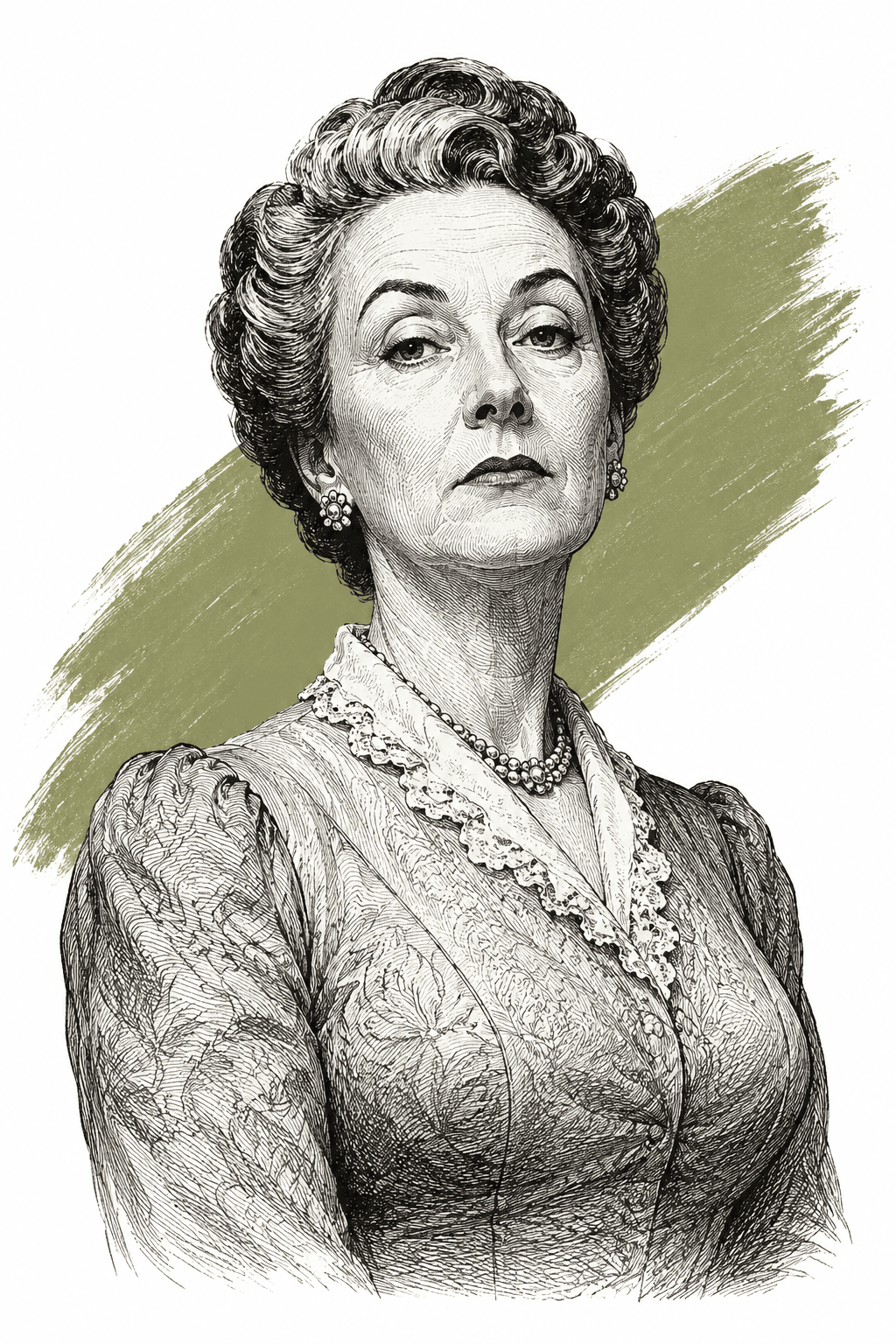
Mrs. Viola Cullinan
The white employer who tried to rename Marguerite “Mary” for her own convenience.
To have her house run to the minute and her help answer to the names she finds convenient.
The book

At a glance
- A three-bedroom house behind the post office in Stamps
- Virginia, and wealthy parents
- Miss Glory, the cook, descended from people the Cullinans enslaved
- Had two daughters by a Black woman in town, according to Bailey
Who they are in the book
Spoiler-freeMrs. Viola Cullinan was the white woman in Stamps, Arkansas, whose kitchen Marguerite Johnson worked in at about ten. Maya Angelou describes her as plump, living in a three-bedroom house behind the post office, and singularly unattractive until she smiled, at which point the lines that made her look perpetually dirty disappeared and her face turned into an impish elf’s mask. She saved the smile for late afternoon, when her women friends came and the cook, Miss Glory, served cold drinks on the closed-in porch.
The house ran on a clock. The table was set at twelve, Mrs. Cullinan sat down at 12:15 whether her husband had arrived or not, and Miss Glory brought out the food at 12:16. Angelou calls the exactness of the house inhuman, and lists the glassware she had to learn as a new language: tureen, goblets, sherbet glasses, green glass coffee cups with matching saucers. Her own drinking glass sat on a separate shelf from the family’s, next to Miss Glory’s.
For a while the child pitied her. Miss Glory, whose ancestors had been enslaved by the Cullinans, told her that the woman could have no children because a doctor had taken out all her lady organs, and the ten-year-old worked out from this that the unmarked bottles she drank from were a preservative. She arrived early and stayed late for weeks, trying to make up for the barrenness.
That ended when Mrs. Cullinan began calling her Mary, on the grounds that Marguerite was too long. Angelou explains why it mattered: everyone she knew had a hellish horror of being called out of their name.
How Mrs. Viola Cullinan Is Portrayed
- The house on the clockThis glass went here and only here; putting a cup anywhere but its place was an act of impudent rebellion. Twelve for the table, 12:15 for her, 12:16 for the food. Angelou calls the exactness inhuman and admits she was fascinated by the novelty of it.
- Where the money came fromShe kept up the tradition of wealthy Virginia parents. Miss Glory, who had the family history, said she had married beneath her: the husband’s family had not had their money long and what they had did not amount to much.
- The glasswareSoup spoons, gravy boat, butter knives, salad forks, carving platter, and the large round bowl the soup came in, which Angelou learned was called a tureen. She describes the whole vocabulary as almost a new language, and was fascinated by it. Her own drinking glass and Miss Glory’s sat on a shelf apart from the rest.
- Why she drankMiss Glory said she was too delicate-boned to have children and that a doctor had taken out all her lady organs. The child, reasoning from a pig’s anatomy, concluded she was walking around without lungs, heart or liver, which explained the alcohol in unmarked bottles: she was keeping herself embalmed.
- MaryWhen a friend on the porch asked the girl’s name, Mrs. Cullinan gave it as Margaret, which was not her name either. The friend said Margaret was too long and she would call her Mary. The next day Mrs. Cullinan did the same, and Miss Glory corrected her employer out loud before she gave in.
- What she said when the dishes brokeThe girl dropped the fish-shaped casserole and two green glass coffee cups on the tiled floor. Mrs. Cullinan screamed a racial slur at her twice, threw a wedge of the broken plate that caught Miss Glory over the ear, and then, to the women on the porch, corrected the record: the girl’s name was Margaret. Angelou’s closing note is that she was right about one thing — the name was not Mary.
If you like I Know Why the Caged Bird Sings


If you like Maya Angelou
Explore authors with a similar voice, perspective, and influence.
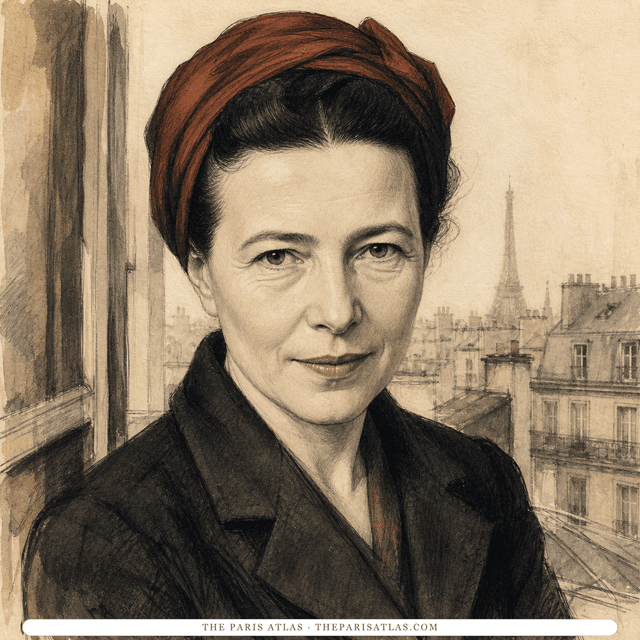
Simone de Beauvoir
French writer and philosopher whose novels, memoirs, and social analysis examined freedom, gender, responsibility, aging, and the material conditions that shape a life.
View author
Louis-Ferdinand Céline
The doctor of the Paris slums who wrote the century's blackest, funniest novel — and changed the sound of French prose.
View author
Henry Miller
The Brooklyn dropout who arrived in Paris broke at thirty-eight and wrote the exuberant, banned books that ended American censorship.
View author