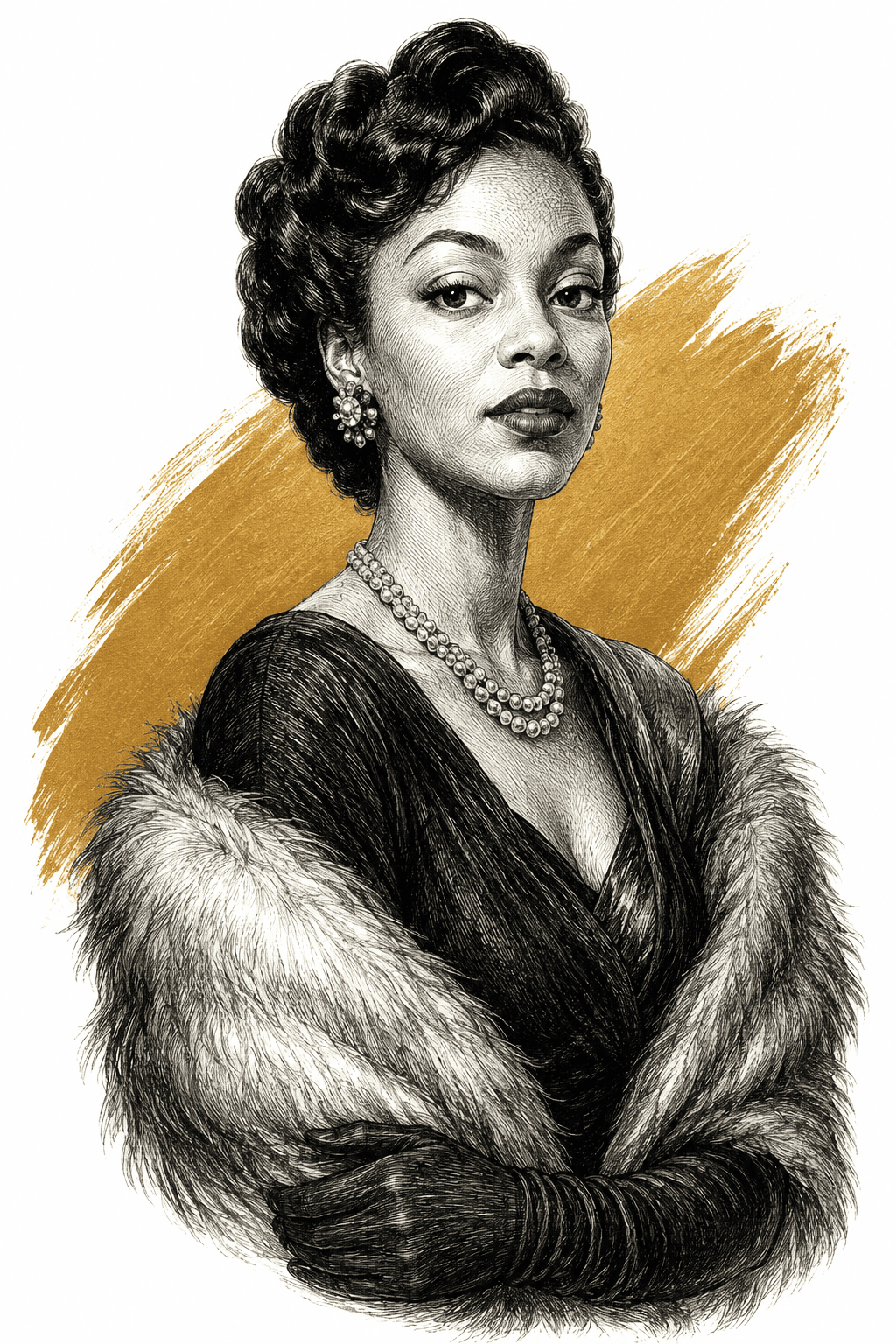
Vivian Baxter
Her mother — beautiful, formidable, and mostly absent in the early years, then the center of the San Francisco chapters.
To live the life she has been given without much fuss, and to have her children do the same.
The book

At a glance
- A nurse
- Mother Dear, then Muh Dear, then M’Deah by Bailey; Bibbi by her brothers
- Daddy Clidell, a businessman in San Francisco
- The original do-it-yourself girl
Who they are in the book
Spoiler-freeVivian Baxter was Maya Angelou’s mother. She sent her two children to Arkansas when they were three and four, and for most of the first third of the book she reaches them only as presents: a tea set and a blue-eyed, yellow-haired doll that arrived one Christmas and made both children cry. Bailey called her Mother Dear, then Muh Dear, then M’Deah as living in the same house wore the formality down. Her brothers called her Bibbi.
She was a trained nurse who never worked as one while the children were with her in St. Louis. Mr. Freeman, the man she lived with, brought in the necessities, and she made extra money cutting poker games in gambling parlors. Angelou says the straight eight-to-five world simply did not have enough glamour for her, and that it was twenty years before she first saw her mother in a nurse’s uniform.
She was the only warm, outgoing one among six Baxter siblings who beat up Black and white with the same abandon. Her own temper did not soften with time. Angelou describes the anger as melodrama and also insists it was fair, and quotes an Oakland saying that stood in for her mother’s attitude: “Sympathy is next to shit in the dictionary, and I can’t even read.”
In San Francisco she ran a fourteen-room house built after the earthquake, full of roomers — shipyard workers coming up the stairs in steel-tipped boots and metal hats, and prostitutes who hung their wigs on the doorknobs. She married Daddy Clidell, a businessman Angelou calls the first father she ever knew. When her daughter announced she was going to get a job on the streetcars, Vivian Baxter told her flatly that they did not accept colored people on the streetcars, and then backed her anyway.
How Vivian Baxter Is Portrayed
- The first sight of herSmaller than memory had made her and more glorious than any recall. A light-tan suede suit, shoes to match, a mannish hat with a feather in the band, and gloved hands that patted her daughter’s face. Except for the lipsticked mouth, the white teeth and the shining black eyes, Angelou writes, she might have come out of a beige bath.
- A nurse who cut poker gamesShe was qualified and did not practise. In St. Louis the household ran on Mr. Freeman’s wages and on what she took out of gambling parlors. Angelou reports both without comment and adds that she did not see her mother in uniform until twenty years later.
- The Baxter temperShe came out of a family Angelou describes as mean by reputation and too fond of each other to need outside friends. When a man cursed her in the street she reported it to her brothers. They had him tracked down, walked into the saloon where he was drinking, and called her over to do the beating herself.
- No sympathyAngelou attaches an Oakland saying to her mother by way of explanation: sympathy is next to shit in the dictionary, and I can’t even read. She then says that with all her jollity Vivian Baxter had no mercy, and that in every outburst she was fair.
- Awake or asleepThere was never any yawning or stretching with her. She woke completely and at once, which is how the last scene of the book begins.
- The house full of roomersFourteen rooms in San Francisco, everyone on the second floor except her and Daddy Clidell, and a rolling cast of shipyard workers and prostitutes bringing their accents and their food through it.
- What she said about the streetcarsShe rejected the idea first — they do not hire colored people on the streetcars — and then supported it in her usual terse register: nothing beats a trial but a failure, give it everything you’ve got, and can’t do is like don’t care, neither of them have a home. Angelou also credits her with the working advice that came later: you ask for what you want, and you pay for what you get.
- How much attention she paidAngelou says her mother noticed her out of the corner of her existence, and that as long as she was healthy, clothed and smiling nothing further was required. It is how a sixteen-year-old managed to conceal a pregnancy for eight months in the same house.
Vivian Baxter quotes
See, you don't have to think about doing the right thing. If you're for the right thing, then you do it without thinking.
Life is going to give you just what you put in it. Put your whole heart in everything you do, and pray, then you can wait.
hoped for the best, was prepared for the worst, so anything in between didn't come as a surprise.
She puts Bailey out of the house at sixteen, and Angelou frames it as a mother refusing to watch her son spend his youth on a woman who would use it up.
The book’s last scene is hers. She turns on the light in the night and tells her daughter twice to look at the baby, and there is no sadness in her voice, which is what lets the girl look at all. Angelou finds she has made a tent of her own bent arm and that the child is asleep under it. Her mother’s line closes the book: if you are for the right thing, you do it without thinking.
If you like I Know Why the Caged Bird Sings


If you like Maya Angelou
Explore authors with a similar voice, perspective, and influence.
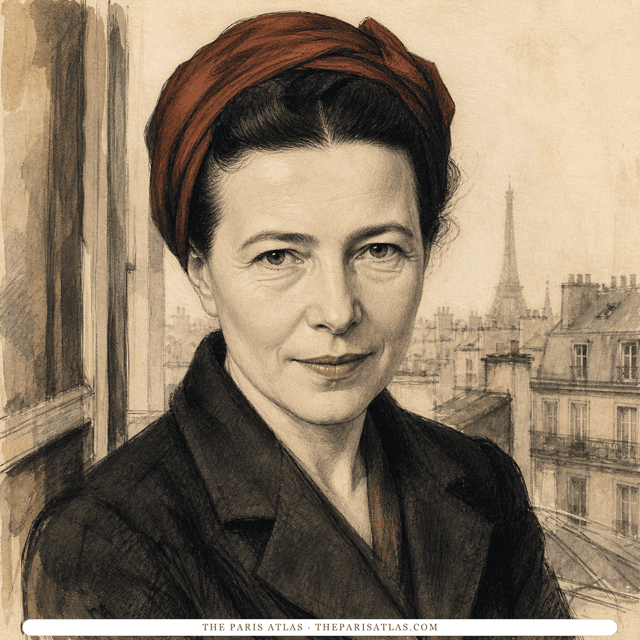
Simone de Beauvoir
French writer and philosopher whose novels, memoirs, and social analysis examined freedom, gender, responsibility, aging, and the material conditions that shape a life.
View author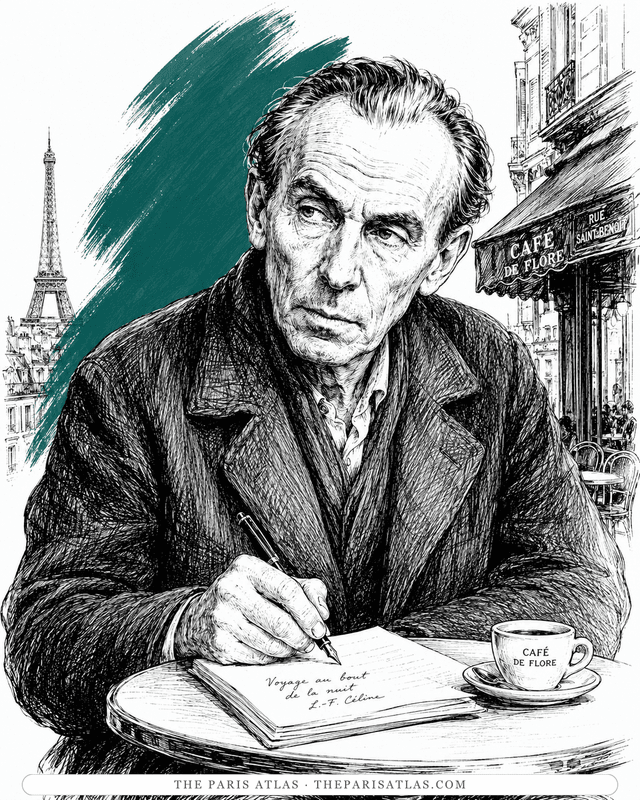
Louis-Ferdinand Céline
The doctor of the Paris slums who wrote the century's blackest, funniest novel — and changed the sound of French prose.
View author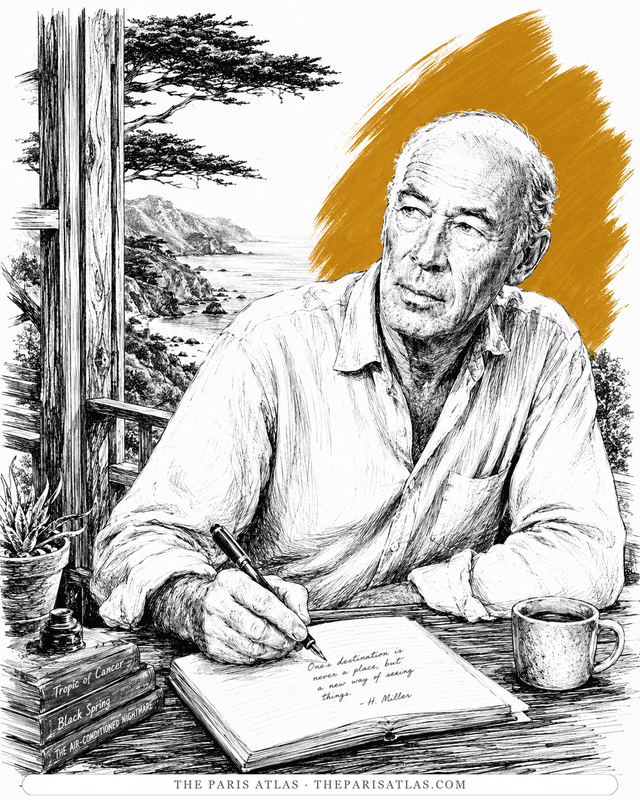
Henry Miller
The Brooklyn dropout who arrived in Paris broke at thirty-eight and wrote the exuberant, banned books that ended American censorship.
View author