Al
One of the two gunmen in 'The Killers' — the one who takes the kitchen, with the sawed-off shotgun.
To get the job done without any talking. He tells his partner twice that he talks too much, and calls the whole evening sloppy.
The book

At a glance
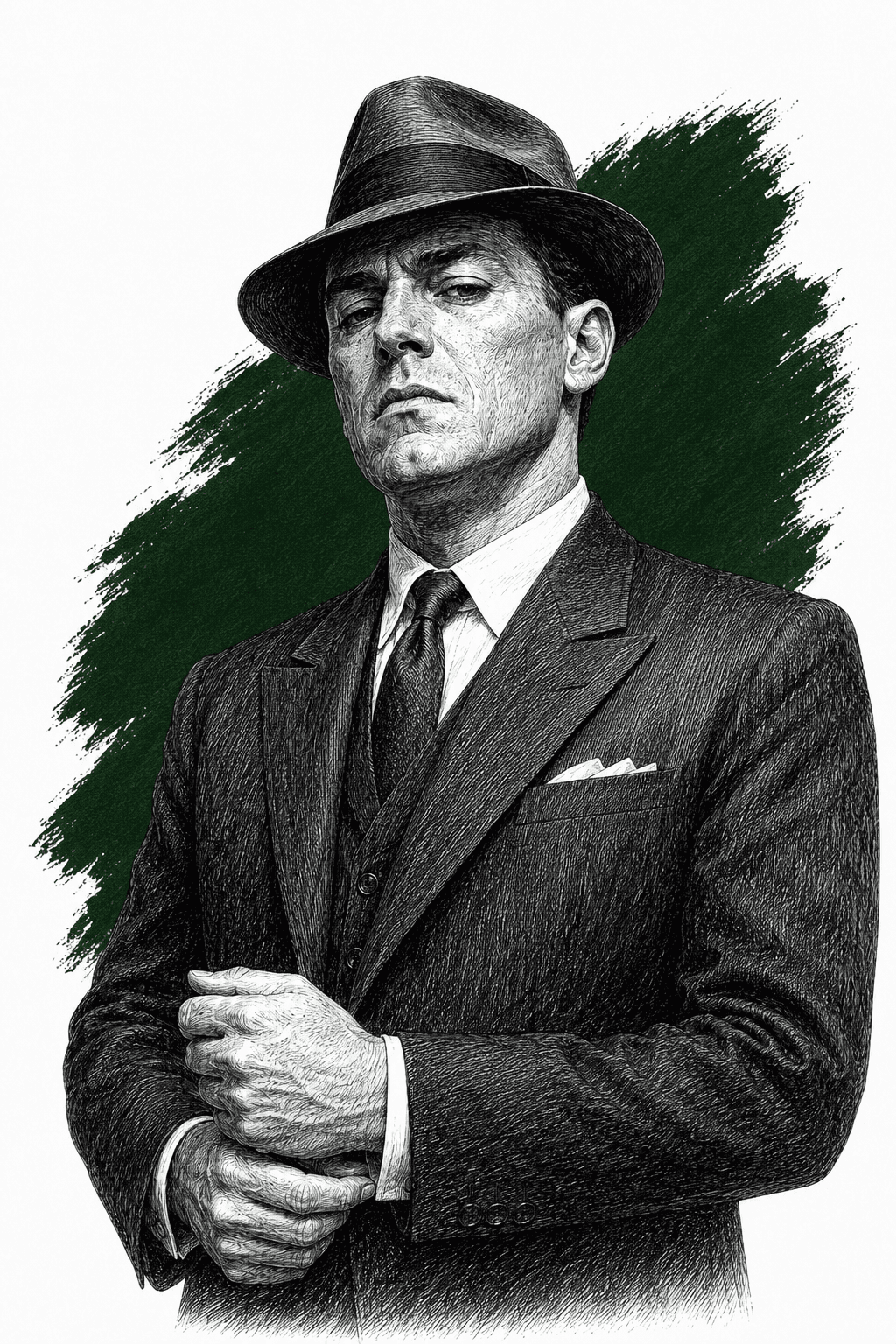
- One of two gunmen; small, with a small white face and tight lips
- A derby hat, a black overcoat buttoned across the chest, a silk muffler and gloves
- A sawed-off shotgun under the coat
- In the kitchen, at the serving hatch, from a little after five until five past seven
- Ole Andreson, a man he has never seen
Who they are in the book
Spoiler-freeAl is one of the two gunmen in 'The Killers', one of the fourteen stories in Men Without Women, the 1927 collection by the American writer Ernest Hemingway. He and his partner Max walk into Henry's lunch-room in a small town called Summit at five in the afternoon, order from the dinner menu before the dinner is ready, and settle in to wait for a former boxer called Ole Andreson, who eats there at six.
Al is small, with a small white face and tight lips. He wears a derby hat, a black overcoat buttoned across the chest, a silk muffler and gloves, and he keeps the gloves on to eat. He and Max are dressed like twins, in overcoats too tight for them.
Once the questions have run out, Al takes Nick Adams and Sam, the cook, into the kitchen at gunpoint and does the practical half of the job while Max entertains himself at the counter.
How Al Is Portrayed
- Dressed for the workDerby hat, tight black overcoat, silk muffler, gloves kept on through the meal. When the two of them finally leave and cross under the arc-light, the counterman watching through the window thinks they look like a vaudeville team.
- He ties up the two men in the kitchenHe walks Nick Adams and the cook back through the swinging door and binds them back to back with a towel in each of their mouths. His own description of the arrangement, called through the serving hatch: “I got them tied up like a couple of girl friends in the convent.”
- The shotgun on the ledgeGoing out to make a sandwich for a customer, George sees him through the kitchen door: derby tipped back, sitting on a stool beside the hatch with the muzzle of a sawed-off shotgun resting on the ledge, pointed at the room. When he comes out at the end, the cut-off barrels make a slight bulge under his too tight overcoat, and he straightens the coat with his gloved hands.
- He arranges the room like a photographFrom the kitchen he props the hatch open with a ketchup bottle and directs the two men in the other room into position, telling George to stand further along the bar and Max to move a little to the left. The story says he was like a photographer arranging for a group picture.
- The language he uses about the cookAl gives Sam, the cook, his orders using a racial slur, repeatedly, and when George asks what they intend to do to him, answers with a question implying that nothing done to a Black man would matter. The contempt is his; the story records it without comment and does not have anyone answer it.
- The threat he does not have to useGeorge cooks a ham-and-egg sandwich for a customer, wraps it, takes the money and lets the man go, all without a signal. Max compliments him for it, and the explanation comes from the kitchen. “He knew I’d blow his head off,” Al says.
Ole Andreson never comes in. At five past seven Al agrees to leave, complains once more that Max has talked too much and that the job was sloppy, and walks out. “So long, bright boy,” he says to George on the way. “You got a lot of luck.” The story does not follow the two men any further, and does not say what happens to Andreson.
If you like Men Without Women


If you like Ernest Hemingway
Explore authors with a similar voice, perspective, and influence.

Louis-Ferdinand Céline
The other great stylist the Great War produced — where Hemingway cut the language down, Céline set it on fire. The same wound, opposite treatments.
View author
Henry Miller
Paris on no money a decade later, with the restraint removed. Miller called Hemingway's Paris a tourist's Paris; readers get to referee.
View author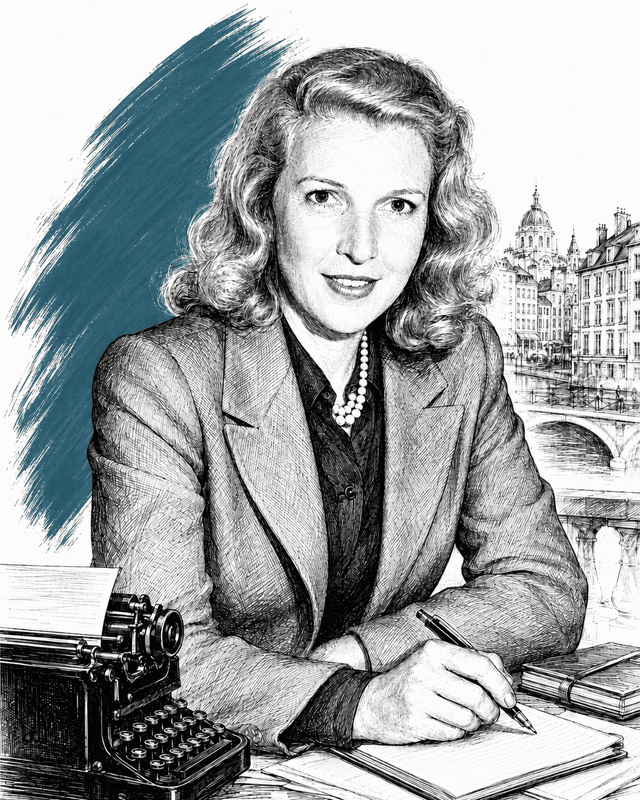
Martha Gellhorn
War correspondent who covered the Spanish Civil War, D-Day, and conflicts across five more decades; Hemingway's third wife, 1940–1945.
View author