George
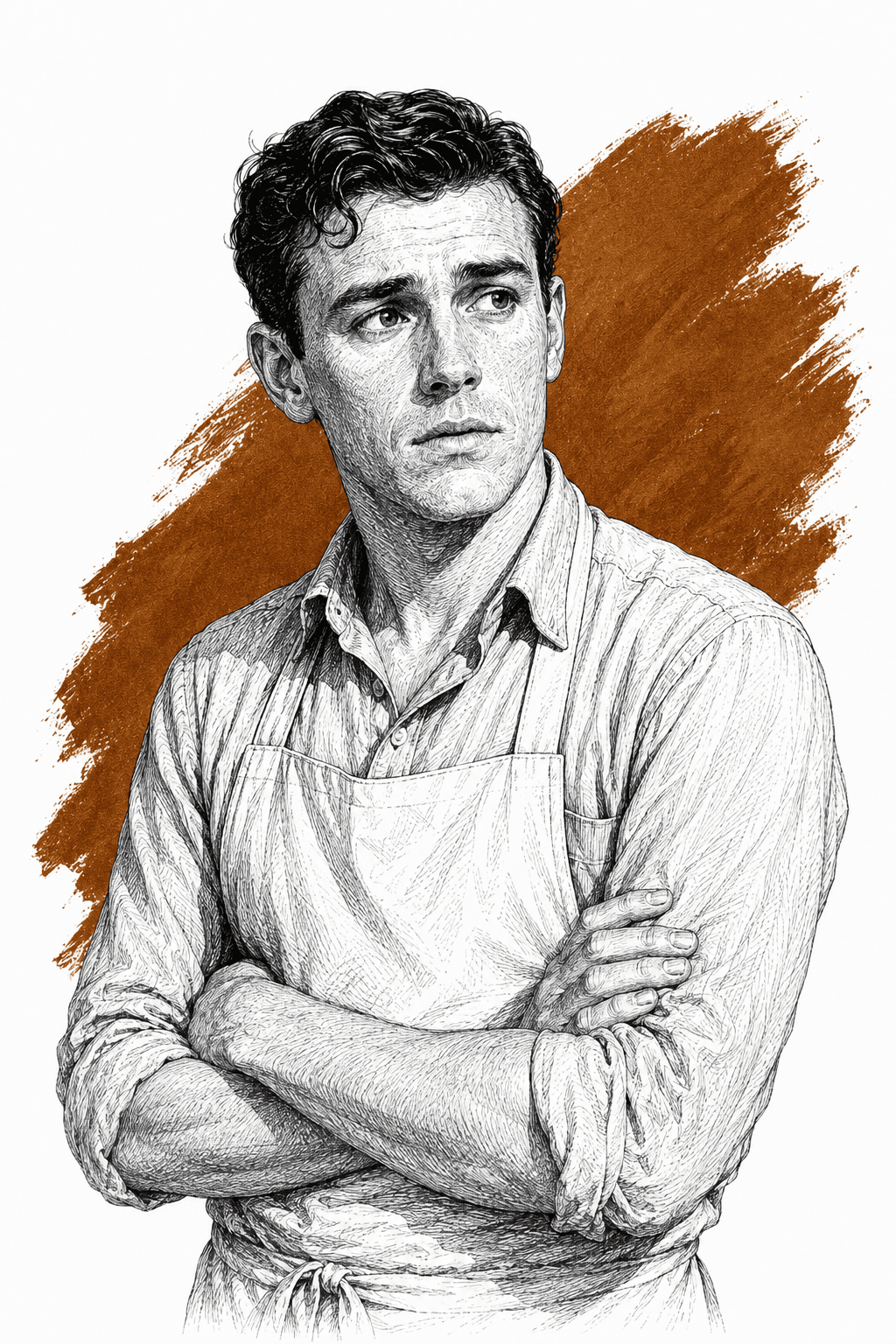
The counterman at Henry's lunch-room in 'The Killers', who keeps two gunmen in conversation for two hours.
To get everybody through the evening. He does as he is told, keeps the customers moving, and once the men have gone he unties the other two and sends someone to warn the man they came for.
The book

At a glance
- Counterman at Henry's lunch-room in Summit
- Twenty minutes fast
- That the cook is off, and that he will cook himself if anyone keeps asking
- Bright boy
- Nick Adams to Hirsch's rooming-house to warn Ole Andreson
Who they are in the book
Spoiler-freeGeorge is the counterman at Henry's lunch-room in 'The Killers', one of the fourteen stories in Men Without Women, the 1927 collection by the American writer Ernest Hemingway. He is behind the counter when two armed men come in, and once the other two people in the building have been tied up in the kitchen, he is the one left out in the room with them.
For two hours he answers questions, serves the dinners, lies to the customers who come through the door, and watches the clock. What he does not do is warn anyone or make a move, and the story does not judge him for it.
How George Is Portrayed
- He runs the counterThe story opens with him taking an order. The pork tenderloin and the chicken croquettes are on the dinner menu and the dinner is not served until six; the clock on the wall says twenty past five and is twenty minutes fast. He offers sandwiches, ham and eggs, bacon and eggs, liver and bacon, or a steak.
- He answers everything flatlyTold he is a bright boy, he says sure. Told he is not, he says all right. He laughs once, is told he does not have to laugh at all, and stops. Almost every line he speaks in the first half of the story is one or two words long.
- He asks the question the others do not“What are you going to kill Ole Andreson for?” he says. “What did he ever do to you?” He asks it twice and gets an answer both times, which is more than the gunmen intended to give.
- He gets rid of three customersA street-car motorman comes in for supper and is told the cook has gone out and will be back in half an hour. Another man wants a ham-and-egg sandwich to take with him, and George goes into the kitchen, past Al and the shotgun, cooks it, wraps it in oiled paper, bags it and takes the money. A third asks why they do not get another cook.
- He watches the clockThe story marks the time through his eyes: a quarter past six, twenty past, six fifty-five, seven o'clock, five past seven. At six fifty-five he says out loud that the man is not coming.
- He decides what happens nextAs soon as the two men are across the street he goes into the kitchen and unties Nick Adams and the cook. Then he says Nick had better go and see Ole Andreson, and immediately afterwards that he need not go if he does not want to. The cook tells Nick to stay out of it. Nick goes.
Nick comes back and reports that Andreson will not move. George says they will kill him, and that the man must have got mixed up in something in Chicago, and that people get killed for double-crossing somebody. Nick says he is going to get out of town. The story's last line is George's answer to Nick saying he cannot stand to think about it: “Well, you better not think about it.” Then he wipes the counter.
If you like Men Without Women


If you like Ernest Hemingway
Explore authors with a similar voice, perspective, and influence.

Louis-Ferdinand Céline
The other great stylist the Great War produced — where Hemingway cut the language down, Céline set it on fire. The same wound, opposite treatments.
View author
Henry Miller
Paris on no money a decade later, with the restraint removed. Miller called Hemingway's Paris a tourist's Paris; readers get to referee.
View author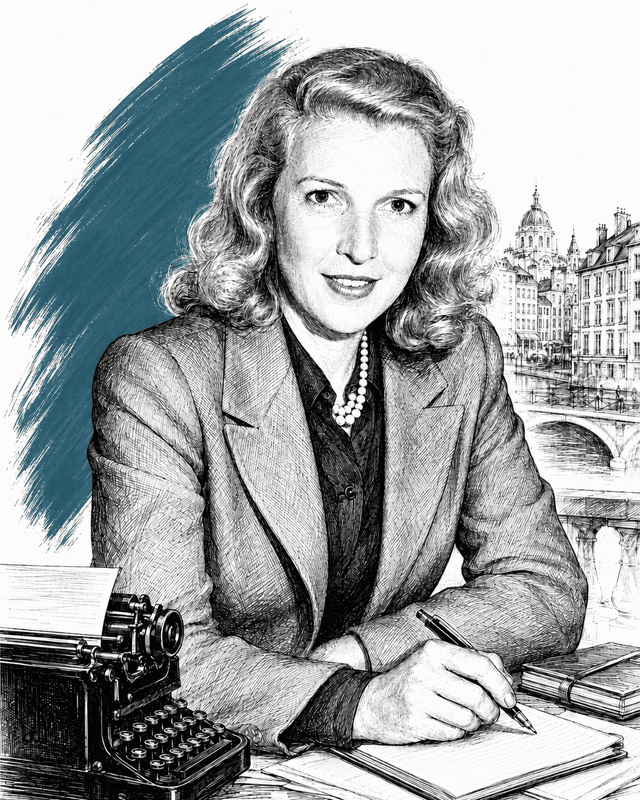
Martha Gellhorn
War correspondent who covered the Spanish Civil War, D-Day, and conflicts across five more decades; Hemingway's third wife, 1940–1945.
View author