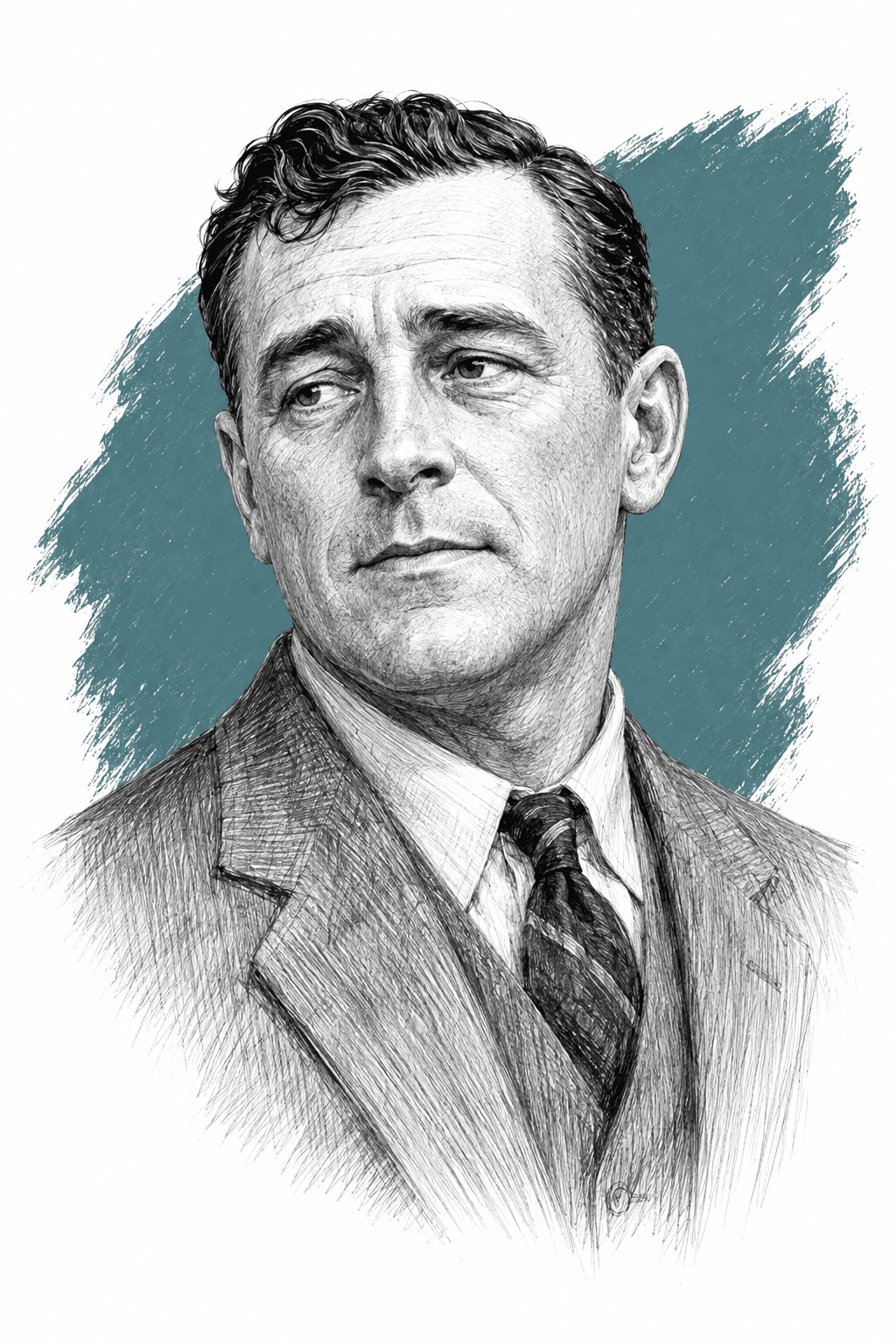
Jack Brennan
An Irish-American welterweight champion at the end of his career, who bets fifty thousand dollars against himself. From 'Fifty Grand'.
To leave boxing with the money and without being knocked out. “It's business,” he says of the bet. “I can't win. You know I can't win anyway.”
The book

At a glance
- Welterweight champion, Irish-American, at the end of his career
- One hundred and forty-three pounds; the match was made at one hundred and forty-seven
- Danny Hogan's health farm in the New Jersey hills
- John Collins, ten years
- Fifty thousand dollars on Walcott at two to one, to win twenty-five
- A wife and daughters; he writes to her every day and she has never seen him fight
Who they are in the book
Spoiler-freeJack Brennan is the central character of 'Fifty Grand', one of the fourteen stories in Men Without Women, the 1927 collection by the American writer Ernest Hemingway. He is an Irish-American welterweight boxing champion near the end of his career, training at a health farm in the New Jersey hills for a title defence against a younger and heavier-hitting fighter called Walcott. The story is told by Jerry Doyle, his trainer.
Jack has not slept for a week. He misses his wife and daughters, he cannot sweat, and he knows what is going to happen to him in the ring. So he puts fifty thousand dollars on Walcott at two to one, through his manager's friends, to take twenty-five thousand out of a fight he cannot win. He is not selling the fight and says so: it is not crooked, he cannot beat the man anyway, and he intends to give them a good show.
How Jack Brennan Is Portrayed
- A week without sleepAsked what he thinks about at night, Jack lists it: property he owns in the Bronx, property in Florida, the kids, the wife, some stocks, and old fights that still make him angry. He shadow-boxes badly, skips rope, and cannot raise a sweat. Danny Hogan, who runs the training farm, says he is stale as poorhouse cake and has nothing left inside.
- The left hand that does the workFor seven rounds Jack runs the fight on his left hand alone. Walcott comes forward with his chin on his chest and his hands low, and the left is in his face every time, so automatically that the narrator says Jack only has to wish it there. By the fourth round Walcott's face is cut up and bleeding. Then Jack says his left is getting heavy, and after that the fight belongs to the other man.
- How he talks about other fightersJack speaks about other men with open ethnic contempt, and the story reports it without comment. In the first scene he uses an anti-Jewish slur about the boxer Ted Lewis, and a woman drinking at the next table takes him apart for it. In the ring he calls Walcott a Polish obscenity, and asks him why he fights under the name Walcott, following the question with a racial slur about the man whose name he took. The narrator's summary is that Jack could say what he wanted when he wanted to say it.
- Careful with money, down to the tipHe turns down a ten-dollar hotel room and takes a seven-dollar one; when the bellboy brings the bags up, the narrator is the one who produces a quarter. At the station he gives Bruce, who has been giving him his rubdowns at the farm, two dollars, sees the man's face, and explains that the rubbing is already on Hogan's bill.
- Cribbage the day of the fightHe wins three dollars off his trainer at cribbage in the hotel room, then a dollar and a half off his manager, then plays another hand to decide who pays for dinner, and wins that too. It is the only stretch of the story in which he is described as feeling pretty good.
- The family he stays away fromHe writes to his wife every day from the farm and telephones her once. He will not have her come out to the country, and he takes a hotel room near the arena for the night of the fight rather than go home to the Bronx afterwards. She has never seen him fight.
- What the people around him make of himHogan, who likes him, says twice that he is a cold one. His manager, John Collins, says he has had him for ten years and he has never been right yet. Drunk, late at night, Jack tells his trainer that he is the only friend he has got, and says it twice.
The two men his manager brings out to the farm, Happy Steinfelt and Lew Morgan, have arranged for the fight to go wrong in a way Jack has not allowed for. In the eleventh round Walcott hits him deliberately about five inches below the belt. A foul that low would hand Jack the fight on a disqualification, keep him champion, and lose him the fifty thousand dollars. Standing there with his insides ruined, he refuses it: “It wasn't low,” he says. “It was a accident.” Then he tells Walcott to come on and fight.
He holds himself together long enough to swing twice into Walcott's groin. Walcott goes down, the announcer gives the fight to Walcott on a foul, and Jack's bet stands. He crosses the ring afterwards to apologise. “I'm sorry,” he says. “I didn't mean to foul you,” and then, “Well, you're the champion now. I hope you get a hell of a lot of fun out of it.” In the dressing room he tells John Collins that Morgan and Steinfelt are nice friends to have, and remarks how fast a man can think when that much money is involved. Told he is some boy, he answers: “No. It was nothing.”
If you like Men Without Women


If you like Ernest Hemingway
Explore authors with a similar voice, perspective, and influence.

Louis-Ferdinand Céline
The other great stylist the Great War produced — where Hemingway cut the language down, Céline set it on fire. The same wound, opposite treatments.
View author
Henry Miller
Paris on no money a decade later, with the restraint removed. Miller called Hemingway's Paris a tourist's Paris; readers get to referee.
View author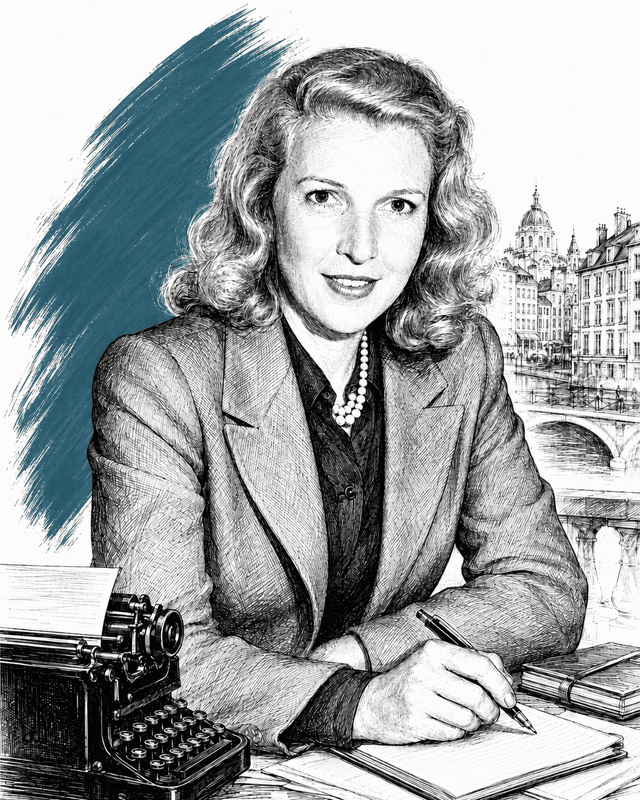
Martha Gellhorn
War correspondent who covered the Spanish Civil War, D-Day, and conflicts across five more decades; Hemingway's third wife, 1940–1945.
View author