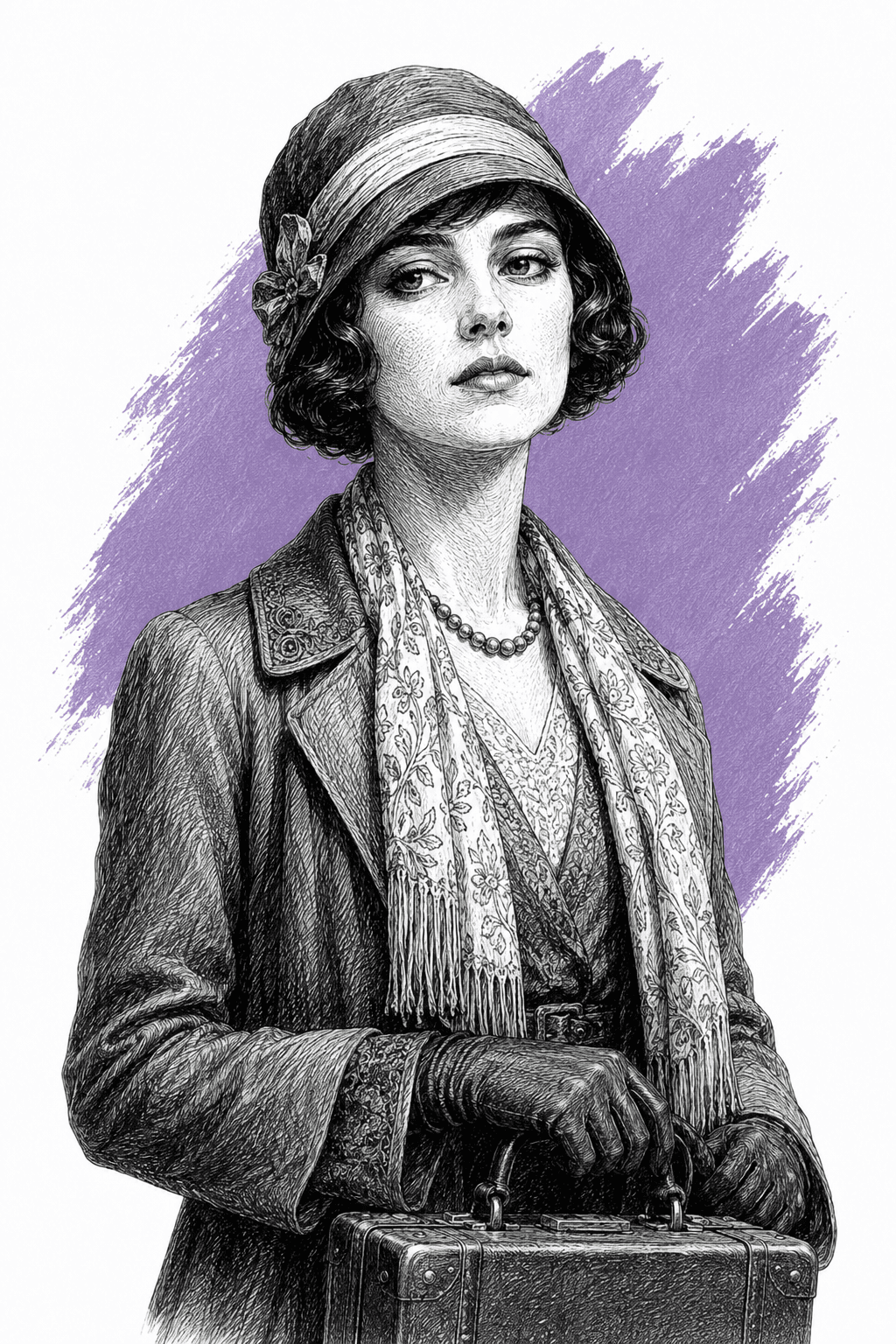
Jig
The woman waiting for the Madrid express in 'Hills Like White Elephants', arguing with the man she is travelling with about an operation.
To keep what the two of them have, and to stop being talked at about it. “And we could have everything and every day we make it more impossible,” she says, and a little later she asks him to please stop talking.
The book

At a glance
- Called the girl throughout; named Jig twice, both times by the man
- A railway station in the Ebro valley, Spain, between Barcelona and Madrid
- Forty minutes before the express, which stops for two
- Beer, then Anis del Toro with water
- An abortion, which neither of them names
- Two heavy bags labelled from all the hotels where they had spent nights
Who they are in the book
Spoiler-freeJig is one of the two characters in 'Hills Like White Elephants', one of the fourteen stories in Men Without Women, the 1927 collection by the American writer Ernest Hemingway. The story runs about four pages and is almost entirely conversation. A woman and the American man she is travelling with sit outside the bar of a railway station in the Ebro valley in Spain, in the forty minutes before the express from Barcelona comes through on its way to Madrid.
The story calls her the girl. She is named twice, both times by him, both times in the middle of telling her that the operation is a simple one. The operation is an abortion. Neither of them ever says the word and the story never uses it: he calls it perfectly simple, says it is not really an operation at all, and tells her they just let the air in.
They drink beer, and then a Spanish anise liqueur called Anis del Toro, while he presses her towards a decision and repeats that he does not want her to do it unless she wants to. Their two bags stand against the wall of the station with labels on them from all the hotels where they had spent nights.
How Jig Is Portrayed
- The line the story takes its title fromShe looks across the valley at a line of long white hills standing over brown, dry country and says they look like white elephants. He says he has never seen one. Later she takes it back: they are lovely hills, they do not really look like white elephants, and she only meant how their skin looked through the trees.
- Named twice by him, and never by the storyJig is what he calls her, twice, in the space of five lines. The narration never uses it; everywhere else she is the girl. She is given no age, no home, no surname and no history, and neither is he.
- What she says about the drinksShe asks him what is painted on the bead curtain hanging over the bar door, and when he says it is the name of a drink she asks to try it. She tastes it and puts the glass down. “Everything tastes of licorice. Especially all the things you've waited so long for, like absinthe.” He tells her to cut it out. She says she was being amused and having a fine time.
- The way she agrees to itShe works through what agreement is supposed to buy: that things will be as they were, that he will love her, that he will stop worrying. Then she says she will do it, and gives her reason. “But I don't care about me.”
- The walk to the end of the platformShe gets up and looks at the other side of the valley, where there are fields of grain and trees along the banks of the Ebro and mountains beyond, and watches the shadow of a cloud cross the grain. Back at the table he tells her they can have the whole world, and she answers that they cannot, and that it is not theirs any more, and that once they take it away you never get it back.
- Seven pleases“Would you please please please please please please please stop talking?” He looks at the bags for a moment and starts again, and she says she will scream. Then the woman from the bar brings two more beers and says the train comes in five minutes, and Jig smiles at her to thank her.
Nothing is settled. He carries the bags around to the other side of the station, looks up the line without seeing the train, walks back through the barroom, drinks an Anis at the bar and looks at the people, who are all waiting reasonably for the train. Then he comes out through the bead curtain and asks whether she feels better. She smiles at him: “There's nothing wrong with me. I feel fine.” That is the last line of the story. Whether she means it, and whether she has agreed to anything, the story does not say.
If you like Men Without Women


If you like Ernest Hemingway
Explore authors with a similar voice, perspective, and influence.

Louis-Ferdinand Céline
The other great stylist the Great War produced — where Hemingway cut the language down, Céline set it on fire. The same wound, opposite treatments.
View author
Henry Miller
Paris on no money a decade later, with the restraint removed. Miller called Hemingway's Paris a tourist's Paris; readers get to referee.
View author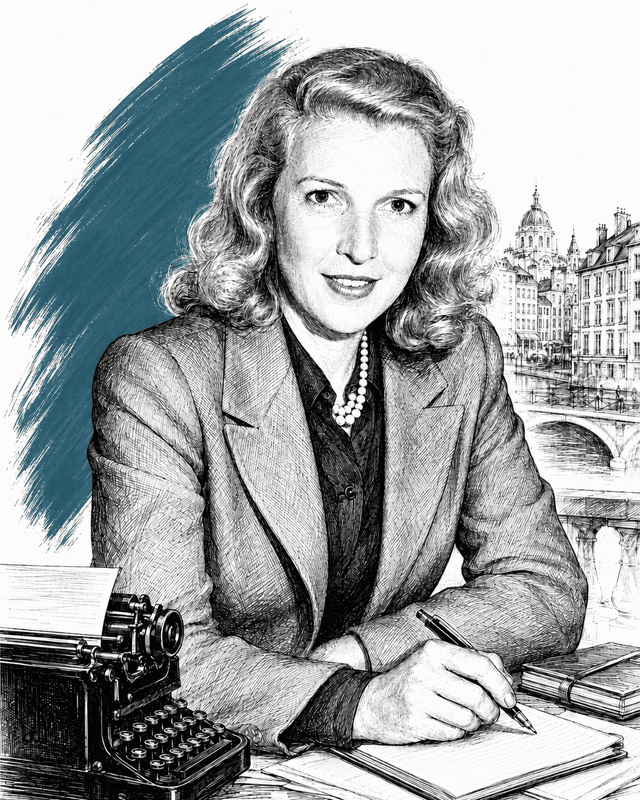
Martha Gellhorn
War correspondent who covered the Spanish Civil War, D-Day, and conflicts across five more decades; Hemingway's third wife, 1940–1945.
View author