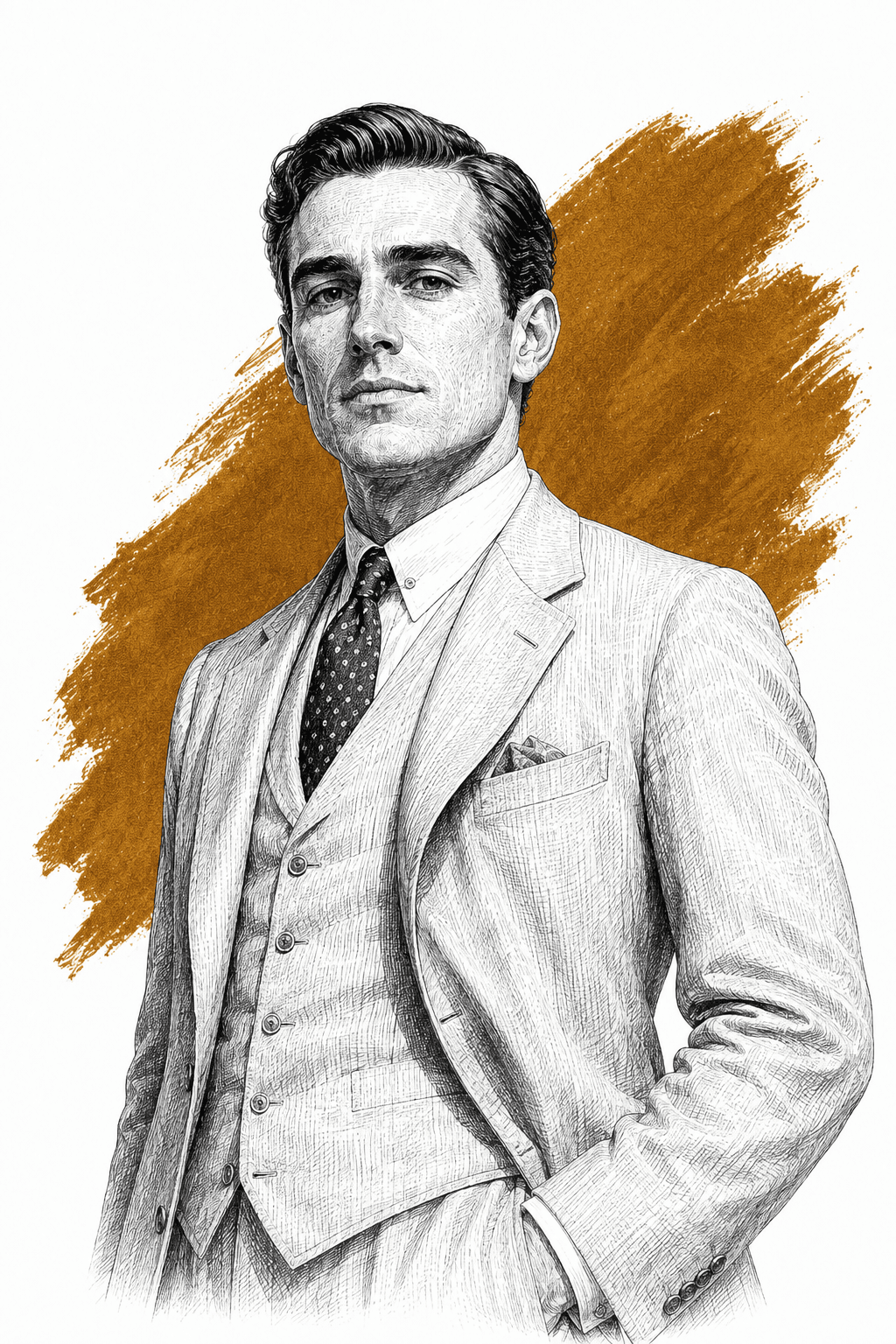
The American
The unnamed man at the Spanish railway station in 'Hills Like White Elephants', talking the woman with him towards an operation.
For the two of them to go back to how they were before. He tells her it is the only thing that has made them unhappy, and that afterwards they will be fine, just like they were before.
The book

At a glance
- Called the American and the man; never named
- Spanish — he orders the drinks and translates the barwoman for her
- That it is perfectly simple and that they will be fine afterward
- Two heavy bags, labelled from the hotels where they had spent nights
- Beer, Anis del Toro, and a last Anis alone at the bar
Who they are in the book
Spoiler-freeThe American is the second of the two characters in 'Hills Like White Elephants', one of the fourteen stories in Men Without Women, the 1927 collection by the American writer Ernest Hemingway. He is never named. The story calls him the American and the man, and he is the one who does the persuading.
He and the woman he is travelling with, whom he calls Jig, are waiting at a station in the Ebro valley in Spain for the express to Madrid. He speaks Spanish and orders for both of them. What he wants from the conversation is her agreement to an abortion, a word he never uses. He calls it an awfully simple operation, says it is not really an operation at all, and describes the procedure as letting the air in.
How The American Is Portrayed
- The words he uses for itHe never names the operation. He calls it perfectly simple, tells her it is not really an operation at all, and says twice that they just let the air in and then it is all perfectly natural. He offers to go with her and stay with her the whole time.
- The reassurance he repeatsAsked whether they will be all right and happy afterwards, he says he knows they will and that she does not have to be afraid, because he has known lots of people that have done it. She says she has too, and that afterward they were all so happy.
- He keeps telling her she does not have to do it“If you don't want to you don't have to. I wouldn't have you do it if you didn't want to.” He says some version of that six times in four pages, usually with another sentence about how simple it is attached to the end, and he is still saying it after she has asked him to stop talking.
- He does the orderingHe calls the drinks through the bead curtain in Spanish, asks the woman in the bar for two big beers and then two Anis del Toro, reads out what is painted on the curtain, and translates when the woman comes out to say the train is coming in five minutes.
- What he says he wantsPressed on whether it means anything to him, he says of course it does. “But I don't want anybody but you. I don't want any one else.” He adds, as he adds to almost everything, that he knows it is perfectly simple.
- The trip to the other platformHe picks up the two heavy bags and carries them around the station to the far tracks, looks up the line, and cannot see the train. Coming back he goes through the barroom where the other passengers are drinking, has an Anis by himself at the bar, and looks at them all waiting reasonably for the train.
The story ends before the train arrives and before anything is decided. He comes back through the bead curtain and asks whether she feels better, and she smiles and says she feels fine and there is nothing wrong with her. Whether he has got what he came for, the story does not say.
If you like Men Without Women


If you like Ernest Hemingway
Explore authors with a similar voice, perspective, and influence.

Louis-Ferdinand Céline
The other great stylist the Great War produced — where Hemingway cut the language down, Céline set it on fire. The same wound, opposite treatments.
View author
Henry Miller
Paris on no money a decade later, with the restraint removed. Miller called Hemingway's Paris a tourist's Paris; readers get to referee.
View author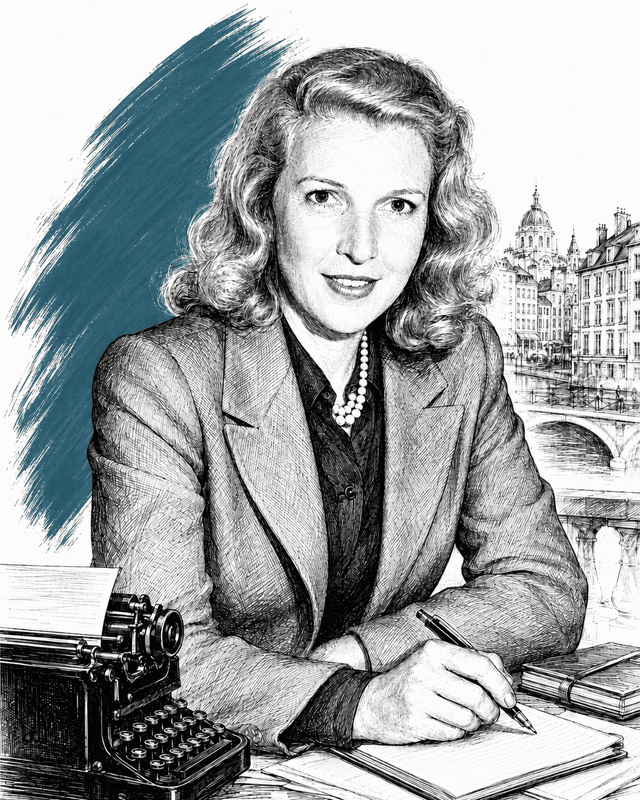
Martha Gellhorn
War correspondent who covered the Spanish Civil War, D-Day, and conflicts across five more decades; Hemingway's third wife, 1940–1945.
View author