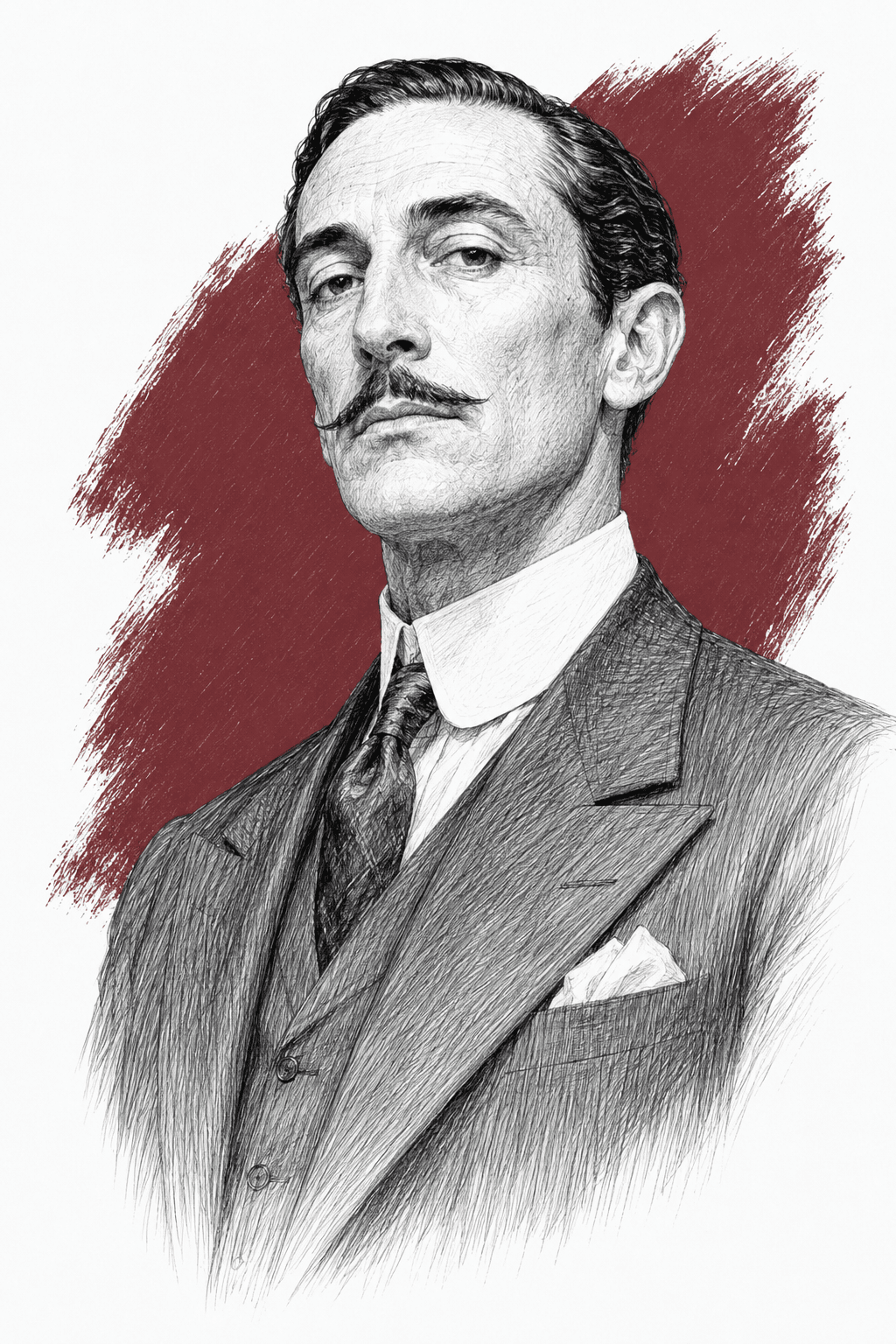
Jerry Doyle
The narrator of 'Fifty Grand' — Jack Brennan's trainer, and the only person the fighter calls a friend.
To get Jack Brennan through the fight in one piece. He runs the road work, waters the drinks, works the legs between rounds, and tells the truth when he is asked a direct question.
The book

At a glance
- Jack Brennan's trainer, and the story's narrator
- Once, as Mr. Doyle; Jerry to everybody
- Runs the road work, reads the papers on the porch, packs the bags
- Offered a bed in Brennan's seven-dollar hotel room; loses three dollars to him at cribbage
- Works the legs between rounds and takes the gloves off after
Who they are in the book
Spoiler-freeJerry Doyle tells 'Fifty Grand', one of the fourteen stories in Men Without Women, the 1927 collection by the American writer Ernest Hemingway. He is the trainer of Jack Brennan, an Irish-American welterweight champion preparing for a title fight he expects to lose, and he tells the whole thing in the same flat American speech the fighters use.
He is named exactly once, in the middle of the story, when Brennan's manager introduces him to two visitors: this is Mr. Doyle, he has been training Jack. Everyone else calls him Jerry. He does the roadwork, the massage, the packing and the tipping, and he is in the corner on the night.
How Jerry Doyle Is Portrayed
- “Put some water in it”On the last night at the training camp Brennan drinks a quart of liquor and talks about his wife, his money and his insomnia. Jerry has one drink, then two, and otherwise says the same thing over and over, five times, until the bottle is empty and he can put the man to bed.
- He will not flatter the fighterAsked what he thinks of Brennan's condition a week out, he starts with the standard answer about there being time to come into form. Told not to stall him, he says it straight: you're not right.
- The betting tip he does nothing withDrunk, Brennan tells him to get some money down on the opponent, then tells him the size of his own bet: fifty thousand dollars at two to one. Jerry says that is a lot of dough and that it sounds good, and the story never shows him placing anything.
- The corner workBetween rounds he rubs the fighter's legs, and the muscles flutter under his hands the whole time he is rubbing them. He hears Brennan say in the eleventh that his legs are going bad, and pushes him back out for the next round anyway.
- He defends Brennan to the man Brennan firedSent back to town for needling one joke too many, the sparring partner Soldier Bartlett waits on the platform saying he was only kidding. Jerry tells him the champion is nervous and crabby and a good fellow. Bartlett's answer is that he never has been one.
- What he gets told at the end of the nightPutting Brennan to bed, he is told that he is the only friend the man has got, and then told it again. He answers “Oh, hell,” and tells him to go to sleep.
Jerry is the one watching when the fight turns into something else: the low blow that would have handed Brennan the title, Brennan refusing to take it, and the two deliberate fouls that lose him the fight and save his fifty thousand dollars. He describes the fighter's face at that moment as the worst thing he ever saw, and says that everything the man was holding together in his body showed on it.
If you like Men Without Women


If you like Ernest Hemingway
Explore authors with a similar voice, perspective, and influence.

Louis-Ferdinand Céline
The other great stylist the Great War produced — where Hemingway cut the language down, Céline set it on fire. The same wound, opposite treatments.
View author
Henry Miller
Paris on no money a decade later, with the restraint removed. Miller called Hemingway's Paris a tourist's Paris; readers get to referee.
View author
Martha Gellhorn
War correspondent who covered the Spanish Civil War, D-Day, and conflicts across five more decades; Hemingway's third wife, 1940–1945.
View author