Big Brother
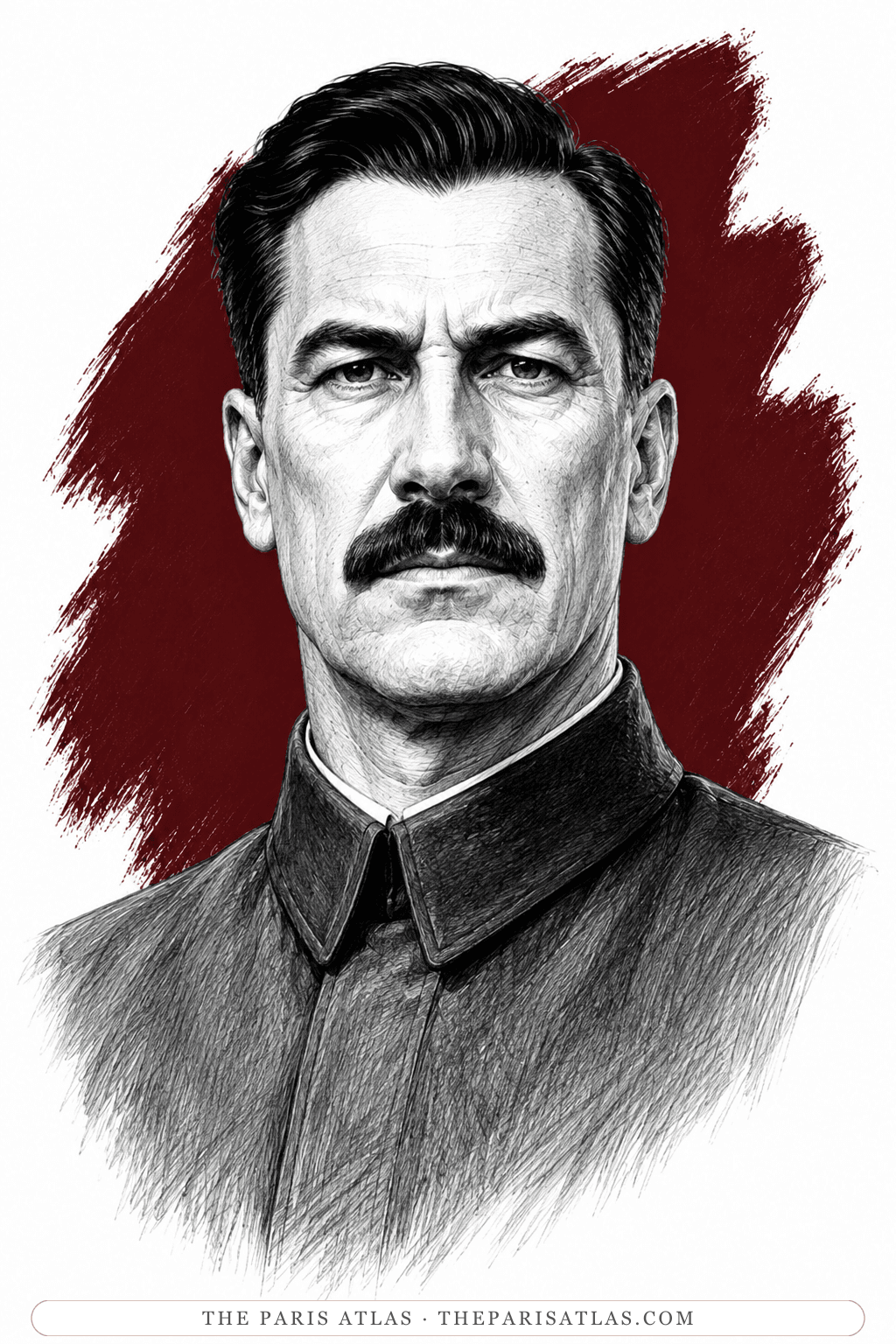
The leader of the Party, and the most reproduced face in Oceania. He never appears in the novel: he is a poster, a voice on a telescreen, a portrait on a coin, and an Order for the Day that clerks like Winston Smith write for him.
The book

At a glance
- The leader of the Party, seen only in reproduction
- A face of about forty-five with a heavy black moustache; a metre wide on the posters
- Once, inaudibly, on a telescreen; his written orders are drafted by Ministry clerks
- Never settled. O'Brien says only that he exists and that he cannot die
- Part One, Chapter 1, on the wall of Winston's hallway
Who they are in the book
Spoiler-freeBig Brother is the face on the poster in the hallway of Victory Mansions: an enormous head more than a metre wide, a man of about forty-five with a heavy black moustache and ruggedly handsome features, contrived so that the eyes follow you about the room. The caption reads BIG BROTHER IS WATCHING YOU. There is another on the house-front opposite, another on every landing, and one on every commanding corner in London.
He is also on coins, stamps, book covers, banners and cigarette packets. He appears at the end of the Two Minutes Hate, when the image of a charging Eurasian soldier dissolves into his face and the room breaks into a slow chant of B-B, B-B, which Winston finds worse than the Hate itself. A small sandy-haired woman flings herself forward with her arms out, murmuring something that sounds like "My Saviour!"
In the Party histories he has led the Revolution since its earliest days, and his exploits have been pushed steadily backwards in time until they reach into the thirties and forties. Winston cannot remember when he first heard the name. He thinks it was in the sixties and cannot be certain, and he knows exactly how such a record gets made, because he makes them. One of his own working days is spent inventing a dead war hero for Big Brother to praise in an Order for the Day.
The novel never shows him and never says whether he is or was a person. Asked directly, O'Brien says that of course he exists, and that he is the embodiment of the Party. Asked whether he exists in the same way Winston exists, O'Brien answers that Winston does not exist. Asked whether he will ever die: "Of course not. How could he die?"
How Big Brother Is Portrayed
- The faceA man of about forty-five, heavy black moustache, ruggedly handsome, more than a metre wide, printed so that the eyes follow you. Winston studies the version on a twenty-five cent piece and wonders what kind of smile is hidden under the moustache.
- EverywhereOn coins, on stamps, on the covers of books, on banners, on posters, on the wrappings of a cigarette packet. Orwell's summary of what is left is one sentence: nothing was your own except the few cubic centimetres inside your skull.
- At the HateThe Eurasian soldier melts into his face, black-haired and black-moustachio'd, full of power and mysterious calm, so vast it nearly fills the screen. Nobody hears what he says; the words are described as the kind uttered in the din of battle, restoring confidence by the fact of being spoken.
- Written by clerksHis Order for the Day is a document produced in the Records Department. Winston, told to remove a disgraced official from one, invents Comrade Ogilvy instead and dictates the praise in Big Brother's familiar style, which is military and pedantic and easy to imitate because he asks questions and then answers them.
- Pushed backwardsThe histories extend his career into the fabulous world of the thirties and forties, when capitalists in cylindrical hats still rode through London in gleaming motor-cars. Winston cannot even remember at what date the Party itself came into existence.
- The nameGoldstein's book notes that a regime which systematically undermines the family calls its leader by a name that appeals directly to family loyalty, and files it with the Ministry of Peace and the Ministry of Love as a deliberate exercise in doublethink.
If you like Nineteen Eighty-Four


If you like George Orwell
Explore authors with a similar voice, perspective, and influence.
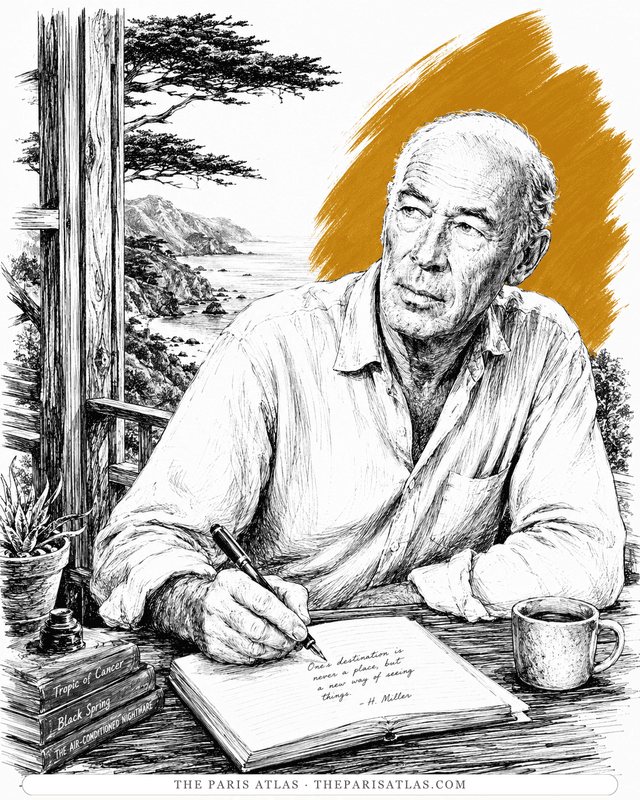
Henry Miller
The Brooklyn dropout who arrived in Paris broke at thirty-eight and wrote the exuberant, banned books that ended American censorship.
View author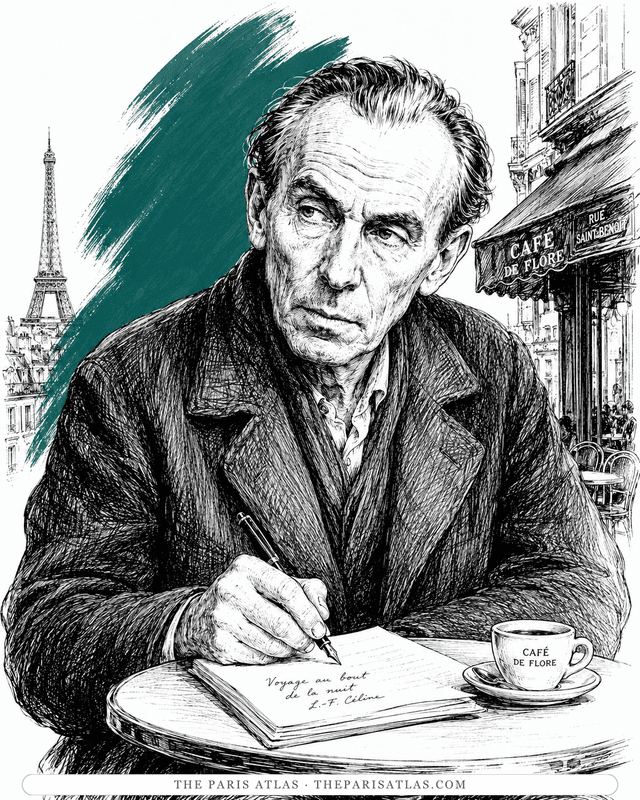
Louis-Ferdinand Céline
The doctor of the Paris slums who wrote the century's blackest, funniest novel — and changed the sound of French prose.
View author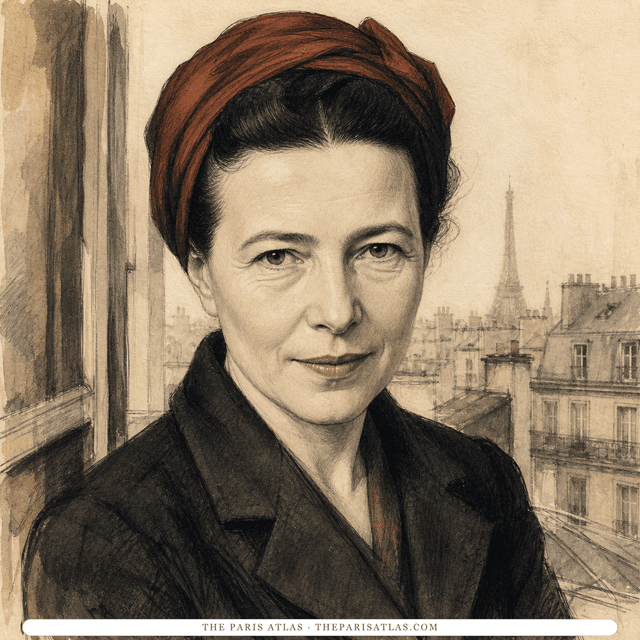
Simone de Beauvoir
French writer and philosopher whose novels, memoirs, and social analysis examined freedom, gender, responsibility, aging, and the material conditions that shape a life.
View author